

Commentary
As the U.S. stumbles in its war with Iran, we are likely to see an acceleration of its disengagement from the region.
Michael Young
{
  "authors": [],
  "type": "pressRelease",
  "centerAffiliationAll": "dc",
  "centers": [
    "Carnegie Endowment for International Peace"
  ],
  "collections": [],
  "englishNewsletterAll": "menaTransitions",
  "nonEnglishNewsletterAll": "",
  "primaryCenter": "Carnegie Endowment for International Peace",
  "programAffiliation": "MEP",
  "programs": [
    "Middle East"
  ],
  "projects": [],
  "regions": [
    "Middle East"
  ],
  "topics": [
    "Political Reform",
    "Democracy"
  ]
}
REQUIRED IMAGE
Turkey narrowly avoided an unprecedented constitutional crisis when its Constitutional Court refrained from banning the Justice and Development Party (AKP). Henri Barkey analyzes the court’s decision, outlines the history of the AKP, and assesses the impact of the crisis on Turkey’s political future.
WASHINGTON, Aug 1—Turkey narrowly avoided an unprecedented constitutional crisis on Wednesday when its Constitutional Court refrained from banning the ruling Justice and Development Party (AKP). Henri Barkey analyzes the court’s decision, outlines the history of the AKP, and assesses the impact of the crisis on Turkey’s political future.
Barkey notes that the AKP’s success as a moderate Islamist party has worried Turkey’s secularist establishment—concerns that were exacerbated by the party’s controversial stance on the wearing of headscarves. Barkey warns that, having just avoided a political crisis, the AKP must develop a more broadly acceptable agenda, while Turkey must address its weakened institutions—military, judiciary, and parliament—all of which have been embroiled in the crisis.
Key Conclusions:
###

Direct link to the Commentary:
www.carnegieendowment.org/publications/index.cfm?fa=view&id=20339&prog=zgp&proj=zme
Henri J. Barkey is a nonresident senior associate in the Carnegie Middle East Program and the Bernard L. and Bertha F. Cohen Professor in International Relations and International Relations Department Chair at Lehigh University. He served as a member of the U.S. State Department Policy Planning Staff working primarily on issues related to the Middle East, the Eastern Mediterranean, and intelligence from 1998 to 2000.
The Carnegie Middle East Program combines in-depth local knowledge with incisive comparative analysis to examine economic, socio-political, and strategic interests in the Arab world. Through detailed country studies and the exploration of key cross-cutting themes, the Carnegie Middle East Program, in coordination with the Carnegie Middle East Center, provides analysis and recommendations in both English and Arabic that are deeply informed by knowledge and views from the region. The Carnegie Middle East Program has special expertise in political reform and Islamist participation in pluralistic politics throughout the region.
The Carnegie Middle East Center is a public policy think tank and research center based in Beirut, Lebanon. Bringing together senior researchers from the region, the Carnegie Middle East Center aims to better inform the process of political change in the Middle East and deepen understanding of the issues the region and its people face.
The Arab Reform Bulletin addresses political reform in the Middle East. Sent monthly, it offers analysis from U.S.-based and Middle Eastern political experts in English and Arabic, as well as news synopses and resource guides.
Carnegie does not take institutional positions on public policy issues; the views represented herein are those of the author(s) and do not necessarily reflect the views of Carnegie, its staff, or its trustees.

As the U.S. stumbles in its war with Iran, we are likely to see an acceleration of its disengagement from the region.

Michael Young

The accord represents a pivotal moment in the region to avert a security vacuum in the Gulf.


Azeema Cheema, Mohanad Hage Ali

In an interview, Jason Burke discusses his sweeping account of the “revolutionists” who so shaped the 1970s and early 1980s.
Michael Young

Just look at Iraq in 1991.

Marwan Muasher
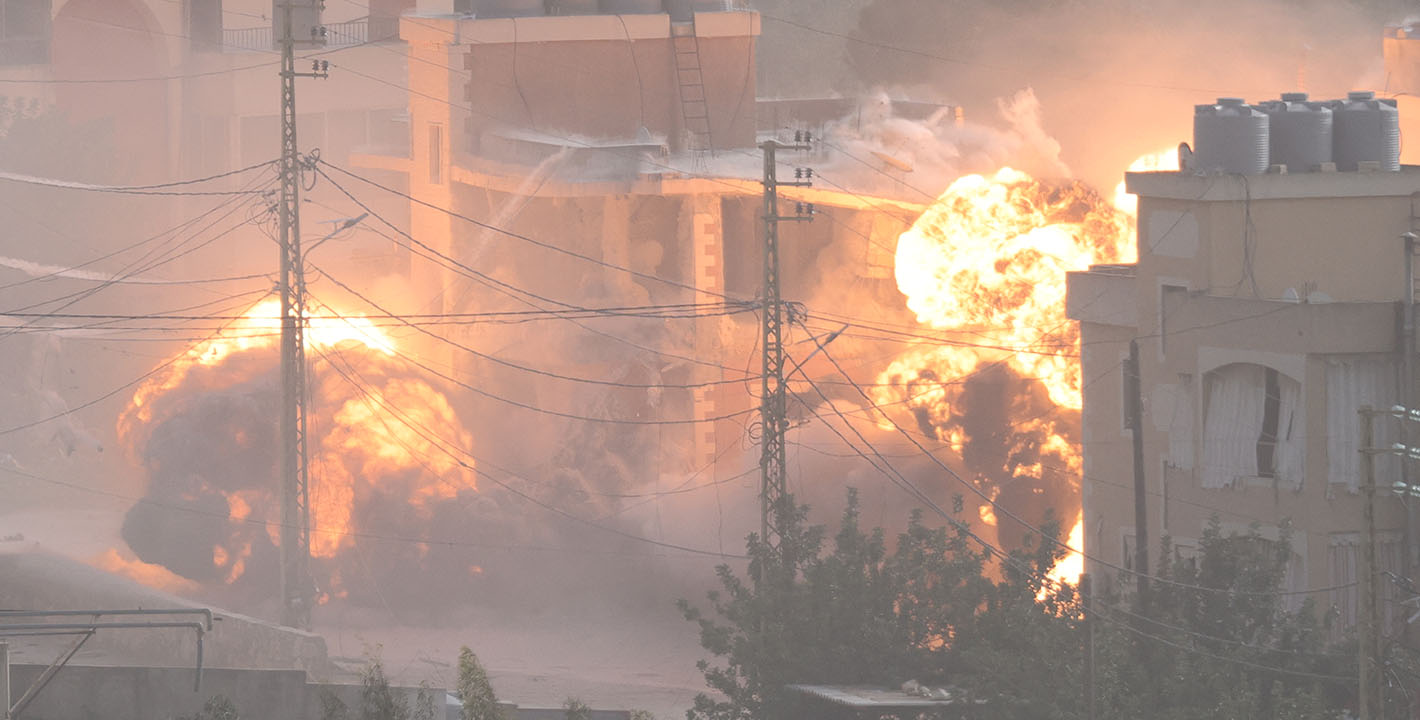
As Iran defends its interests in the region and its regime’s survival, it may push Hezbollah into the abyss.
Michael Young