

Commentary
Fabrice Pothier
{
  "authors": [
    "Fabrice Pothier"
  ],
  "type": "legacyinthemedia",
  "centerAffiliationAll": "",
  "centers": [
    "Carnegie Endowment for International Peace",
    "Carnegie Europe"
  ],
  "collections": [],
  "englishNewsletterAll": "",
  "nonEnglishNewsletterAll": "",
  "primaryCenter": "Carnegie Europe",
  "programAffiliation": "",
  "programs": [],
  "projects": [],
  "regions": [
    "Asia",
    "Europe",
    "South Asia",
    "Afghanistan",
    "Western Europe"
  ],
  "topics": [
    "Foreign Policy",
    "Economy",
    "Security"
  ]
}
Source: Getty
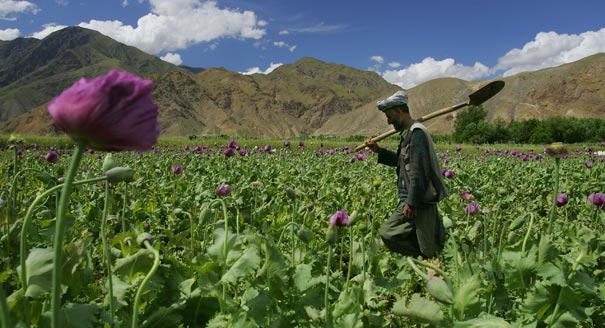
Fabrice Pothier explains the scale of the the opium problem in Afghanistan and argues for a decoupling of counter-insurgency and counter-narcotics operations.
Opium poses an existential threat to Afghanistan’s reconstruction: it feeds a systemic corruption and undermines governance, provides fresh funds to insurgents and criminal groups, and locks entire sections of the rural population in poverty. But to effectively tackle a problem of this scale, a counter-narcotics strategy requires functional institutions, relative government control, and a coherent reconstruction strategy. Today Afghanistan meets none of those conditions. Yet the opium problem is not going to go away without any sustained policy pressure. This is the close-to-impossible drugs policy dilemma that the international community and the Afghan people face.
This article originally appeared in LSE IDEAS Strategic Update. To read the article in full, please click here.

Former Director, Carnegie Europe
Pothier, director of Carnegie Europe, is a noted commentator on European policy in Afghanistan and Pakistan, transatlantic issues, and global drug policy.
Recent Work
Fabrice Pothier
Fabrice Pothier
Carnegie does not take institutional positions on public policy issues; the views represented herein are those of the author(s) and do not necessarily reflect the views of Carnegie, its staff, or its trustees.

By failing to address Palestinian representation, the current process is bound to lead to just another temporary arrangement.

Nathan J. Brown

The armed forces champion a form of capitalism that is generating revenue, but its reliance on rent faces diminishing returns, leaving the country with massive sunk costs and deferred returns, deepening dependency on external borrowing.

Yezid Sayigh

Just look at Iraq in 1991.

Marwan Muasher

A coalition of states is seeking to avert a U.S. attack, and Israel is in the forefront of their mind.

Michael Young

Baku may allow radical nationalists to publicly discuss “reunification” with Azeri Iranians, but the president and key officials prefer not to comment publicly on the protests in Iran.

Bashir Kitachaev