

Paper
Douglas H. Paal
{
  "authors": [
    "Douglas H. Paal"
  ],
  "type": "questionAnswer",
  "centerAffiliationAll": "dc",
  "centers": [
    "Carnegie Endowment for International Peace"
  ],
  "collections": [],
  "englishNewsletterAll": "asia",
  "nonEnglishNewsletterAll": "",
  "primaryCenter": "Carnegie Endowment for International Peace",
  "programAffiliation": "AP",
  "programs": [
    "Asia"
  ],
  "projects": [],
  "regions": [
    "East Asia",
    "Japan"
  ],
  "topics": [
    "Political Reform",
    "Foreign Policy"
  ]
}
Source: Getty
While the election victory of the Democratic Party of Japan could alter regional dynamics and the U.S.-Japan alliance, it is unlikely to cause significant changes to the bilateral relationship in the long-run.
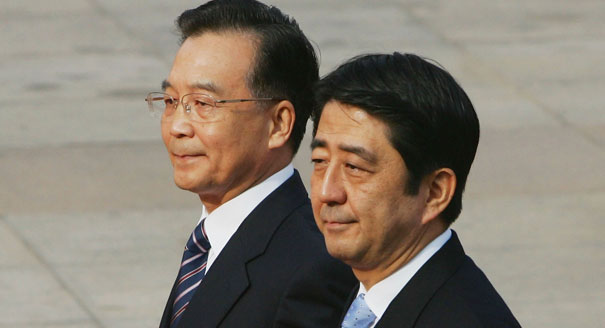
The dramatic election victory of the Democratic Party of Japan marks the end of a half-century of nearly uninterrupted rule by the Liberal Democratic Party and could alter regional dynamics and the U.S.-Japan alliance. Two weeks after the party won national elections, Yukio Hatoyama formally took power as prime minister on September 16. In a new video Q&A, Douglas Paal, Carnegie’s vice president for studies, explains the significance of the new government and its impact on Japan’s relations with the United States.
Paal says the elections signaled “the initiation of a two-party system in Japan.” The U.S. will need to work hard to accomplish what the two countries normally accomplish, but in the end it is unlikely that Tokyo’s foreign policies will significantly change and Washington’s strategies in Asia “will not be deeply affected by this.”

Distinguished Fellow, Asia Program
Paal previously served as vice chairman of JPMorgan Chase International and as unofficial U.S. representative to Taiwan as director of the American Institute in Taiwan.
Recent Work
Douglas H. Paal


Douglas H. Paal, Tong Zhao, Chen Qi, …
Carnegie does not take institutional positions on public policy issues; the views represented herein are those of the author(s) and do not necessarily reflect the views of Carnegie, its staff, or its trustees.

In an interview, Ian Lustick and Eli Clifton discuss their new book on why a prominent ally has so much influence in America.

Michael Young

By failing to address Palestinian representation, the current process is bound to lead to just another temporary arrangement.

Nathan J. Brown

Just look at Iraq in 1991.

Marwan Muasher

A coalition of states is seeking to avert a U.S. attack, and Israel is in the forefront of their mind.
Michael Young

Baku may allow radical nationalists to publicly discuss “reunification” with Azeri Iranians, but the president and key officials prefer not to comment publicly on the protests in Iran.

Bashir Kitachaev