

Paper
Adam Baczko, Gilles Dorronsoro, Arthur Quesnay
{
  "authors": [
    "Gilles Dorronsoro"
  ],
  "type": "legacyinthemedia",
  "centerAffiliationAll": "dc",
  "centers": [
    "Carnegie Endowment for International Peace",
    "Carnegie Russia Eurasia Center"
  ],
  "collections": [],
  "englishNewsletterAll": "ctw",
  "nonEnglishNewsletterAll": "",
  "primaryCenter": "Carnegie Endowment for International Peace",
  "programAffiliation": "SAP",
  "programs": [
    "South Asia"
  ],
  "projects": [],
  "regions": [
    "South Asia",
    "Afghanistan"
  ],
  "topics": [
    "Security",
    "Military",
    "Foreign Policy"
  ]
}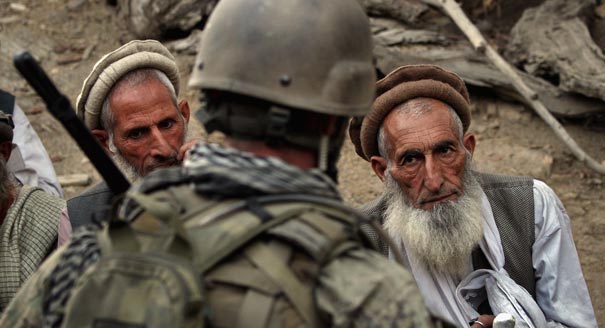
Source: Getty
In his long-awaited address, President Obama presented a series of objectives but no clear strategy. His plan will likely leave Afghanistan looking worse than it does now.
Source: The Washington Post

In his long-awaited address, the president presented a series of objectives but no clear strategy. Although al-Qaeda hasn't returned to Afghanistan in great numbers, he conceded that it maintains "safe havens along the border." Yes, on the other side, in Pakistan. Later, he articulated a goal to "disrupt, dismantle and defeat al-Qaeda in Afghanistan and Pakistan."
Even as Obama spoke of focusing U.S. war efforts and preparing for withdrawal, he made it sound as though the United States should be fighting in two countries instead of one, aggregating distinct enemies together and fighting them all.
The signs were evident even in a Freudian slip in a Tuesday White House press briefing, when a senior administration official said, "our goal is to prevent the return of the Taliban -- I'm sorry, of al-Qaeda -- and to prevent the Taliban from overthrowing the Afghan government."
The new troops will not stay in southern Afghanistan long enough for the Afghan army to establish control there and build functioning government institutions. And, indeed, the presence of foreign troops fighting on behalf of a corrupt government in Kabul only makes that government more unpopular, which helps the Taliban grow more entrenched, even as they take losses.
Obama's speech was just a speech. His point about arming Afghan militias and building security from the ground up is where the country is actually headed. But as the Taliban continue to gain on Kabul from several directions -- including the north, where new troops would make more of a difference -- Obama's plan will make it harder for the government to survive and likely that the United States will leave Afghanistan looking worse than it does now.
Former Nonresident Scholar, South Asia Program
Dorronsoro’s research focuses on security and political development in Afghanistan. He was a professor of political science at the Sorbonne in Paris and the Institute of Political Studies of Rennes.
Recent Work
Adam Baczko, Gilles Dorronsoro, Arthur Quesnay
Gilles Dorronsoro
Carnegie does not take institutional positions on public policy issues; the views represented herein are those of the author(s) and do not necessarily reflect the views of Carnegie, its staff, or its trustees.

By failing to address Palestinian representation, the current process is bound to lead to just another temporary arrangement.

Nathan J. Brown

The armed forces champion a form of capitalism that is generating revenue, but its reliance on rent faces diminishing returns, leaving the country with massive sunk costs and deferred returns, deepening dependency on external borrowing.

Yezid Sayigh

Just look at Iraq in 1991.

Marwan Muasher

A coalition of states is seeking to avert a U.S. attack, and Israel is in the forefront of their mind.

Michael Young

Baku may allow radical nationalists to publicly discuss “reunification” with Azeri Iranians, but the president and key officials prefer not to comment publicly on the protests in Iran.

Bashir Kitachaev