

Research
- +5
Alper Coşkun, Fatih Ceylan, Tacan İldem, …
{
  "authors": [
    "Sinan Ülgen"
  ],
  "type": "legacyinthemedia",
  "centerAffiliationAll": "",
  "centers": [
    "Carnegie Endowment for International Peace",
    "Carnegie Europe",
    "Malcolm H. Kerr Carnegie Middle East Center",
    "Carnegie Russia Eurasia Center"
  ],
  "collections": [
    "Turkey’s Transformation",
    "Brexit and UK Politics"
  ],
  "englishNewsletterAll": "",
  "nonEnglishNewsletterAll": "",
  "primaryCenter": "Carnegie Europe",
  "programAffiliation": "",
  "programs": [],
  "projects": [
    "Eurasia in Transition"
  ],
  "regions": [
    "Middle East",
    "Europe",
    "Türkiye",
    "Levant"
  ],
  "topics": [
    "Foreign Policy",
    "Political Reform"
  ]
}
Source: Getty
Turkey’s recent constitutional referendum passed with the support of little over half of the Turkish population, giving Prime Minister Erdogan an electoral victory and consolidating his political authority.
Source: The Financial Times

The outcome should therefore be seen as yet another electoral victory for Mr Erdogan, who spearheaded the “yes” campaign, consolidating his hold over the Turkish political scene. Analysts predict that the vote will now enable him to push his agenda of transforming Turkey’s parliamentary system into a US-style presidential system. The unfinished business of designing a new constitutional order will also top the agenda of the next elections – the AKP has now rekindled its hopes of winning a third term in the general elections slated for the first half of 2011.
The vote was far from united, however – western and Mediterranean Turkey, including all coastal regions, voted “no” while the rest of the country, with few exceptions, backed the amendments. The Kurdish Peace and Democracy party (BDP) also demonstrated its ability to control a large part of its constituency in south-east Turkey. The BDP had called for a boycott of the referendum, and in some areas turnout dropped as low as 7 per cent, while the national average was 77 per cent.
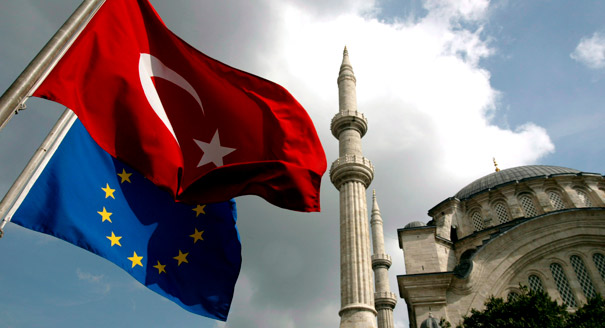
But perhaps the most significant change brought by the referendum campaign is the greater visibility brought to the objective of EU membership. The “yes” campaign made reference to the EU to convince Turkish public opinion of the package’s benefits. And today’s statement by the European Commission welcoming the adoption of the package underscored the growing interest of the EU in Turkey’s domestic dynamics.
In its role as a watchdog of democratic principles in candidate countries, the EU should now closely monitor the implementation of the reform package. Brussels should not shy away from commending the government for its democracy-friendly vision. But it should also be willing to criticise Ankara if, on the back of his electoral success, Mr Erdogan starts to steer the country, as the opposition fears, towards more authoritarian rule.

Senior Fellow, Carnegie Europe
Sinan Ülgen is a senior fellow at Carnegie Europe in Brussels, where his research focuses on Turkish foreign policy, transatlantic relations, international trade, economic security, and digital policy.
Recent Work

Alper Coşkun, Fatih Ceylan, Tacan İldem, …
Carnegie does not take institutional positions on public policy issues; the views represented herein are those of the author(s) and do not necessarily reflect the views of Carnegie, its staff, or its trustees.

The Zaidi government’s objective to collect weapons is constrained by regional conflict, but it can take certain measures at home.
Ali Al-Mawlawi

Huawei pushed hard to enter the Egyptian data centers market, until the Americans made a better offer.

Angie Omar

The accord represents a pivotal moment in the region to avert a security vacuum in the Gulf.


Azeema Cheema, Mohanad Hage Ali

In an interview, Jason Burke discusses his sweeping account of the “revolutionists” who so shaped the 1970s and early 1980s.

Michael Young

By failing to address Palestinian representation, the current process is bound to lead to just another temporary arrangement.

Nathan J. Brown