

Commentary
As the U.S. stumbles in its war with Iran, we are likely to see an acceleration of its disengagement from the region.
Michael Young
{
  "authors": [],
  "type": "pressRelease",
  "centerAffiliationAll": "dc",
  "centers": [
    "Carnegie Endowment for International Peace"
  ],
  "collections": [],
  "englishNewsletterAll": "menaTransitions",
  "nonEnglishNewsletterAll": "",
  "primaryCenter": "Carnegie Endowment for International Peace",
  "programAffiliation": "MEP",
  "programs": [
    "Middle East"
  ],
  "projects": [],
  "regions": [
    "Middle East"
  ],
  "topics": []
}
REQUIRED IMAGE
As Islamist movements in the Arab world become more politically active, they are struggling to pursue their moral and religious agenda while navigating daily political tussles.
WASHINGTON—As Islamist movements in the Arab world become more politically active, they are struggling to pursue their moral and religious agenda while navigating daily political tussles. In the face of repressive regimes, they have achieved some popular support, but enjoyed few—if any—concrete successes, write Nathan J. Brown and Amr Hamzawy in their new book Between Religion and Politics. As a result, Islamist movements in Egypt, Morocco, Yemen, Jordan, Palestine, and Kuwait have failed to satisfy their political and religious constituencies. In the coming years, Islamist movements are likely to scale back their political engagement.
Key Challenges for Islamists:
“We expect Islamists to compete in subsequent parliamentary elections,” the authors write. “But we also expect that they will place fewer of their hopes (and, in some countries, perhaps fewer of their energies) in a parliamentary strategy, instead contenting themselves for the foreseeable future to reap the limited gains that parliamentary activity offers without viewing it as the sole or even primary strategy for realizing their vision of Islamic reform.”
NOTES
Press Contact: Kendra Galante, 202-939-2289, pressoffice@ceip.org
Carnegie does not take institutional positions on public policy issues; the views represented herein are those of the author(s) and do not necessarily reflect the views of Carnegie, its staff, or its trustees.

As the U.S. stumbles in its war with Iran, we are likely to see an acceleration of its disengagement from the region.

Michael Young

The accord represents a pivotal moment in the region to avert a security vacuum in the Gulf.


Azeema Cheema, Mohanad Hage Ali

In an interview, Jason Burke discusses his sweeping account of the “revolutionists” who so shaped the 1970s and early 1980s.
Michael Young

Just look at Iraq in 1991.

Marwan Muasher
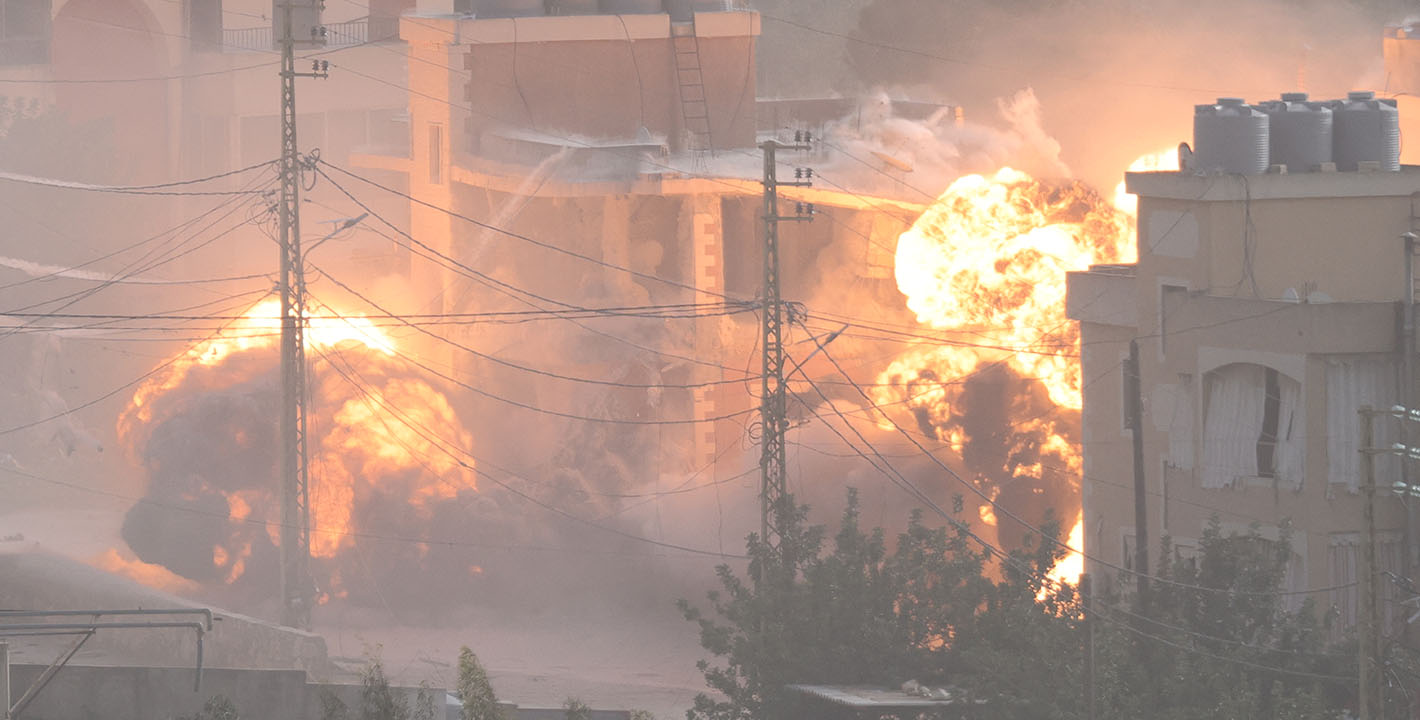
As Iran defends its interests in the region and its regime’s survival, it may push Hezbollah into the abyss.
Michael Young