

Article
Marina Ottaway, Omar Hossino
{
  "authors": [
    "Marina Ottaway"
  ],
  "type": "legacyinthemedia",
  "centerAffiliationAll": "dc",
  "centers": [
    "Carnegie Endowment for International Peace",
    "Malcolm H. Kerr Carnegie Middle East Center"
  ],
  "collections": [
    "Arab Awakening"
  ],
  "englishNewsletterAll": "menaTransitions",
  "nonEnglishNewsletterAll": "",
  "primaryCenter": "Carnegie Endowment for International Peace",
  "programAffiliation": "MEP",
  "programs": [
    "Middle East"
  ],
  "projects": [],
  "regions": [
    "North Africa",
    "Egypt",
    "Gulf",
    "Levant",
    "Maghreb"
  ],
  "topics": [
    "Political Reform",
    "Foreign Policy"
  ]
}
Source: Getty
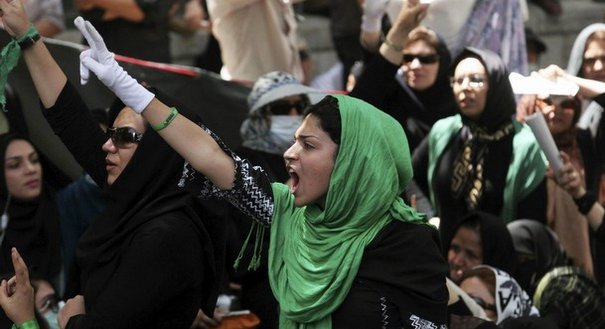
While Washington's reaction to the growing unrest in the Middle East will have almost no impact on what actually happens in the Arab world, it will affect the United States’ standing in the region.
Source: The Washington Post

But what the United States says affects its standing in the region. The Obama administration's attempt to strike a balance between not offending incumbent regimes and refurbishing its image by sending a message that Washington wants reforms is failing - messages are circulating on the Internet to the effect that the United States is once again supporting authoritarianism. Washington must get off the fence and choose whether it wants to support democracy, and thus be on the side of Arab publics enraged by decades of repression, or whether it wants to continue supporting regimes that have been repressive for decades in the name of ill-defined strategic interests. It cannot do both. The United States' long-term interests would be best served by supporting unequivocally the messy process of democratic change.
Former Senior Associate, Middle East Program
Before joining the Endowment, Ottaway carried out research in Africa and in the Middle East for many years and taught at the University of Addis Ababa, the University of Zambia, the American University in Cairo, and the University of the Witwatersrand in South Africa.
Recent Work
Marina Ottaway, Omar Hossino
Marina Ottaway
Carnegie does not take institutional positions on public policy issues; the views represented herein are those of the author(s) and do not necessarily reflect the views of Carnegie, its staff, or its trustees.

The Zaidi government’s objective to collect weapons is constrained by regional conflict, but it can take certain measures at home.
Ali Al-Mawlawi

Huawei pushed hard to enter the Egyptian data centers market, until the Americans made a better offer.

Angie Omar

Middle Eastern states should welcome an accelerated U.S. disengagement from their region.

Michael Young

The accord represents a pivotal moment in the region to avert a security vacuum in the Gulf.


Azeema Cheema, Mohanad Hage Ali

By failing to address Palestinian representation, the current process is bound to lead to just another temporary arrangement.

Nathan J. Brown