

Commentary
Maria Lipman
{
  "authors": [
    "Maria Lipman"
  ],
  "type": "legacyinthemedia",
  "centerAffiliationAll": "",
  "centers": [
    "Carnegie Endowment for International Peace",
    "Carnegie Russia Eurasia Center"
  ],
  "collections": [],
  "englishNewsletterAll": "",
  "nonEnglishNewsletterAll": "",
  "primaryCenter": "Carnegie Russia Eurasia Center",
  "programAffiliation": "",
  "programs": [],
  "projects": [],
  "regions": [
    "Caucasus",
    "Russia"
  ],
  "topics": [
    "Political Reform",
    "Domestic Politics"
  ]
}
Source: Getty
Elements of the Soviet political order remain deeply embedded in modern Russian politics, regardless of whether Lenin’s body remains in its mausoleum in Red Square.
Source: Washington Post

Lenin presided over one of the most ambitious sociopolitical transformations in history. To build a new society based on proletarian internationalism, he created a Bolshevik state; launched the gulag; and evicted or exterminated Russian nobility, property owners, clerics and other "old world" classes. After his death in 1924, his body was displayed in a downtown mausoleum where generations paid homage to the communist idol.
For decades worship of Lenin remained the pillar of Soviet ideology, but by the centennial of Lenin's birth, in 1970, the Soviet people were losing their faith. The anniversary was celebrated as a state event, but in private citizens were making jokes about the great leader. Officially, however, the cult was maintained; it was only at the height of Mikhail Gorbachev's perestroika that the tide of disclosures about the communist dictatorship finally washed away Lenin. Still, it was a political bombshell when it was suggested in the legislature in 1989 that Lenin's body be removed from the mausoleum. Communist hard-liners' fierce opposition prevented this.
Streets and squares in Russian cities may still bear Lenin's name or display statues in his honor, but his image has irreversibly faded. Younger generations are no longer fully aware of who Lenin was - not surprising, given that the ideas of the proletarian revolution are of no use to a Russia groping for its post-communist identity.
But while Lenin's image was declining in the past decade or so, Joseph Stalin's persona rose. Though he had pledged allegiance to Lenin, Stalin had no interest in the messianic idea of proletarian internationalism or the trappings of the "new world." After succeeding Lenin, Stalin brought back traditional elements of Russian statehood: imperial expansion and total submission of his subjects.
After the breakup of the Soviet Union, Russia briefly attempted competitive politics under Boris Yeltsin, but his successor, Vladimir Putin, has drawn on the Russian pattern of the strong state as the only force for order and achievement. He recentralized power at the top and relies on an inner circle with backgrounds in the security services. Though Putin's regime didn't glorify Stalin directly, Stalin's persona gained attraction as the embodiment of the Russian state at its most powerful, especially as the leader of the Soviet victory over Nazi Germany.
In recent years the Russian leadership has condemned some of Stalin's acts, particularly the 1940 Katyn massacre of more than 20,000 Poles, but this is a superficial campaign as long as elements of the Soviet political order - such as state dominance over law and security forces' impunity - remain in place.
The latest initiative to remove Lenin's body may be an attempt by Kremlin loyalists to actually appear to do something progressive while not shifting the fundamental state order nor greatly stirring public passions. Most Russians favor removing Lenin, but the anti-communist ardor of the late '80s and early '90s is gone. Increasingly, the mausoleum, housing a mummy in the heart of a bustling commercial metropolis, looks like a curiosity. Indeed, if the government were interested in stripping Lenin of his last vestiges of sainthood, it might capitalize on the mausoleum as a tourist attraction.
The recent initiative is also weakened by ambivalence. Those who called for desanctifying Lenin years ago had a political message: They sought to overthrow the communist idol. Today, Kremlin loyalists suggesting Lenin's removal are not eager to discuss the Soviet past or Lenin's legacy. In his statement last month, Medinsky called keeping Lenin's body in the mausoleum "paganism" and "necrophilia." But consider: Several of Stalin's henchmen are buried in Red Square next to the mausoleum. Stalin's grave is there, too. Fifty years ago Nikita Khrushchev had him removed from the mausoleum, where he used to lie at Lenin's side, but he did not dare eliminate Stalin's relics altogether.
Similarly, today's Russia hasn't fully broken from its Soviet relics. The Lubyanka building, for example, where people were shot and tortured under Stalin, remains the seat of the FSB, the Russian security police. The FSB is a privileged group that enjoys special perks, and its officers like to refer to themselves as "chekisty," the force that on Lenin's orders exterminated the "hostile classes." Even President Dmitry Medvedev concluded the most recent annual greetings to the FSB with a wish that they "augment the glorious traditions of their predecessors."
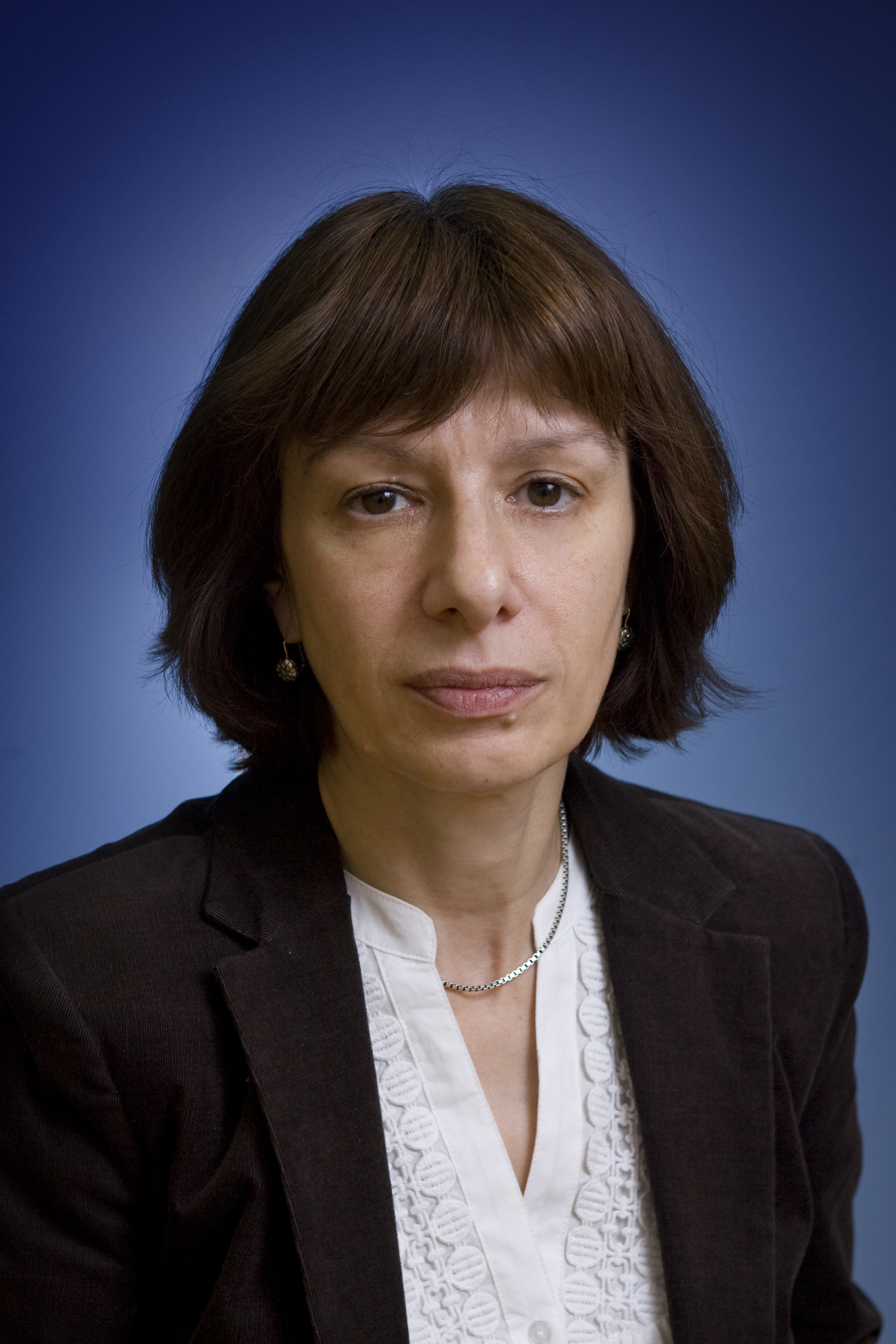
Former Scholar in Residence, Society and Regions Program, Editor in Chief, Pro et Contra, Moscow Center
Lipman was the editor in chief of the Pro et Contra journal, published by the Carnegie Moscow Center. She was also the expert of the Carnegie Moscow Center’s Society and Regions Program.
Recent Work
Maria Lipman
Maria Lipman
Carnegie does not take institutional positions on public policy issues; the views represented herein are those of the author(s) and do not necessarily reflect the views of Carnegie, its staff, or its trustees.
In an interview, Sergei Melkonian discusses Armenia’s and Azerbaijan’s careful balancing act among the United States, Israel, and Iran.

Armenak Tokmajyan
The country’s leadership is increasingly uneasy about multiple challenges from the Levant to the South Caucasus.
Armenak Tokmajyan
In an interview, Daniela Richterova speaks about her book on Czechoslovakia’s Cold War ties to Palestinian groups and others.

Michael Young
Municipal elections in the city may be a harbinger of developments in the Sunni community.

Issam Kayssi
The downfall of the Assad regime represented a setback, but Russia’s primary focus remains Ukraine.
Sergei Melkonian