

Commentary
Thomas de Waal
{
  "authors": [
    "Thomas de Waal"
  ],
  "type": "legacyinthemedia",
  "centerAffiliationAll": "dc",
  "centers": [
    "Carnegie Endowment for International Peace",
    "Carnegie Europe",
    "Carnegie Russia Eurasia Center"
  ],
  "collections": [],
  "englishNewsletterAll": "ctw",
  "nonEnglishNewsletterAll": "",
  "primaryCenter": "Carnegie Europe",
  "programAffiliation": "russia",
  "programs": [
    "Russia and Eurasia"
  ],
  "projects": [],
  "regions": [
    "Caucasus",
    "Georgia"
  ],
  "topics": []
}
Source: Getty
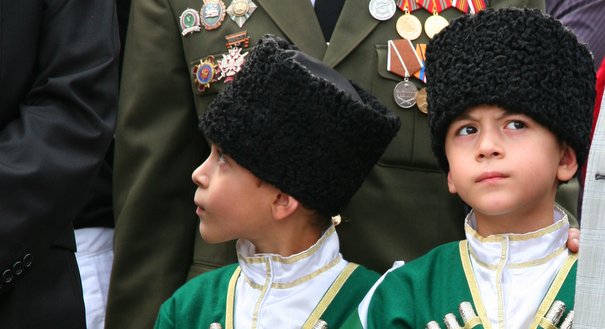
As the Georgian parliament contemplates passing a resolution declaring the 1864 Russian deportations of the Circassians to be genocide, it risks setting a precedent for the Abkhaz, an ethnic group also deported by the Russian Empire in 1867.
Source: Abkhaz World

Two acts of mass deportation define Abkhazia’s troubled history. The first is the mass exile of Abkhaz in 1867 and 1877 by the Russian imperial army as a result of two insurrections. Tens of thousands of Abkhaz were uprooted them from their homeland and exiled to the Ottoman empire. Those that stayed came to be one ethnic group amongst many and a second-class ethnic group until 1907. The second act is the mass flight and expulsion of the ethnic Georgian population of Abkhazia in 1993 at the end of the modern 14-month war. This at a stroke sent more than 200,000 Georgians from their homeland and made the victors in the war, the Abkhaz, if not a sheer majority, then the undisputed masters of Abkhazia again.
I know of no better account of the events of 1866-67 than that of William Palgrave, the famous English diplomat and Arabist, who briefly served as British consul in Sukhum-Kale around the time of the 1866 uprising.
Palgrave compares the crushing of the revolt to that of the suppression of the Polish rebellion thirty years before:
Here in Abkhasia the hereditary ruler of the country had, after life long services, in time of profound tranquility, with nothing proved or even distinctly charged against him, been suddenly dragged into exile and premature death; his family, those of all the Abkhasian nobility, had been deprived of their rights, and threatened with the deprivation of their property; ancestral customs, law, religion, national existence,--for even Abkhasians lay claim to all these,--had been brought to the verge of Russian absorption into not-being; and all the while [Russian governor-general Colonel] Cognard with his friends could not imagine the existence of any Abkhasian discontent that would not at once be appeased be changed into enthusiastic, into Pan-slavistic loyalty, by the appearance of that ‘deus ex machina,’ a Russian Governor-General. Vide Warsaw passim. [Essays on Eastern Questions, 264.]
Writing in 1867, after Abkhazia had been depopulated, Palgrave reports:
A few more months have passed, and that triumph is already complete After entire submission, and granted pardon, the remnant of the old Abkhasian nation, first their chiefs and then the people, have at last in time of full peace and quiet been driven from the mountains and coast where Greek, Roman, Persian, and Turkish domination had left them unmolested for more than two thousand years, to seek under the more tolerant rule of the Ottoman Sultan a freedom which Russia often claims without her own limits, always denies within them The Meidan of So’ouk Soo is now empty. Russians and Abkhasians, Shervashijis and Cossacks, native and foreigner have alike disappeared, and nothing remains but the fast crumbling memorials of a sad history of national folly rewarded by oppression, oppression by violence, violence by desolation. [Page 270]
The deportations were a Russian imperial operation, aimed as much against the Ottomans as the local population. Some Georgian nobles, serving the tsarist government, took part in it and the deportations were a prelude to the ethnic Georgian immigration into Abkhazia, which gave Georgians a demographic preponderance there in the 20th century. But it would be a distortion of history to see this, as some Abkhaz may be tempted to, as a “Georgian plan.” Palgrave writes eloquently of how non-Russian people in the Caucasus served the imperial state for a variety of reasons and how their loyalty could change, when circumstances changed:
Many of the ‘princes’ of the land—elsewhere chiefs or sheykhs at most—have, on this motive, with the additional hope of a decoration, assumed the badges of Russian military service, wherein they easily obtain subordinate posts; and there aid as spies or as tools in disarming the constantly recurring discontent of their countrymen, till some day or other their own personal discontent breaks out, and then the tool, no longer serviceable, is broken and thrown aside, to be replaced where wanted, by another. [Page 252]
The Abkhaz did not have the same options at this historical juncture as the Georgians did. The deportations are perhaps the darkest page in Abkhaz history. And so, given Georgia’s very complex history in Abkhazia, it seems extraordinarily insensitive for the parliament of Georgia to be contemplating a resolution declaring the 1864 deportations of the Circassians to be genocide. Abkhaz and Circassians are ethnically and linguistically related and the 1867 deportations were basically a continuation of what the Russian imperial government had done in Circassia just to the north only three years before.
As Circassians, supported by many Abkhaz, mark the anniversary of their holocaust on May 21, others whose ancestors were involved in those fateful events should tread very carefully.

Senior Fellow, Carnegie Europe
Thomas de Waal is a senior fellow at Carnegie Europe, specializing in Eastern Europe and the Caucasus.
Recent Work
Thomas de Waal
Thomas de Waal
In an interview, Sergei Melkonian discusses Armenia’s and Azerbaijan’s careful balancing act among the United States, Israel, and Iran.

Armenak Tokmajyan
The country’s leadership is increasingly uneasy about multiple challenges from the Levant to the South Caucasus.
Armenak Tokmajyan
As the influence of the Assad regime and Russia declines, Iran is emerging as the main actor, which could provoke a major Israeli intervention.
Armenak Tokmajyan
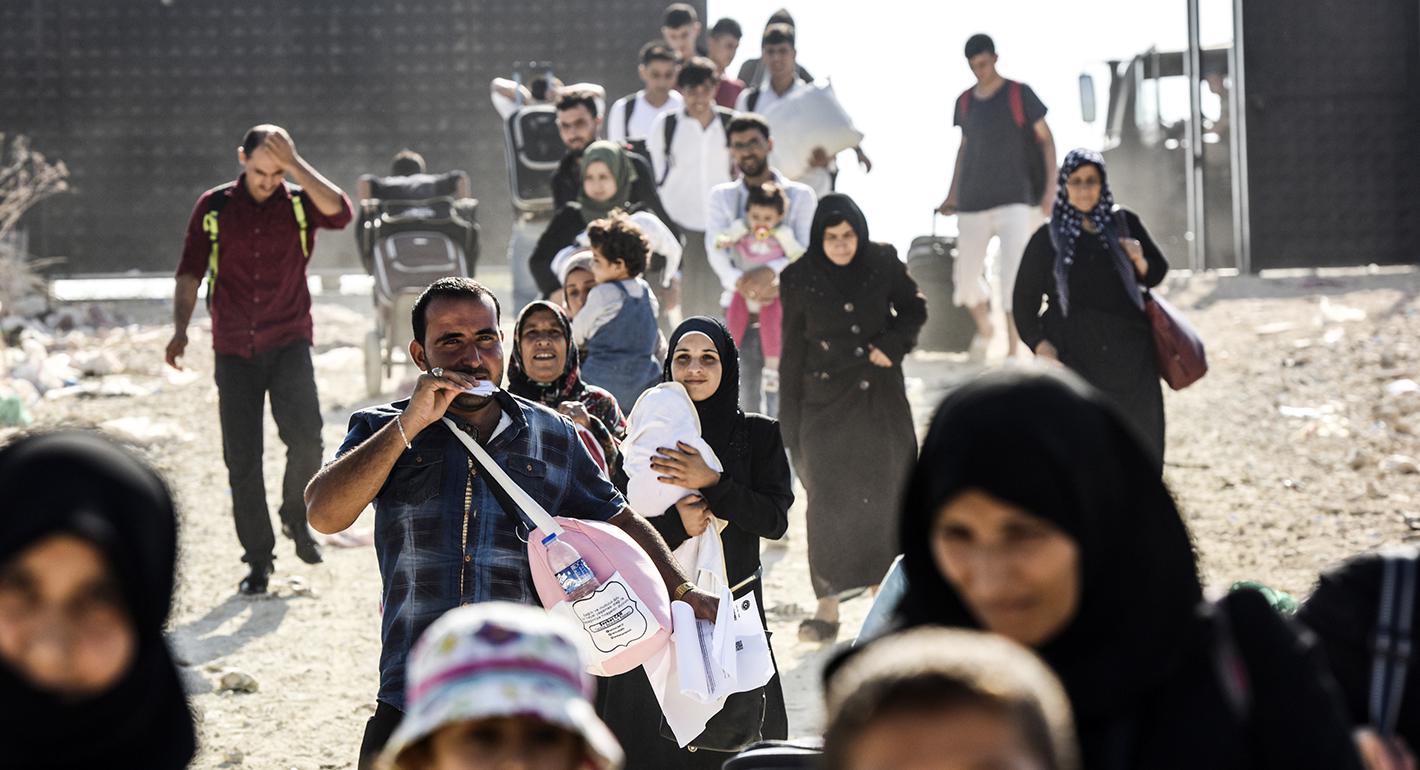
Syria, Azerbaijan, and some officials in Israel have conceptualized forced displacement as a mode of conflict management. That has consequences for the Western peacebuilding model.
Armenak Tokmajyan
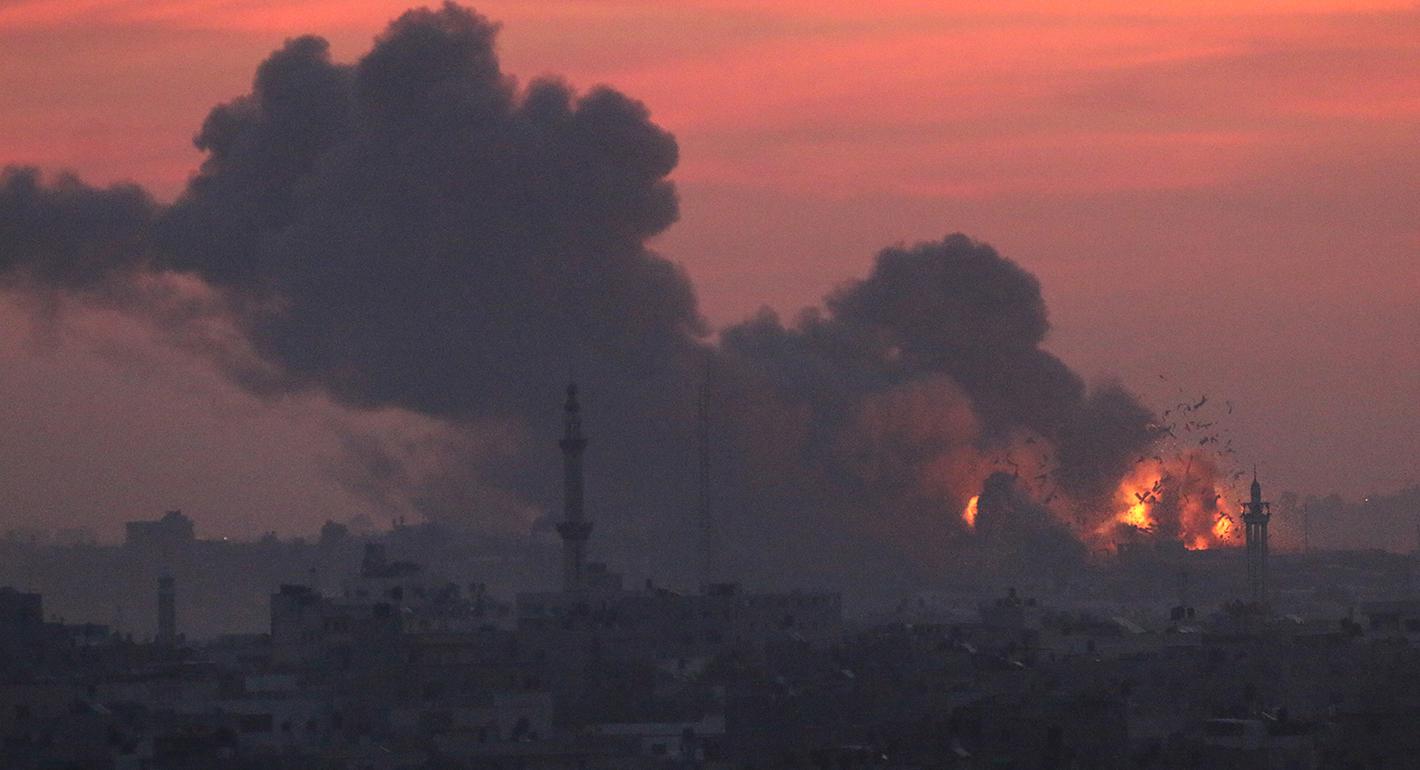
Scholars from Carnegie’s global network comment on how the ongoing conflict between Israelis and Palestinians is affecting their areas of interest, and what the implications of this may be.



Maha Yahya, Rosa Balfour, Judy Dempsey, …