

Commentary
As the U.S. stumbles in its war with Iran, we are likely to see an acceleration of its disengagement from the region.
Michael Young
{
  "authors": [],
  "type": "pressRelease",
  "centerAffiliationAll": "dc",
  "centers": [
    "Carnegie Endowment for International Peace"
  ],
  "collections": [
    "Arab Awakening"
  ],
  "englishNewsletterAll": "menaTransitions",
  "nonEnglishNewsletterAll": "",
  "primaryCenter": "Carnegie Endowment for International Peace",
  "programAffiliation": "MEP",
  "programs": [
    "Middle East"
  ],
  "projects": [],
  "regions": [
    "Middle East",
    "Jordan"
  ],
  "topics": [
    "Political Reform"
  ]
}
REQUIRED IMAGE
Jordan’s resilient class of political elites have thwarted efforts to open up the political system in the last ten years, writes Marwan Muasher in a new paper.
WASHINGTON—Jordan’s resilient class of political elites have thwarted efforts to open up the political system in the last ten years, writes Marwan Muasher in a new paper. Muasher, the former deputy prime minister of Jordan who led the effort to produce a ten-year plan for political, economic, and social reform, explains how reform efforts have largely stalled despite numerous attempts.
The answer to why Jordan’s reform efforts continue to falter is clear: in order to protect itself, the regime created a loyal political and bureaucratic group, but this group is now entrenched and has no qualms about turning against its creator when its interests—as opposed to those of the country—are threatened. This phenomenon is not unique to Jordan, but can be found throughout most of the Arab world.
Findings:
The rentier systems “have already proven difficult to maintain and, in an Arab world that is increasingly demanding better governance and greater accountability, such ossified systems will come to pose significant threats to stability, particularly in resource-poor countries such as Jordan.”
NOTES
Click here to read the full paper
Marwan Muasher is vice president for studies at the Carnegie Endowment, where he oversees the Endowment’s research in Washington and Beirut on the Middle East. Muasher served as foreign minister (2002–2004) and deputy prime minister (2004–2005) of Jordan, and he played a central role in developing the Arab Peace Initiative and the Middle East Road Map. His career has spanned the areas of diplomacy, development, civil society, and communications.
The Carnegie Middle East Program combines in-depth local knowledge with incisive comparative analysis to examine economic, socio-political, and strategic interests in the Arab world. Through detailed country studies and the exploration of key cross-cutting themes, the Carnegie Middle East Program, in coordination with the Carnegie Middle East Center, provides analysis and recommendations in both English and Arabic that are deeply informed by knowledge and views from the region. The Carnegie Middle East Program has special expertise in political reform and Islamist participation in pluralistic politics throughout the region. The program produces the Arab Reform Bulletin, a monthly analysis of political reform in the Middle East.
Press Contact: Karly Schledwitz, +1 202 939 2233, pressoffice@ceip.org
Carnegie does not take institutional positions on public policy issues; the views represented herein are those of the author(s) and do not necessarily reflect the views of Carnegie, its staff, or its trustees.

As the U.S. stumbles in its war with Iran, we are likely to see an acceleration of its disengagement from the region.

Michael Young

Huawei pushed hard to enter the Egyptian data centers market, until the Americans made a better offer.

Angie Omar

The accord represents a pivotal moment in the region to avert a security vacuum in the Gulf.


Azeema Cheema, Mohanad Hage Ali

In an interview, Jason Burke discusses his sweeping account of the “revolutionists” who so shaped the 1970s and early 1980s.
Michael Young
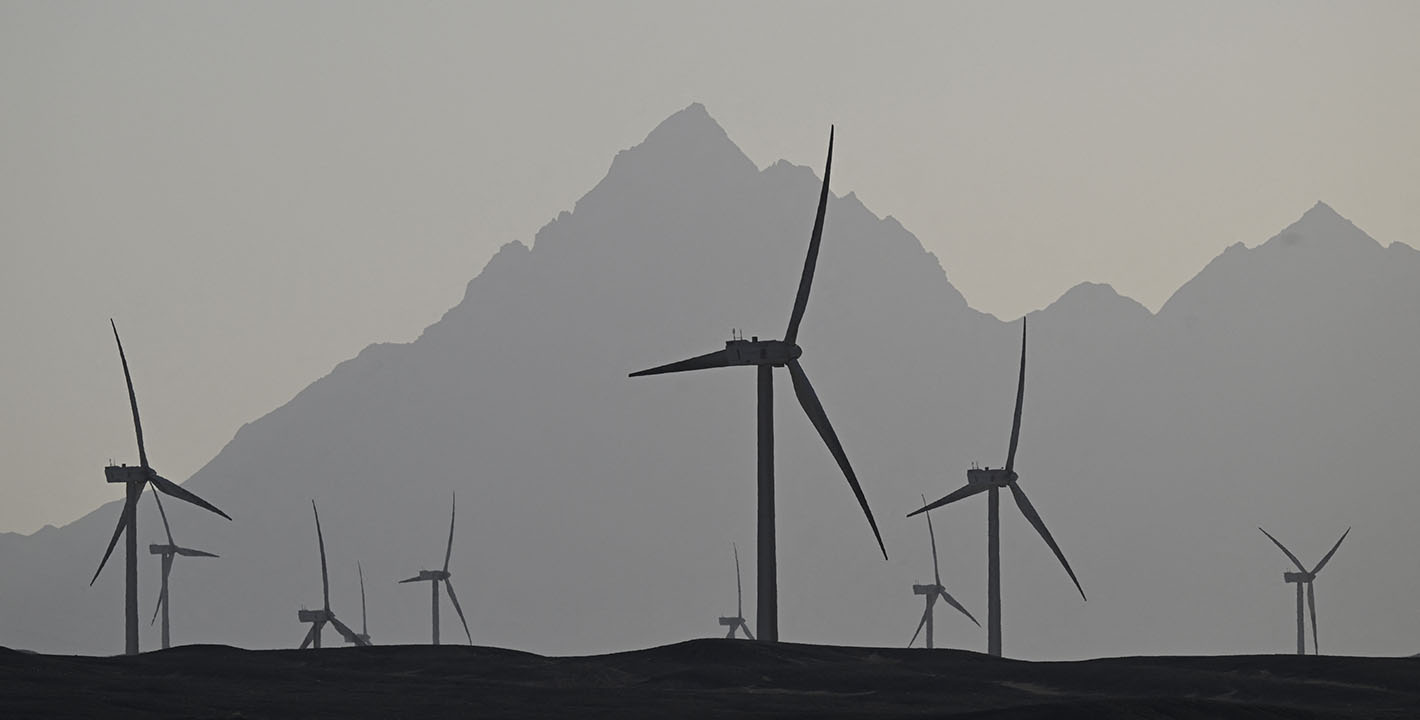
There is a disturbing structural parallel between the old global energy economy and the new green transition.
Angie Omar