• Research
  • Diwan
  • About
  • Experts
Carnegie Middle East logoCarnegie lettermark logo
PalestineSyria
{
  "authors": [],
  "type": "other",
  "centerAffiliationAll": "dc",
  "centers": [
    "Carnegie Endowment for International Peace"
  ],
  "collections": [
    "Arab Awakening"
  ],
  "englishNewsletterAll": "menaTransitions",
  "nonEnglishNewsletterAll": "",
  "primaryCenter": "Carnegie Endowment for International Peace",
  "programAffiliation": "MEP",
  "programs": [
    "Middle East"
  ],
  "projects": [],
  "regions": [
    "North Africa",
    "Egypt"
  ],
  "topics": [
    "Political Reform",
    "Democracy",
    "Foreign Policy"
  ]
}
Source: Getty

Other

U.S. Should Give Meaningful and Constructive Support to Egypt’s Democratic Transition: A Statement by the Working Group on Egypt

The United States must renew its support for the democratic principles that guided Egypt's revolution to ensure that Egypt realizes its potential as a free and independent regional leader.

Link Copied
Published on Jun 7, 2011

Source: June 7

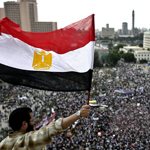
Egypt’s popular uprising succeeded in its goal of dismantling Hosni Mubarak’s authoritarian regime, but the country’s democratic transition has only just begun. It is imperative that the United States renew its support for the democratic principles that guided the revolution, to ensure that Egypt realizes its potential as a free and independent regional leader.

President Obama’s call for $1 billion in debt relief, plus loan guarantees and the creation of an enterprise fund to stimulate investment, was a positive gesture signaling the administration’s commitment to the political transition underway in Egypt.

  • Congress must now support this vital assistance package in order to provide greater opportunity for all Egyptians and ensure that an economic downturn does not jeopardize democratic reforms.

  • U.S. assistance will also set an example for other donors and creditors to Egypt.

  • Debt relief and other assistance, as well as steps toward free trade, should be structured to provide incentives for and reward passage of key milestones such as free and fair parliamentary and presidential elections, as well as the writing of a new constitution that enshrines human rights and civil liberties, including the right to assembly, freedom of expression, religious freedom, and equal opportunity for women.

As Egypt’s military leadership prepares to transfer authority to an elected civilian government:

  • The United States should support free, fair, and monitored elections that extend participation to all peaceful political forces committed to the rights and freedoms defined above.

  • While various candidates and political parties in Egypt may espouse positions troubling to Americans in the course of the election campaign, the United States should determine the future of its relationship with Egypt based on how a new government formed on the basis of these elections comports itself on critical issues, from respecting human rights and civil liberties to adhering to international commitments.

The Working Group on Egypt is a nonpartisan initiative bringing substantial expertise on Egyptian politics and political reform, and aimed at ensuring that Egypt’s elections are free and fair and open to opposition candidates.

Political ReformDemocracyForeign PolicyNorth AfricaEgypt

Carnegie does not take institutional positions on public policy issues; the views represented herein are those of the author(s) and do not necessarily reflect the views of Carnegie, its staff, or its trustees.

More Work from Malcolm H. Kerr Carnegie Middle East Center

  • Commentary
    Diwan
    When Football Is More Than Football

    The recent African Cup of Nations tournament in Morocco touched on issues that largely transcended the sport.

      Issam Kayssi, Yasmine Zarhloule

  • Commentary
    Diwan
    Iran and the New Geopolitical Moment

    A coalition of states is seeking to avert a U.S. attack, and Israel is in the forefront of their mind.

      Michael Young

  • Commentary
    Carnegie Politika
    Baku Proceeds With Caution as Ethnic Azeris Join Protests in Neighboring Iran

    Baku may allow radical nationalists to publicly discuss “reunification” with Azeri Iranians, but the president and key officials prefer not to comment publicly on the protests in Iran.

      Bashir Kitachaev

  • Commentary
    Diwan
    Iran’s Woes Aren’t Only Domestic

    The country’s leadership is increasingly uneasy about multiple challenges from the Levant to the South Caucasus.

      Armenak Tokmajyan

  • A municipal employee raises the US flag among those of other nations in Sharm el-Sheikh, as the Egyptian Red Sea resort town gets ready to receive international leaders, following a Gaza ceasefire agreement, on October 11, 2025.
    Article
    The Tragedy of Middle Eastern Politics

    The countries of the region have engaged in sustained competition that has tested their capacities and limitations, while resisting domination by rivals. Can a more stable order emerge from this maelstrom, and what would it require?

      • Mohamed Ali Adraoui

      Hamza Meddeb, Mohamed Ali Adraoui

Get more news and analysis from
Malcolm H. Kerr Carnegie Middle East Center
Carnegie Middle East logo, white
  • Research
  • Diwan
  • About
  • Experts
  • Projects
  • Events
  • Contact
  • Careers
  • Privacy
  • For Media
Get more news and analysis from
Malcolm H. Kerr Carnegie Middle East Center
© 2026 Carnegie Endowment for International Peace. All rights reserved.