• Research
  • Diwan
  • About
  • Experts
Carnegie Middle East logoCarnegie lettermark logo
LebanonIran
{
  "authors": [
    "George Perkovich"
  ],
  "type": "other",
  "centerAffiliationAll": "dc",
  "centers": [
    "Carnegie Endowment for International Peace"
  ],
  "collections": [],
  "englishNewsletterAll": "ctw",
  "nonEnglishNewsletterAll": "",
  "primaryCenter": "Carnegie Endowment for International Peace",
  "programAffiliation": "NPP",
  "programs": [
    "Nuclear Policy",
    "South Asia"
  ],
  "projects": [],
  "regions": [
    "South Asia",
    "Pakistan"
  ],
  "topics": [
    "Security",
    "Foreign Policy",
    "Nuclear Policy"
  ]
}
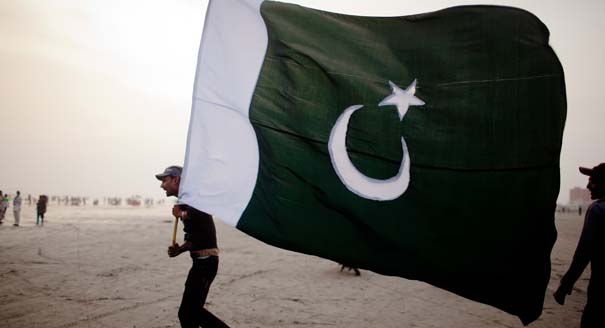
Source: Getty

Other

Stop Enabling Pakistan's Dangerous Dysfunction

Because the U.S. withdrawal from Afghanistan means that Washington will be less dependent on Pakistani supply lines, it presents a rare opportunity to reconsider American policies and practices in Pakistan.

Link Copied
By George Perkovich
Published on Sep 6, 2011
As the United States begins to look to the end of its heavy fighting role in Afghanistan, it needs to confront the more important question of Pakistan’s future. The United States has been a major player there for sixty years; if Pakistan is dangerously dysfunctional, Washington helped enable it to get this way. Because withdrawal from Afghanistan means that the United States will be less dependent on Pakistani supply lines into that country, this is a rare opportunity to reconsider and dramatically revise American policies and practices in this strategically important country of almost 200 million.
 
The United States has frequently cited its interests in Pakistan: securing Pakistan’s growing nuclear arsenal; preventing war between it and India; counterterrorism; inducing Pakistan’s cooperation in stabilizing Afghanistan; and fostering development and democratization in what will soon be the world’s most populous Muslim-majority state. But overwhelmingly, these interests all boil down to one: the security of Pakistanis. If Pakistanis are more justly governed, more educated, more employed, and therefore more able to define and pursue a constructive national identity and interest, they will expunge terrorists to secure themselves. The United States will be better off as a result. Getting from here to there may be impossible, but it certainly will not happen if the United States continues to treat Pakistan as it has until now: as the means to pursue U.S. security interests outside the country.
 
For decades that posture has had the unintended but undeniable effect of empowering Pakistan’s grossly oversized and hyperactive military and intelligence services at the expense of the country’s civil society and progress toward effective governance. Washington’s collusion with the Pakistani security establishment has amounted to enablement—the indulgence and augmentation of a friend’s self-destructive outlook and actions. To stop doing harm, the United States would first have to give up the illusion that it can change the Pakistani military’s mindset, and stop offering money to do so. It would have to pause and then redesign a large aid program so hamstrung by anti-corruption and security measures that it antagonizes recipients and seems designed to fail. It would mean removing barriers to Pakistani imports into the United States, and, not least, undertaking determined efforts to correct the impression that Pakistani interests and lives mean less to the United States than Indian interests and lives.

About the Author

George Perkovich

Japan Chair for a World Without Nuclear Weapons, Senior Fellow

George Perkovich is the Japan Chair for a World Without Nuclear Weapons and a senior fellow in the Carnegie Endowment for International Peace’s Nuclear Policy Program. He works primarily on nuclear deterrence, nonproliferation, and disarmament issues, and is leading a study on nuclear signaling in the 21st century.

    Recent Work

  • Paper
    How to Assess Nuclear ‘Threats’ in the Twenty-First Century

      George Perkovich

  • Commentary
    “A House of Dynamite” Shows Why No Leader Should Have a Nuclear Trigger

      George Perkovich

George Perkovich
Japan Chair for a World Without Nuclear Weapons, Senior Fellow
George Perkovich
SecurityForeign PolicyNuclear PolicySouth AsiaPakistan

Carnegie does not take institutional positions on public policy issues; the views represented herein are those of the author(s) and do not necessarily reflect the views of Carnegie, its staff, or its trustees.

More Work from Malcolm H. Kerr Carnegie Middle East Center

  • people watching smoke rising at sunrise from rooftops
    Commentary
    Emissary
    Bombing Campaigns Do Not Bring About Democracy. Nor Does Regime Change Without a Plan.

    Just look at Iraq in 1991.

      Marwan Muasher

  • Commentary
    Diwan
    Iran and the New Geopolitical Moment

    A coalition of states is seeking to avert a U.S. attack, and Israel is in the forefront of their mind.

      Michael Young

  • Commentary
    Carnegie Politika
    Baku Proceeds With Caution as Ethnic Azeris Join Protests in Neighboring Iran

    Baku may allow radical nationalists to publicly discuss “reunification” with Azeri Iranians, but the president and key officials prefer not to comment publicly on the protests in Iran.

      Bashir Kitachaev

  • Commentary
    Diwan
    Iran’s Woes Aren’t Only Domestic

    The country’s leadership is increasingly uneasy about multiple challenges from the Levant to the South Caucasus.

      Armenak Tokmajyan

  • A municipal employee raises the US flag among those of other nations in Sharm el-Sheikh, as the Egyptian Red Sea resort town gets ready to receive international leaders, following a Gaza ceasefire agreement, on October 11, 2025.
    Article
    The Tragedy of Middle Eastern Politics

    The countries of the region have engaged in sustained competition that has tested their capacities and limitations, while resisting domination by rivals. Can a more stable order emerge from this maelstrom, and what would it require?

      • Mohamed Ali Adraoui

      Hamza Meddeb, Mohamed Ali Adraoui

Get more news and analysis from
Malcolm H. Kerr Carnegie Middle East Center
Carnegie Middle East logo, white
  • Research
  • Diwan
  • About
  • Experts
  • Projects
  • Events
  • Contact
  • Careers
  • Privacy
  • For Media
Get more news and analysis from
Malcolm H. Kerr Carnegie Middle East Center
© 2026 Carnegie Endowment for International Peace. All rights reserved.