

Paper
Paul Salem
{
  "authors": [
    "Paul Salem"
  ],
  "type": "legacyinthemedia",
  "centerAffiliationAll": "",
  "centers": [
    "Carnegie Endowment for International Peace",
    "Malcolm H. Kerr Carnegie Middle East Center"
  ],
  "collections": [
    "Arab Awakening"
  ],
  "englishNewsletterAll": "",
  "nonEnglishNewsletterAll": "",
  "primaryCenter": "Malcolm H. Kerr Carnegie Middle East Center",
  "programAffiliation": "",
  "programs": [],
  "projects": [],
  "regions": [
    "North Africa",
    "Sudan"
  ],
  "topics": [
    "Political Reform",
    "Security"
  ]
}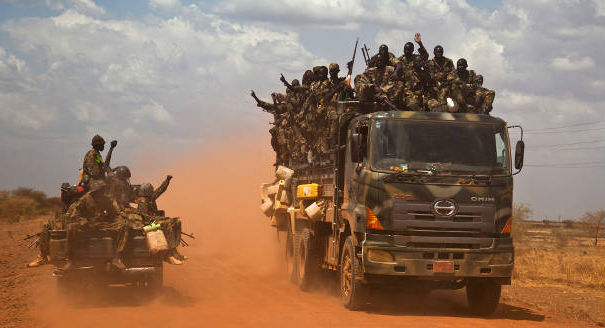
Source: Getty
As Sudan drifts again into war, the regional and international community must act quickly to save the lives of hundreds of thousands that are at risk. And political change in Khartoum might have to be part and parcel of a long-term solution.
Source: Al-Hayat

The regional and international community was aware that this split would be difficult and would require a great deal of international diplomacy to achieve smoothly. The two countries would need to agree on disputed borders, sharing oil resources, apportioning the national debt, and the status of citizens in each other’s territories. And this would have to be achieved between two leaderships that had waged war against each other for years, and with an authoritarian government in Khartoum that had been at war with many parts of its own population for decades and whose president was wanted for war crimes.
Needless to say, the dramatic events of the Arab Spring overtook the Arab world and overwhelmed observers and decisionmakers both in the region and further afield. What was supposed to be the main focus of regional attention in 2011 ended up almost completely ignored.Predictably, the two countries, which formally split in July 2011, have drifted rapidly into conflict. Disputes over borders have led to armed clashes in the South Kordofan and Blue Nile regions. Differences over oil resources have led to a near-total collapse of oil production: South Sudan suspended its 350,000 barrels a day production in January, protesting against the exorbitant fees that the north was charging for transit of that oil to the Red Sea. And southern forces’ recent attack on the disputed oil town of Heglig in South Kordofan took out half of the north’s remaining 150,000 barrels per day production. A country that until only recently exported 500,000 barrels a day is now exporting around 50,000.
Meanwhile, food prices are soaring, and there are up to half a million South Sudanese in the north who have been declared illegal. Thousands of them have been stranded in northern airports—denied legal status in Sudan but barred from boarding planes to the south.
The seizure of Heglig set the fuse. The Sudanese parliament declared South Sudan an enemy state, and the army has been called up to take back the city by force. The two countries are heading rapidly toward all-out war.
The coming war will be more devastating than previous conflicts because this is no longer a war between a regular army and guerrilla groups. The south has invested in tanks, artillery, helicopters, and antitank weapons, and has the advantage of proximity and familiarity with the terrain. The north has tanks, attack helicopters, and MIG and Antonov warplanes.
Unless it is stopped, the coming war will further devastate the Sudan—once Africa’s and the Arab world’s largest and potentially most prosperous country. Indeed, the new conflict, and the economic collapse that is accompanying it, could turn the Sudan region into another Somalia: two failed states vying for illusive power and armed militias setting up their own principalities, fueled by ethnic and tribal identities and struggling for crippled oil resources.
The Arab League, the UN, and world powers have all issued condemnations of the recent escalation and called for an immediate cessation to hostilities. But unless focused and direct high-level attention is given to this crisis, war will generate renewed human tragedy on a massive scale.
The United States, the European Union, Russia, and China, working with the Arab League and the African Union, should put coordinated and intense pressure on Khartoum and Juba to immediately cease all military escalation. Serious international mediation should then be given a chance—mediation that would include making quick progress on border delineation, renegotiating oil-resource-sharing agreements, and resolving the situation of displaced populations. Simultaneously, the UN should insist on redeploying its peacekeeping troops along the disputed border area.
The Sudan has proven to be a model of exactly how not to manage ethnic and religious diversity. It has been at war with itself since its independence in the 1950s, and government conflicts with its own population in the west, south, and east have led to the deaths of millions. The government in Khartoum is among the worst models of pre–Arab Spring governance, with an authoritarian military ruler clinging to power through a combination of oil revenues and corruption, and waving the banners of religion and ethnic nationalism.
Had only the Arab Spring moved from Tunisia through Cairo to Khartoum to bring democracy and better government to this long-troubled land. Indeed, some are hoping, perhaps in vain, that the embarrassing secession of South Sudan, and the current economic and political crisis that has been created by the mismanagement of relations with the south, might push the people of Sudan to rise up against their government.
Surely state violence and abuse in Sudan is equal or worse than other cases in the Arab world. And if the Arab and international community has pressed President Ali Abdullah Saleh of Yemen to leave office, and is trying to get President Bashar al-Assad of Syria to do the same, surely President Omar al-Bashir should be pushed to leave as well. Instead of welcoming Bashir to the last Arab summit in Baghdad, the Arab League should have made it clear that his rule is no longer considered legitimate and that Khartoum should come up with a more legitimate alternative.
As the Sudan drifts again into war, the regional and international community must act quickly and decisively to save the lives of hundreds of thousands that are at risk. And political change in Khartoum might have to be part and parcel of a long-term solution.
This article was originally published in al-Hayat.
Senior Fellow at the Middle East Institute
Paul Salem is a senior fellow at the Middle East Institute.
Recent Work
Paul Salem
Paul Salem
Carnegie does not take institutional positions on public policy issues; the views represented herein are those of the author(s) and do not necessarily reflect the views of Carnegie, its staff, or its trustees.

The armed forces champion a form of capitalism that is generating revenue, but its reliance on rent faces diminishing returns, leaving the country with massive sunk costs and deferred returns, deepening dependency on external borrowing.

Yezid Sayigh
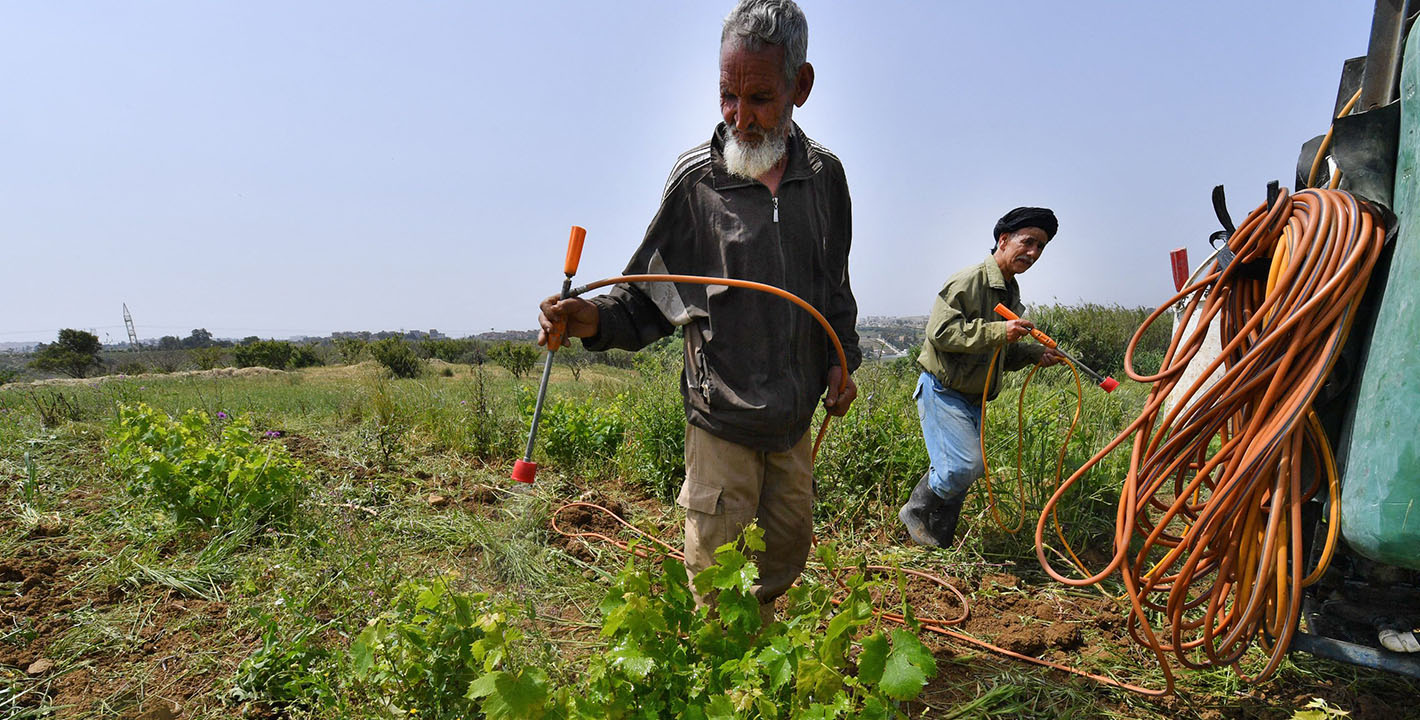
Understanding how farmers in the Oued Sahel-Soummam Valley grapple with climate change is essential for addressing the paradoxes through which adaptation, operating at both individual and institutional levels, deepens the region’s vulnerability and erodes the social fabric and agrarian identity that once defined life.
Ilyssa Yahmi

Just look at Iraq in 1991.

Marwan Muasher
The recent African Cup of Nations tournament in Morocco touched on issues that largely transcended the sport.


Issam Kayssi, Yasmine Zarhloule

Baku may allow radical nationalists to publicly discuss “reunification” with Azeri Iranians, but the president and key officials prefer not to comment publicly on the protests in Iran.

Bashir Kitachaev