

Report
Shin-pei Tsay, Victoria Herrmann
{
  "authors": [
    "Shin-pei Tsay"
  ],
  "type": "legacyinthemedia",
  "centerAffiliationAll": "dc",
  "centers": [
    "Carnegie Endowment for International Peace",
    "Carnegie Europe"
  ],
  "collections": [
    "Brexit and UK Politics"
  ],
  "englishNewsletterAll": "ctw",
  "nonEnglishNewsletterAll": "",
  "primaryCenter": "Carnegie Endowment for International Peace",
  "programAffiliation": "SCP",
  "programs": [
    "Sustainability, Climate, and Geopolitics"
  ],
  "projects": [],
  "regions": [
    "Western Europe",
    "United Kingdom",
    "Europe",
    "North America"
  ],
  "topics": [
    "Climate Change",
    "Foreign Policy"
  ]
}
Source: Getty
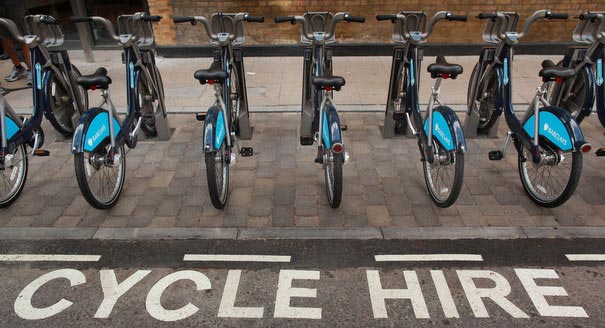
With urban populations growing rapidly and carbon lock-in imminent there is a great need to widely scale and maintain low carbon transport solutions, such as London’s bicycle network.
Source: Euractiv

Brian Deegan, a former bicycle programme manager of Transport for London, led me through several boroughs on both sides of the Thames. Here I caught glimpses of the Ken Livingstone bicycle program, while taking advantage of the Boris Johnson bicycle programme — I was able to cycle in London the moment I arrived only because of what Johnson implemented.
With London’s mayoral elections approaching and both candidates laying claim to a strong bicycle platform, a comparison between their respective sustainable transport programmes seems inevitable. What should matter more to the public, however, is how each candidate offers to steward—and build on—standing investments.Urban innovations are often associated with the individual mayor that pushed a seemingly outlandish idea through to implementation. Think about Richard Daley and Chicago’s green roofs using roof gardens to mitigate stormwater and reduce urban island effect, Enrique Penalosa and Bogota’s Transmilenio bus rapid transit system, and Bertrand Delanoë and Paris’s Velib bicycle exchange scheme. However, there comes a time, for one reason or another, that the dynamic city leader will no longer be in office.
Elected officials love ribbon-cutting photo ops and launching banner projects. But how can it be ensured that worthwhile projects survive beyond the incumbent’s term? New York’s mayor Michael Bloomberg is prevented from running for re-election in 2013 by term limits. Will PlaNYC—his grand scheme to prepare the city for significant population growth, repair aging infrastructure, and combat climate change—survive?
The effect the transition from Livingstone to Johnson had on London’s bicycle networks might shed some light on this issue. Livingstone’s approach was centralised both in administration and financing. His programme built the London Cycle Network nearly from scratch, focusing on creating a permeable, interconnected bicycle lane network within the centre of London. During his tenure, London invested at least £106.66 million on its cycle network.
By contrast, Johnson’s city-wide programme focused on bicycle superhighways intended to bring commuters from the peripheral boroughs into centre London. He launched Barclay’s Cycle Hire for short trips and poured money into marketing campaigns. Austerity measures and localism devolved transport decisions such as bicycle lanes to boroughs and the centralised bicycle program office at Transport for London was eliminated. Publicly released figures show that Johnson has invested at least £143 million (€172 million) over the last two years, although bicycle super highways figures for fiscal year 2011-2012 are not yet available.
Although Johnson had the advantage of building on Livingstone’s programme, he has only been in office a few years and it’s still unclear which approach has had greater success.
Measuring safety, the ratio of cyclist fatalities against all traffic fatalities decreased then plateaued between 2002 and 2010. The overall share of London’s transport that cycling represents, however, has stagnated at 2% over the past two years. It now seems unlikely that goals set in 1998 to increase that figure to 10% by 2012 will be met. Furthermore, although congestion pricing has decreased carbon emissions within the pricing cordon, transport carbon emissions have not decreased across all of London.
The lack of central coordination has also somewhat eroded the overall interconnectivity of the network. Without a centralised mandate laying out principles to which local entities must adhere, boroughs can determine the placement of bike lanes as they wish. This has resulted in some bike lanes running headlong into one another or ending at a borough’s boundaries.
At a fundamental level, London’s experience suggests that it’s only common sense to integrate new programmes with existing assets. The structure of London’s secondary roads makes them a strong contender for bicycle-priority streets due to the slow auto speeds and naturally windy paths, according to Joe Peach, editor of This Big City.
In this case, a simple policy change can avoid costly new infrastructure investments. London could build on its existing assets and develop a hybrid approach that blends centralised coordination of bicycle programming — to maintain the network and coordinate between boroughs — with a splashy marketing campaign encouraging individual use and incentives for private sector investment. All of these measures are needed to significantly bolster the shift away from carbon-intensive mobility.
For broad policy development in cities globally, this suggests that incoming city leaders should not run on the promise of discarding their competitions’ projects for the sake of politics. They should innovate policy to build on existing assets and past progress to create their banner programmes anew. Flexibility in looking for and accepting new models and not discarding successes from the past will lead to success.
Cities are the world’s main producers of carbon emissions. With urban populations growing rapidly and carbon lock-in imminent there is a great need to widely scale low carbon transport solutions. The world simply cannot afford to regress from political term to political term. Centralised coordination to facilitate and negotiate through local preferences and funding that is tied to performance could smooth over short-term political transitions for long-term urban carbon mitigation.

Former Nonresident Associate, Energy and Climate Program
Shin-pei Tsay was a nonresident associate in the Energy and Climate Program at the Carnegie Endowment for International Peace.
Recent Work
Shin-pei Tsay, Victoria Herrmann
Shin-pei Tsay, Victoria Herrmann
Carnegie does not take institutional positions on public policy issues; the views represented herein are those of the author(s) and do not necessarily reflect the views of Carnegie, its staff, or its trustees.

By failing to address Palestinian representation, the current process is bound to lead to just another temporary arrangement.

Nathan J. Brown
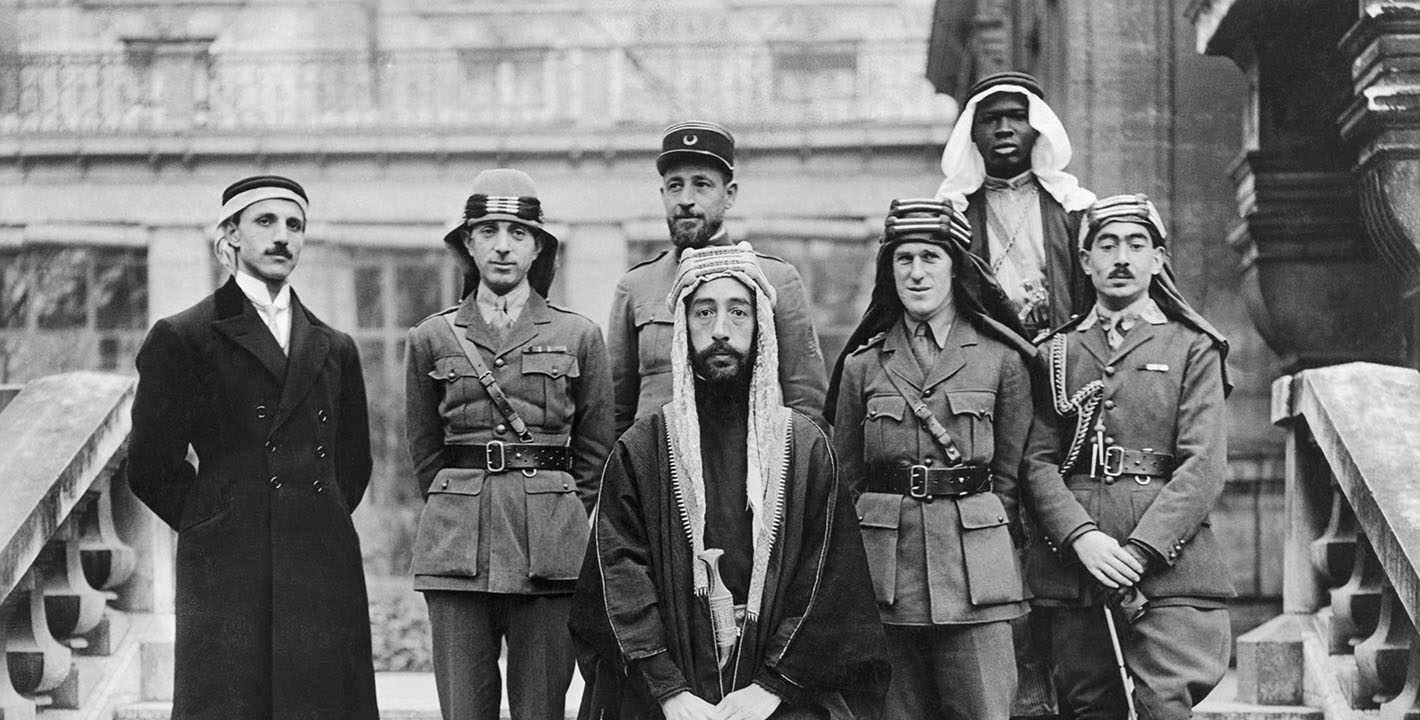
In an interview, Elizabeth Thompson recalls how the country formulated a liberal constitution in 1920, before being denied by France and Britain.

Michael Young

Across the Middle East and North Africa, climate stress interacts with economic fragility, governance failures, social marginalization, and conflict.

Camille Ammoun
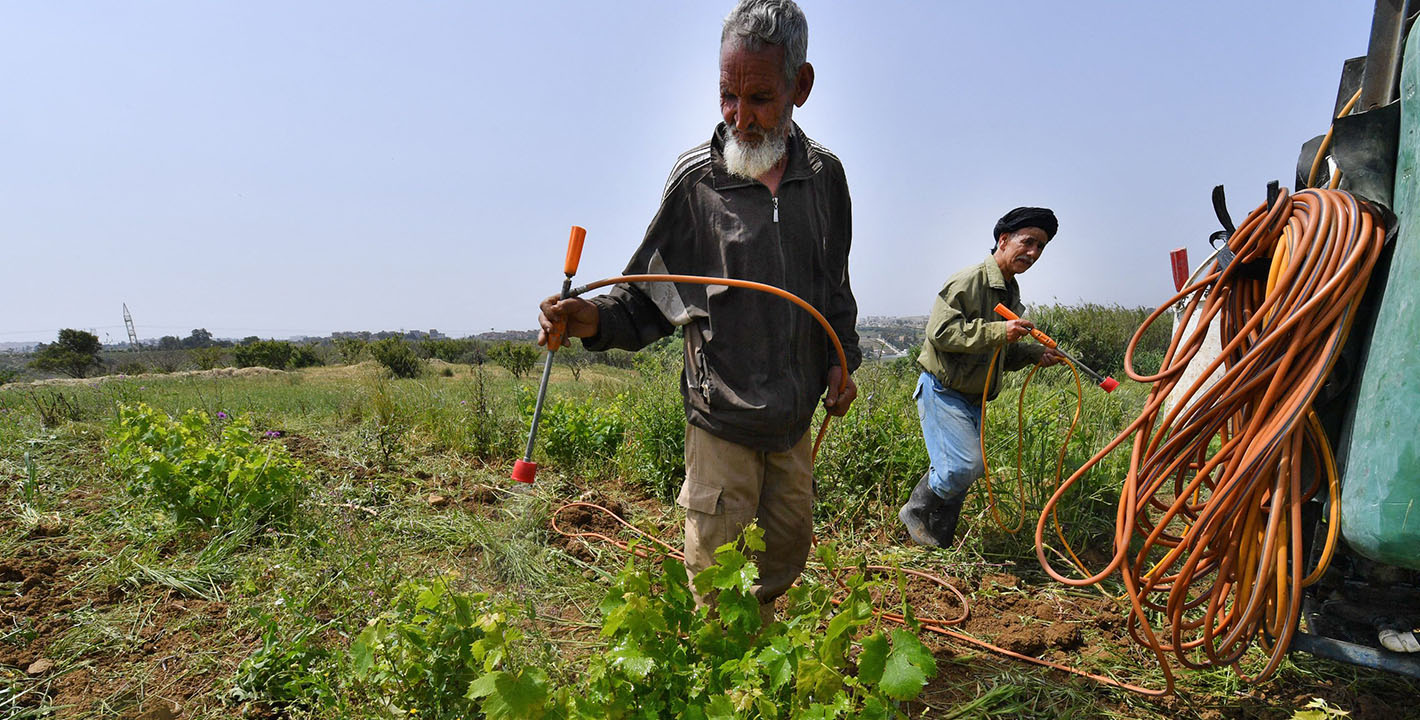
Understanding how farmers in the Oued Sahel-Soummam Valley grapple with climate change is essential for addressing the paradoxes through which adaptation, operating at both individual and institutional levels, deepens the region’s vulnerability and erodes the social fabric and agrarian identity that once defined life.

Ilyssa Yahmi

The community already suffers social discrimination, so addressing inequalities requires sustained interventions.
Musaed Aklan , Mohammad Al-Saidi