

Commentary
Olga Shumylo-Tapiola
{
  "authors": [
    "Olga Shumylo-Tapiola"
  ],
  "type": "questionAnswer",
  "centerAffiliationAll": "",
  "centers": [
    "Carnegie Endowment for International Peace",
    "Carnegie Europe"
  ],
  "collections": [
    "Europe’s Eastern Neighborhood"
  ],
  "englishNewsletterAll": "",
  "nonEnglishNewsletterAll": "",
  "primaryCenter": "Carnegie Europe",
  "programAffiliation": "",
  "programs": [],
  "projects": [],
  "regions": [
    "Europe",
    "Eastern Europe",
    "Ukraine"
  ],
  "topics": [
    "Foreign Policy",
    "Economy"
  ]
}
Source: Getty
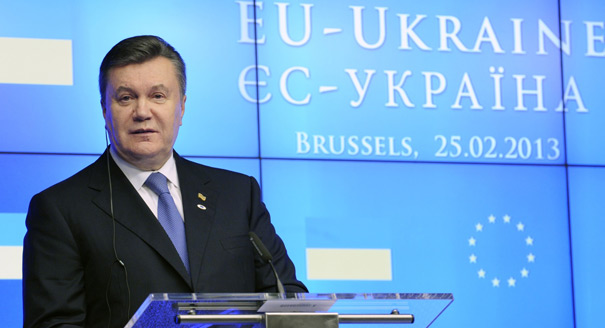
Despite Viktor Yanukovych's promises of reform, an Association Agreement with the European Union has not gotten any closer.
The sixteenth EU-Ukraine summit took place on February 25 in Brussels after a long cooling-off period. Ukrainian President Viktor Yanukovych met with European Council President Herman Van Rompuy and European Commission President José Manuel Barroso to discuss Ukraine’s future with the EU.
In this Q&A, Olga Shumylo-Tapiola explains that despite Yanukovych’s declaration that Kyiv will do everything possible to enable the signing of Ukraine’s Association Agreement with the EU, the summit has not brought agreement any closer. Only real action by Ukraine will speed up that process.
The meeting lasted for two hours, rather than the twenty minutes initially scheduled. Such a long meeting between the presidents is an indication that despite sharp decline of democratic standards in Ukraine, EU leaders are still ready to invest time in talking to Yanukovych.
But the summit was certainly not a breakthrough, despite the fact that Ukraine’s leadership is trying to portray it that way. It is important for Kyiv to remember that breakthroughs only happen at summits with the EU if they are carefully planned and prepared by bureaucrats and diplomats beforehand. That was not the case for this summit.
Real movement will only come on EU-Ukraine relations if Ukraine meets the conditions stipulated in a December 2012 Foreign Affairs Council decision that reaffirmed the EU’s commitment to engagement with Ukraine. At the February summit, President Yanukovych promised to meet the three conditions: establishing a “reliable electoral system based on an Election Code and clear rules for balanced media access for electoral competitors”; tackling “politically motivated convictions” and undertaking reforms of the judiciary and the police to address the issue; and carrying out reforms outlined in Ukraine’s Association Agenda.
But the EU is probably not celebrating just yet. Brussels needs to see action on all three conditions within the next few months—before the May Foreign Affairs Council meeting that, among other things, will review EU-Ukraine relations. Without that, the future of the relationship will remain unclear.
Most of the offers Ukraine got from the EU are not new.
The presidents discussed three sets of practical issues—economic integration, energy, and mobility. The EU is ready to provide Ukraine with €610 million worth of macrofinancial assistance if Ukraine manages to reform its economic policies and secure a loan from the International Monetary Fund to help repay its debt. In the energy field, the EU indicated its willingness to financially support the modernization of Ukraine’s gas transit system.
Some in the Ukrainian media are speculating about whether these offers are a reward for Yanukovych’s economic policy or whether such a “gift” from the EU is good or real enough. But these questions are misguided. The EU is not Santa Claus, and its low-interest loans and budget support are not rewards or gifts for well-behaved children.
The EU’s offers are additional tools to help a given country carry out reforms. If the country is not willing to reform, then the EU’s offers are unlikely to be beneficial.
Each of these offers was made to Ukraine at least three years ago. And it was Kyiv’s refusal to accept the funds that, for instance, has left the country’s gas transit system unmodernized. It remains an open question whether Ukraine is now ready to reform and thus benefit from the EU’s support.
The only offer that can be considered a gift from the EU is in the realm of mobility—a visa-facilitation process and hopefully, over time, visa-free travel to the EU for Ukrainian citizens. Yet, that will not be a reward for the Ukrainian authorities but a gesture of openness toward ordinary Ukrainians.
Definitely not. However, that is not because of problems at the summit. The EU’s three conditions must be met for agreement to be possible.
Some in Kyiv are wondering whether certain conditions are less important than others and can be dropped. But the EU’s line is clear—all conditions are equally important for the EU and all of them have to be implemented.
The good news from Kyiv is that the Ukrainian parliament adopted a resolution in support of implementing the conditions and signing the agreement with the EU. The Ukrainian government also adopted a plan for a series of measures to help make that happen.
Yet, it is difficult to give the Ukrainian authorities the benefit of the doubt. The government’s plan omits a few important measures, such as resolving selective justice cases and reforming electoral legislation. The leadership may run itself into yet another dangerous corner if it starts cherry-picking. Meeting the conditions only partially by May and then pressing the EU to sign the agreement in November—with the hope that EU will be trapped in its own timeline—will get Ukraine nowhere.
That is highly unlikely. Russia invited Ukraine to join the Eurasian Customs Union, but the EU is neither afraid of Russia nor worried that it will lose Ukraine to the Customs Union.
Some individual EU member states are concerned about Russia and its Eurasian integration project. However, no EU member state is ready to waste political capital on bringing Ukraine closer to Brussels—and away from Moscow—if the leadership in Kyiv does not confirm its adherence to EU values.
The fact that Yanukovych was invited to the summit is an indication of Ukraine’s importance as a regional strategic partner for the EU. The EU is interested in sealing the deal with Ukraine and helping it become more EU-compatible. However, there are limits to the price the EU will pay. The EU’s current Ukraine policy is about Ukraine not about its stance for or against Russia.
Let me be clear: the signing depends on one person—President Yanukovych. He is the only one who can use this opportunity wisely. Yet, for this to happen, his personal interests have to finally coincide with those of his country. Despite declarations at the summit and the Ukrainian government’s plans on paper, the likelihood of this happening is rather low. Adopting an electoral code or releasing imprisoned opposition leaders may prove to be too costly in terms of Yanukovych’s 2015 presidential election prospects.
But, of course, history has seen even more dramatic turns, so there is still hope for the future of the EU-Ukraine Association Agreement.
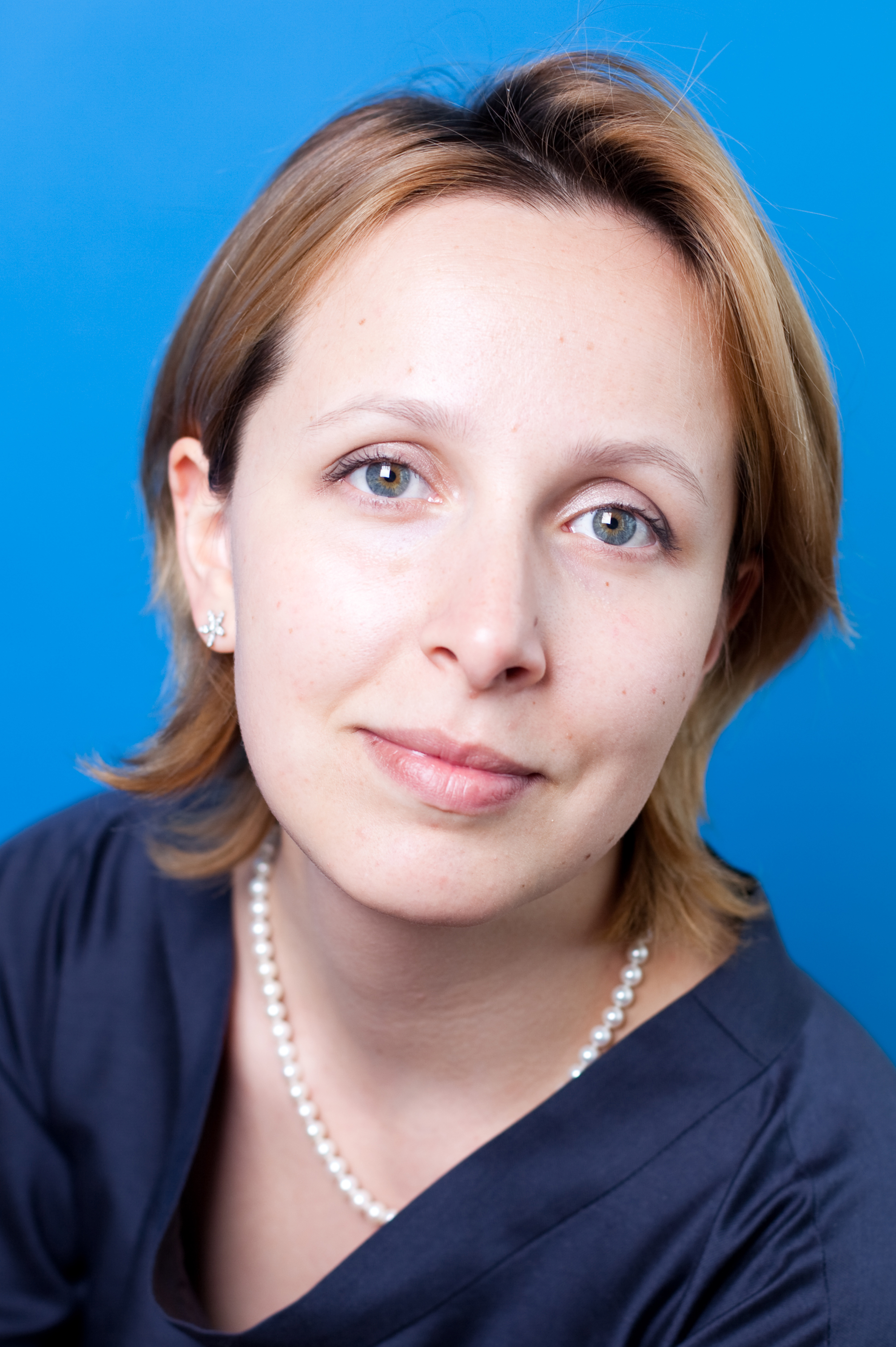
Former Nonresident Associate, Carnegie Europe
Shumylo-Tapiola is a nonresident associate at Carnegie Europe in Brussels, where her research focuses on Eastern Europe and Eurasia.
Recent Work
Olga Shumylo-Tapiola
Olga Shumylo-Tapiola
Carnegie does not take institutional positions on public policy issues; the views represented herein are those of the author(s) and do not necessarily reflect the views of Carnegie, its staff, or its trustees.

In an interview, Ian Lustick and Eli Clifton discuss their new book on why a prominent ally has so much influence in America.

Michael Young

By failing to address Palestinian representation, the current process is bound to lead to just another temporary arrangement.

Nathan J. Brown

The armed forces champion a form of capitalism that is generating revenue, but its reliance on rent faces diminishing returns, leaving the country with massive sunk costs and deferred returns, deepening dependency on external borrowing.

Yezid Sayigh

Just look at Iraq in 1991.

Marwan Muasher

A coalition of states is seeking to avert a U.S. attack, and Israel is in the forefront of their mind.
Michael Young