

Article
Frederic Grare
{
  "authors": [
    "Frederic Grare"
  ],
  "type": "legacyinthemedia",
  "centerAffiliationAll": "dc",
  "centers": [
    "Carnegie Endowment for International Peace"
  ],
  "collections": [],
  "englishNewsletterAll": "ctw",
  "nonEnglishNewsletterAll": "",
  "primaryCenter": "Carnegie Endowment for International Peace",
  "programAffiliation": "SAP",
  "programs": [
    "South Asia"
  ],
  "projects": [],
  "regions": [
    "South Asia",
    "Pakistan"
  ],
  "topics": [
    "Political Reform",
    "Democracy",
    "Security",
    "Foreign Policy"
  ]
}
Source: Getty
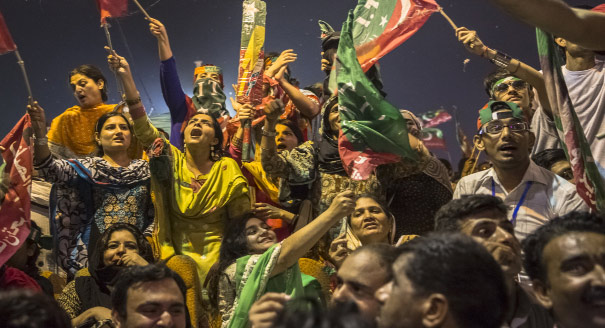
The younger generation in Pakistan may prove to be a decisive, if unpredictable, factor in the upcoming elections, with potentially serious consequences for the country's foreign policy.
Source: Indian Express
On May 11, Pakistan will choose its representatives for the next five years. Two hundred and seventy two National Assembly seats will be contested, and the parties themselves will allocate an additional 60 seats reserved for women and 10 reserved for non-Muslims.
Few elections in Pakistan have generated so much speculation, both domestically and abroad. Parties across the political spectrum celebrated the fact that a democratically-elected government has finally completed a full term in office in Pakistan, but their satisfaction quickly gave way to fierce competition that could end the quasi-monopoly of the two mainstream parties, the ruling center-left Pakistan Peoples Party (PPP) and opposition center-right Pakistan Muslim League-Nawaz (PML-N), and witness the emergence of the Pakistan Tehreek-e-Insaf (PTI), led by former cricketer Imran Khan.
But it's still unclear how the election will play out. Social and ethnic cleavages, grassroots party mobilization and a general disillusion with politics are all potential wild cards, but no factor is more important than the demographic transition currently under way. Out of the 84 million people expected to cast their votes on May 11, almost half (47.8 per cent) are between 18 and 35 years of age. Many of them will be voting for the first time. Described as more educated and better connected to the world than their parents—but also as deeply conservative—this generation could well be a driver of serious change, although no opinion polls have so far assessed how this might translate into support for particular political actors.Polls conducted by various organisations show different results and considerable inconsistencies, but the PML-N of former prime minister Nawaz Sharif seems poised to emerge as the single-largest party and to form the next government, while the PPP looks destined to return to the opposition bench. A small slate of religious parties seems unlikely to secure a share of the vote that could seriously change the outcome, so the real uncertainty lies with the PTI and its ability to capture the traditional voter base of the two mainstream parties. Although polls show a decline of support for the PTI since the beginning of the campaign, it would be a mistake to rule out surprises. There is little doubt that Pakistan is heading towards another coalition government.
Whatever the outcome, the election is unlikely to produce a sea change in Pakistan's security situation. When it took power in 2008, the PPP promised to rid Pakistan of violence, bigotry and terror. Five years later, extremist organisations are stronger than ever, targeting religious minorities and the state apparatus, though the Musharraf-era siege and killing of militants at Islamabad's Red Mosque is to blame for this resurgence as well. Interestingly, despite General Ashfaq Kayani's pledge to eradicate extremism in a speech last summer, the military has proven unable to deliver on the issue as well.
Today, the Tehreek-e-Taliban Pakistan (TTP) is the main obstacle to a smooth electoral process. In recent weeks, the TTP has stepped up attacks against secular-leaning parties such as the Awami National Party and the Muttahida Quami Movement, both allies of the PPP. By contrast, the PML-N and the PTI have largely escaped this violence. The PML-N has not condemned the TTP, while the leader of the PTI, Imran Khan, has suggested negotiations, blaming the US drone campaign in Pakistan for the country's instability. The attitude of the PML-N may well be purely electoral, as the party made the right move in November 2008 by denouncing the Mumbai attack and accepting Ajmal Kasab's responsibility, but the PTI's electoral statements are consistent with its positions over the past five years. In this context, it is worth recalling that all previous attempts to dialogue with the TTP, in 2004 and 2005, resulted in the strengthening of the terrorist organisation. It is, therefore, difficult to imagine the elections producing a quick end to religious violence in Pakistan.
Indeed, the long-term consequences of tolerating the TTP could be disastrous. Refusing to condemn an organisation such as the TTP is equivalent to condoning it, and with it, all radical anti-state organisations. Gone is the time when Pakistan's security establishment controlled most Islamist groups within its borders. In this new context, appeasement could become risky and weaken state control over substantial parts of Pakistan's territory in the volatile provinces adjacent to Afghanistan.
When it comes to foreign policy in general, the elections could produce a wider variety of outcomes. It can be rightly argued that the army remains the dominant player in foreign policy and it is, therefore, legitimate to question the impact of the elections. Since 2011, however, the fear of a "divorce" with the United States, the de facto isolation of Pakistan and the economic crisis have prompted a rapprochement with India. These relatively warmer ties would have been impossible without some tacit military acceptance, but they nevertheless suggest an expanded role for elected civilians in foreign policy.
Bearing this in mind, it is worth considering the significant differences between the two mainstream parties and all other organisations. Mainstream parties have, in the past, demonstrated their willingness to resolve issues peacefully, which in practice meant essentially improving relations with New Delhi as Pakistan has managed to transform almost all other aspects of its foreign policy as a zero-sum game with India. Their political space for maneuver remains limited, but it should be noted, for example, that despite the mention of Kashmir in their electoral manifestos, despite the recent incidents in the area, Kashmir has so far been absent from the campaign. Although they would not fundamentally change Pakistan's narrative about its strategic environment and threat perception, the mainstream parties would certainly try to promote more cooperative policies.
The election could, therefore, have an impact on Pakistan's foreign policy. A hung parliament and a consequently weak government would be indecisive and more vulnerable to manipulation by hawkish members of the security establishment. The larger the victory of one of the mainstream parties, the more likely Pakistan will be to evolve towards a more peaceful foreign policy.
This article was originally published in the Indian Express.
Former Nonresident Senior Fellow, South Asia Program
Frédéric Grare was a nonresident senior fellow at the Carnegie Endowment for International Peace, where his research focuses on Indo-Pacific dynamics, the search for a security architecture, and South Asia Security issues.
Recent Work
Frederic Grare
Frederic Grare
Carnegie does not take institutional positions on public policy issues; the views represented herein are those of the author(s) and do not necessarily reflect the views of Carnegie, its staff, or its trustees.

By failing to address Palestinian representation, the current process is bound to lead to just another temporary arrangement.

Nathan J. Brown

Just look at Iraq in 1991.

Marwan Muasher
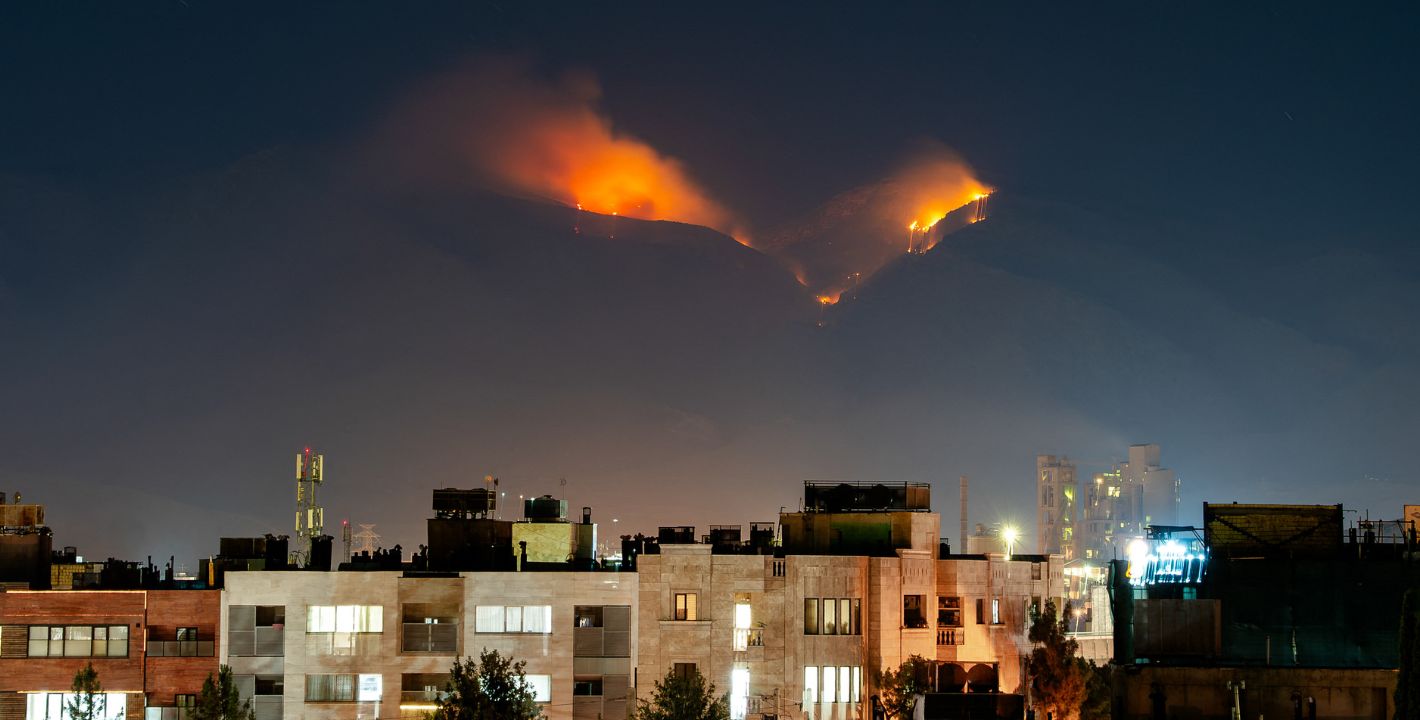
A coalition of states is seeking to avert a U.S. attack, and Israel is in the forefront of their mind.

Michael Young

Baku may allow radical nationalists to publicly discuss “reunification” with Azeri Iranians, but the president and key officials prefer not to comment publicly on the protests in Iran.

Bashir Kitachaev
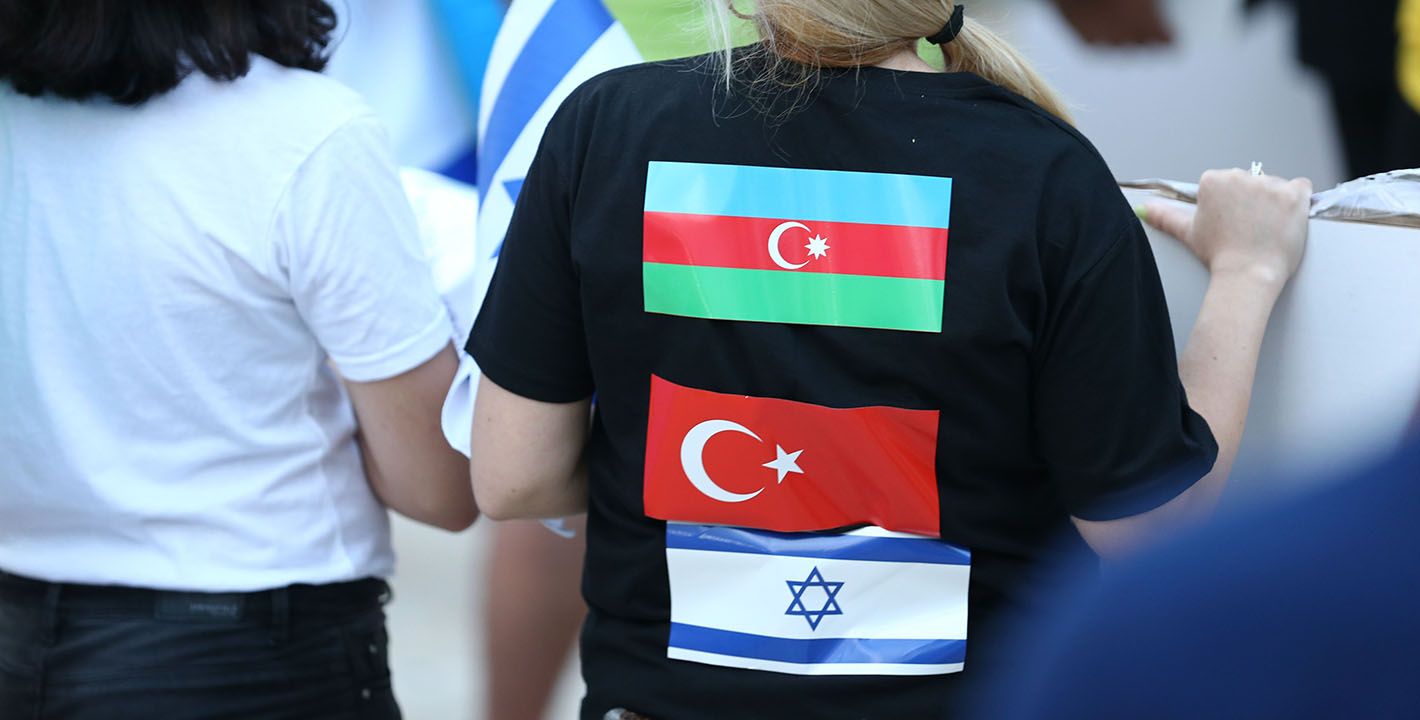
The country’s leadership is increasingly uneasy about multiple challenges from the Levant to the South Caucasus.

Armenak Tokmajyan