

Q&A
Stephen Tankel
{
  "authors": [
    "Stephen Tankel"
  ],
  "type": "legacyinthemedia",
  "centerAffiliationAll": "dc",
  "centers": [
    "Carnegie Endowment for International Peace"
  ],
  "collections": [],
  "englishNewsletterAll": "ctw",
  "nonEnglishNewsletterAll": "",
  "primaryCenter": "Carnegie Endowment for International Peace",
  "programAffiliation": "SAP",
  "programs": [
    "South Asia"
  ],
  "projects": [],
  "regions": [
    "South Asia",
    "India",
    "Pakistan"
  ],
  "topics": [
    "Security",
    "Foreign Policy"
  ]
}
Source: Getty
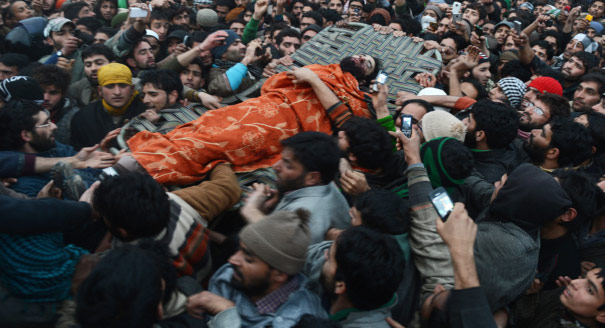
Kashmir may no longer be the most dangerous fault line in the world, but it will remain a flashpoint for conflict for the foreseeable future.
Source: War on the Rocks
On the eve of Indian Prime Minister Manmohan Singh’s visit to Srinagar, the summer capital of Indian-administered Kashmir, militants fired on an army convoy on the outskirts of the city. Five solders were killed and seven others wounded, some critically. A decade ago, when Kashmir was still a proper conflict zone, such an attack would hardly be out of place. Today the territory is largely pacified, the Indian army has pulled back from the cities and the number of militants in country is estimated at roughly 130-150. That was the estimate I heard repeatedly – from journalists, separatists, politicians, the police, the army and U.S. officials – when visiting Kashmir (and Delhi) on a brief research trip last month.
Indications that Pakistan-based militants plan to reignite the jihad in Indian-administered Kashmir informed my decision to visit. Lashkar-e-Taiba a Pakistani militant group I follow closely, has been telling everyone who will listen – the press, their own rank-and-file, Kashmiri separatist leaders when they visit Pakistan, me when I last communicated with them – that they plan to ramp up in Kashmir as U.S. troops draw down in Afghanistan. Indian and American officials take this threat seriously, and an uptick in high-profile attacks this year suggests they are correct to do so.
Hizbul Mujahideen (HM) has claimed the major operations this year. Although its leadership is based in Pakistan-administered Kashmir, HM is an indigenous Kashmiri group. It is also somewhat of a stalking horse for the Lashkar, which counts far fewer actual Kashmiris in its ranks. The two appear to be working in tandem to slowly reignite the conflict, taking care to make any violence appear indigenous. This not only provides plausible deniability to Pakistan-based actors, but also is likely part of a strategy to trigger a genuine grassroots uprising. Indeed, beyond launching more high-profile attacks, militants are recruiting locals to engage in ad hoc attacks, according to Indian police officers. They are also said to be working through above-ground supporters to provoke civil unrest, of which Indian-administered Kashmir has seen plenty since the conflict subsided.Lashkar may be communicating instructions to its supporters via Voice Over Internet Protocol and sending money to support those stoking civil unrest as Indian officials allege. But this overlooks the truly indigenous nature of the protests that have occurred during the past few years and the persistent levels of animosity among the population, which indicate the New Delhi is missing an opportunity to solidify its gains.
The separatists have lost, at least for the foreseeable future. I was not doing survey research, but conversations with separatist leaders, journalists, former militants, and members of civil society suggest that the call for Azadi (freedom) may be coming to mean something different for the current generation. In the past, it was the separatists call for freedom from India. Increasingly, it may mean freedom from an overly-securitized environment in which encounter killings still occur and the army remains immune from prosecution. It also increasingly may mean freedom to pursue the same opportunities as other Indians. Many of the complaints one hears in Kashmir are similar to those voiced elsewhere in India and pertain to corruption, poor governance and lack of economic opportunity. The difference is that it seems Kashmiris view these quotidian complaints through their troubled history of violent conflict. And so the sparks for social unrest are ever present, as was obvious earlier this year when the government decided to hang Afzal Guru in February 2013.
A Kashmiri native, Guru was sentenced to death for his role in the December 2001 attack on the Indian Parliament. India rarely carries out death sentences and in this case did so without even notifying Guru’s family. In addition to robbing them of a chance for closure, it also meant they missed their last legal chance to challenge the rejected mercy plea that sealed Guru’s fate. Whether or not the sentence itself was correct is a separate issue; the way in which it was carried out ignited protests in Kashmir that left three dead. It also killed tourism for the month of May according to a number of hotel operators with whom I spoke.
Kashmir is unlikely to see a return to the bad old days when roughly 2000 militants were chalking up attacks on a daily basis. There were 340 violent incidents in 2011, the last year for which data is available from the Indian Ministry of Home Affairs. Contrast that with 2565 in 2004, when the insurgency was already flagging, or the 1990s when whole cities like Sopore were “liberated” by the insurgents. Regenerating that level of conflict is too tall an order, especially with a population that has seen enough of war and wants very little to return to it.
However, real grievances remain and because violent incidents are now the exception not the rule and there are so few militants in Kashmir, even a relatively modest uptick can have a disproportionate impact: on how the army, paramilitary forces and police respond; on the economy; on the population; and on India-Pakistan relations. Kashmir may no longer be the most dangerous fault line in the world, but it will remain a flashpoint for the foreseeable future.
There is only so much the US can or should do. Pakistan has pushed for international involvement in the Kashmir issue, and allowing non-state militants to whip up trouble is one way of drawing attention to the problem. However, India has insisted this is a bilateral issue and most South Asia hands in Washington understand this is not a problem America can solve. The last major push to do so came from the late Richard Holbrooke, who early in his term sought a grand bargain on Kashmir as a way to sort out of Afghanistan. This only alienated New Delhi, which quickly killed the idea in Washington. Improved relations with India and that country’s increased importance to US interests have reinforced these dynamics. What the US can and should do is continue to seeking to create conditions that facilitate the fragile India-Pakistan rapprochement underway, but which could be disrupted by escalating militant infiltrations into Indian-administered Kashmir.

Former Nonresident Scholar, South Asia Program
Tankel was a nonresident scholar at the Carnegie Endowment, where his research focuses on insurgency, terrorism, and the evolution of nonstate armed groups.
Recent Work
Stephen Tankel
Stephen Tankel
Carnegie does not take institutional positions on public policy issues; the views represented herein are those of the author(s) and do not necessarily reflect the views of Carnegie, its staff, or its trustees.

By failing to address Palestinian representation, the current process is bound to lead to just another temporary arrangement.

Nathan J. Brown

Just look at Iraq in 1991.

Marwan Muasher

A coalition of states is seeking to avert a U.S. attack, and Israel is in the forefront of their mind.

Michael Young

Baku may allow radical nationalists to publicly discuss “reunification” with Azeri Iranians, but the president and key officials prefer not to comment publicly on the protests in Iran.

Bashir Kitachaev
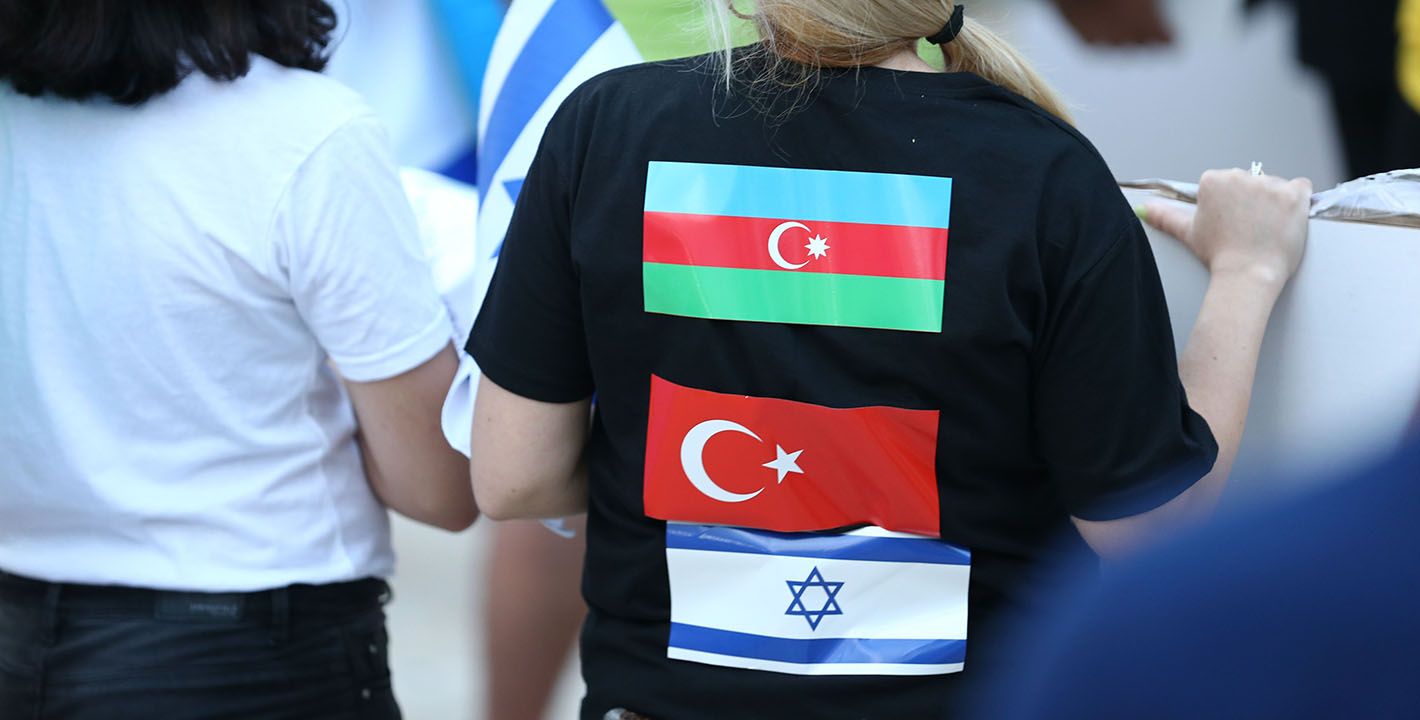
The country’s leadership is increasingly uneasy about multiple challenges from the Levant to the South Caucasus.

Armenak Tokmajyan