

Report
- +3
James M. Acton, Alexey Arbatov, Vladimir Dvorkin, …
{
  "authors": [
    "Petr Topychkanov"
  ],
  "type": "commentary",
  "centerAffiliationAll": "",
  "centers": [
    "Carnegie Endowment for International Peace",
    "Carnegie Russia Eurasia Center"
  ],
  "collections": [],
  "englishNewsletterAll": "",
  "nonEnglishNewsletterAll": "",
  "primaryCenter": "Carnegie Russia Eurasia Center",
  "programAffiliation": "",
  "programs": [],
  "projects": [
    "Eurasia in Transition"
  ],
  "regions": [
    "South Asia",
    "Pakistan"
  ],
  "topics": [
    "Security",
    "Military"
  ]
}
Source: Getty
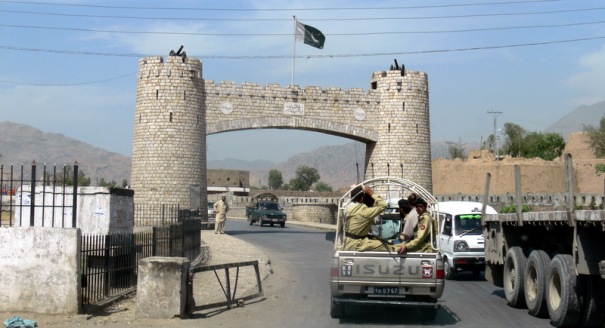
The nomination of Mullah Fazlullah as the new head of the Tehrik-e-Taliban Pakistan (TTP) does not seem to dramatically change prospects for an agreement between the TTP and Islamabad. Yet if signed, this agreement will not be able to stop violence in the tribal area of Pakistan and neighbor regions.
In his recent article about the new head of the Tehrik-e-Taliban Pakistan (TTP), Christophe Jaffrelot has expressed an opinion that the elimination in a drone attack of the previous TTP chief Hakimullah Mehsud and the naming of Mullah Fazlullah to lead the TTP have torpedoed the peace talks between TTP and the Pakistan authorities.
For me, the impact of this change in the TTP leadership on the talks is not so evident. There are at least three questions which make me doubt that it is highly significant, if at all.
The first question is whether the conflicting parties are ready to achieve any kind of a long-term agreement. In previous cases, the TTP used agreements with Islamabad for tactical purposes, i.e. to gain time, replenish resources, and redeploy forces. The Armed Forces of Pakistan used these agreements in the same way as well. Starting with the 2003 agreement reached after the Al Mizan military operation in South Waziristan, there was not a single agreement between the TTP and the Pakistani authorities which would last for more than a couple of months.
The second question is about the role of the TTP chiefs in guaranteeing agreements with Islamabad. It is hard to believe that these chiefs can make all the fighters in Pakistan calling themselves Talibs follow such agreements. Instead of having a strong hierarchical structure, the TTP represents a cloud of big and small groups, including foreign fighters, mostly from Central Asia and the Russian Caucasus. In this environment a personal position of the TTP chief on the talks with Islamabad and even his signature under the agreement cannot stop the violence in the tribal area.
The third question is about the external actors. Jaffrelot's article mentions that the United States may be interested in torpedoing the talks out of fear that an agreement between the TTP and Islamabad could allow Talibs from Pakistan to cross the Durand line to fight against the NATO and the Afghan Armed Forces.
There are at least two, though mutually contradicting, arguments against such an opinion. The first one is that a probable agreement between the TTP and Islamabad would mean that the TTP would have an opportunity to use its fighters as police in the territories which would be under the control of the TTP. There will be no need to think about how to occupy the fighters abroad because there will be a job for them in the tribal area.
The second argument is based on the well-known fact that many fighters from the TTP have already been involved in insurgent operations in Afghanistan. Therefore, even in the situation of heavy military operations in the tribal area, the TTP can send some groups abroad (and not only to Afghanistan).
The nomination of Mullah Fazlullah does not seem to dramatically change prospects for an agreement between the TTP and Islamabad. It is still possible. Yet if signed, this agreement will not be able to stop violence in the tribal area of Pakistan and neighbor regions.
Former Fellow, Nonproliferation Program, Moscow Center
Topychkanov was a fellow in the Carnegie Moscow Center’s Nonproliferation Program.
Recent Work

James M. Acton, Alexey Arbatov, Vladimir Dvorkin, …
Petr Topychkanov
Carnegie does not take institutional positions on public policy issues; the views represented herein are those of the author(s) and do not necessarily reflect the views of Carnegie, its staff, or its trustees.

The armed forces champion a form of capitalism that is generating revenue, but its reliance on rent faces diminishing returns, leaving the country with massive sunk costs and deferred returns, deepening dependency on external borrowing.

Yezid Sayigh

Just look at Iraq in 1991.

Marwan Muasher

Baku may allow radical nationalists to publicly discuss “reunification” with Azeri Iranians, but the president and key officials prefer not to comment publicly on the protests in Iran.

Bashir Kitachaev
In addressing Hezbollah’s disarmament, the Lebanese state must start by increasing its own leverage.

Michael Young
The country’s political and military establishment is still debating how to interpret the recent war’s outcome.
Nicole Grajewski