

Commentary
By failing to address Palestinian representation, the current process is bound to lead to just another temporary arrangement.
Nathan J. Brown
{
  "authors": [
    "Paweł Dariusz Wiśniewski"
  ],
  "type": "commentary",
  "centerAffiliationAll": "",
  "centers": [
    "Carnegie Endowment for International Peace",
    "Carnegie Russia Eurasia Center"
  ],
  "collections": [],
  "englishNewsletterAll": "",
  "nonEnglishNewsletterAll": "",
  "primaryCenter": "Carnegie Endowment for International Peace",
  "programAffiliation": "",
  "programs": [],
  "projects": [],
  "regions": [
    "Eastern Europe",
    "Ukraine",
    "Western Europe"
  ],
  "topics": [
    "Political Reform",
    "Democracy",
    "Civil Society",
    "Foreign Policy"
  ]
}
Source: Getty
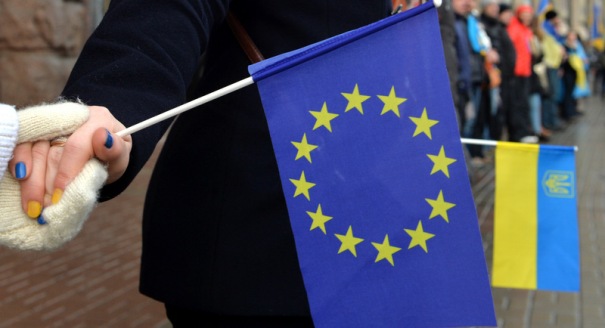
The time is now for Poland to support a peaceful dialogue between the Ukrainian opposition and President Yanukovych. It is also time for Warsaw to make the EU more aware that stability and peaceful transition in Ukraine is of crucial importance for the whole European security.
All eyes on Ukraine? That is correct. However, while the future of Ukraine may be defined before our very eyes, there is one single country within the European Union that up to now has paid the most attention to the protests in Ukraine—Poland. That is also the way that it should be. While Germany as a regional leader should outline a new EU strategy toward “big brother” Russia, there is no other country in the EU that would gain more from Ukraine being near to the EU than Poland, even despite historical differences.
It was the Orange Revolution in 2004 that enabled Poland and President Alexander Kwaśniewski to be perceived as players who were “responsible” for Eastern Europe. Even though there have been difficult times between Warsaw and Kiev since then (e.g. when President Viktor Yushchenko honored Stepan Bandera as a national hero, though his name carries a negative connotation in Poland), the Polish political elite has been devoted to the issue of Ukraine. It is not a secret that the Eastern Partnership (EaP) was a program that was constructed mainly for Georgia (after the Russian-Georgian war in 2008) and Ukraine. It is also the country on the Dnieper River that was officially perceived by many governmental figures in Poland as the crucial state of the EaP not only in the geopolitical sense. And now, for better or worse, the Poles are offered 24/7 news cycles almost entirely dedicated to Ukraine.
Following the decision of President Viktor Yanukovych not to sign the Association Agreement, many Poles joined Ukrainians in their protests in various cities, supporting their EU aspirations. Just after the use of force against the participants of the Euromaidan several days ago, Polish Prime Minister Donald Tusk met with all the ministers of his government who have special knowledge and experience concerning Ukraine as well as with the head of the Polish Intelligence Agency and the Director of the Center for Eastern Studies, a Polish think tank, to discuss the Ukrainian issue and Poland's further steps. President Bronisław Komorowski followed suit and called together the Council of National Security so that the Polish political scene may speak in one voice on Ukraine. It mostly does.
Among all of the EU states, Poland has the biggest transitional know-how relevant for such a big country as Ukraine. This experience is highly appreciated among the European community, making the Polish prime minister the first foreign authority that President Hollande and Chancellor Merkel talked to on the issues in Kiev. Due to the experience and “common” history, Warsaw (and especially President Komorowski) is also perceived by Yanukovych as being devoted to the partnership cooperation and not to blindly imposing difficult reforms using the “now or never” language. It is, therefore, a good step on behalf of Foreign Minister Radosław Sikorski to attend the OSCE Ministerial Council this week, unlike the ministers from the United Kingdom and France. The future of EU-Ukrainian relations should be based on dialogue and more developed cooperation with Ukrainian citizens and not only on criticizing the authorities and punishing the Ukrainian society. Pushing away Ukraine may lead to an irreversible shift of Kiev into the arms of Moscow.
The time is now for Warsaw to show what it knows about transition and to support a peaceful dialogue between the opposition and President Yanukovych, assigning the best possible negotiators. Supporting only one of the sides on the official level would make Polish authorities an unreliable partner. It is also time for Poland to take a step forward in making EU states more aware that stability and peaceful transition in Ukraine is of crucial importance for the whole European community's security. Offering a visa free regime in a short-time period would support the aspirations of so many citizens who stood on the streets of the Ukrainian cities expressing their will to be nearer to the EU. A fruitful strategy of the European Union toward Ukraine and the EaP states per se is only possible if it is common—not solely shared by Germany, Scandinavian and several Central European states. The participation of President François Hollande and Prime Minister David Cameron at the Vilnius Summit was a symbolic sign that the EU may support the EaP.
If it is not Poland, with its successful experience, great interest, and financial and intellectual means, as well as its position within the European community, that shall take the first meaningful step concerning Ukraine, who can?
Paweł Dariusz Wiśniewski holds an M.A. in World Politics from the Moscow State Institute of International Relations, the Humboldt University of Berlin, and the Free University of Berlin. Formerly, he worked on the Eastern Partnership and Russia at the president of the European Parliament’s cabinet and at the Carnegie Moscow Center.
Paweł Dariusz Wiśniewski
Carnegie does not take institutional positions on public policy issues; the views represented herein are those of the author(s) and do not necessarily reflect the views of Carnegie, its staff, or its trustees.

By failing to address Palestinian representation, the current process is bound to lead to just another temporary arrangement.

Nathan J. Brown

Just look at Iraq in 1991.

Marwan Muasher

A coalition of states is seeking to avert a U.S. attack, and Israel is in the forefront of their mind.

Michael Young

Baku may allow radical nationalists to publicly discuss “reunification” with Azeri Iranians, but the president and key officials prefer not to comment publicly on the protests in Iran.

Bashir Kitachaev

The country’s leadership is increasingly uneasy about multiple challenges from the Levant to the South Caucasus.

Armenak Tokmajyan