

In The Media
Lilia Shevtsova
{
  "authors": [
    "Lilia Shevtsova"
  ],
  "type": "commentary",
  "centerAffiliationAll": "",
  "centers": [
    "Carnegie Endowment for International Peace",
    "Carnegie Russia Eurasia Center"
  ],
  "collections": [],
  "englishNewsletterAll": "",
  "nonEnglishNewsletterAll": "",
  "primaryCenter": "Carnegie Russia Eurasia Center",
  "programAffiliation": "",
  "programs": [],
  "projects": [],
  "regions": [
    "Russia"
  ],
  "topics": [
    "Political Reform",
    "Foreign Policy"
  ]
}
Source: Getty
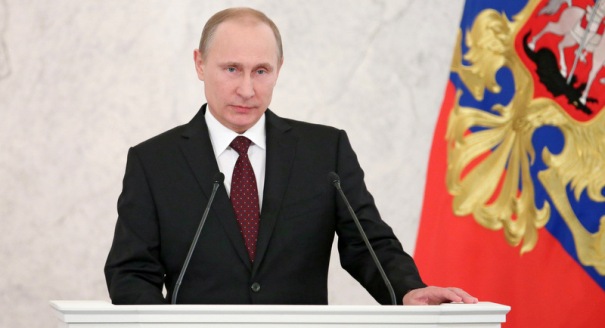
Vladimir Putin’s address to the Federal Assembly means that the president has exhausted himself and can no longer find a single thought or idea that would suggest that he is staying in the Kremlin because he still has something to offer Russia.
Putinology, the study of Vladimir Putin’s psyche, habits, and management style, has been around for 14 years already. With his inconsistencies and lack of answers to obvious questions, as well as with his contradictory answers to the question “Who is Mr. Putin?”, the Russian president has given Putinologists plenty of fodder for their analysis. But Putinology is in for hard times now, since Putin’s actions and rhetoric have already provided answers to virtually every question about his rule. The uncertainty about Putin has long become certainty. The Putin enigma has ceased to exist. I would say that it had actually never existed! Essentially, it was being sustained by numerous experts who were either afraid to lose the subject of their expertise or required Putin’s enigma for their own intellectual or political purposes.
In this context, one should note Putin’s last address to the Federal Assembly and the boredom and melancholy with which he read it, trudging through the text and mangling the words. He definitely suffered delivering it and he apparently suffered seeing his loyal audience before him trying hard to be awake listening to his mantras. Putin’s December 12 speech means only one thing—the president has exhausted himself and can no longer find a single thought or idea that would suggest that he is staying in the Kremlin because he still has something to offer Russia. In the course of his address, he frankly admitted that the country faces a great number of problems, but he in no way admitted responsibility for them. He urged the ruling class to solve the problems but failed to hold it accountable for being unable to do it. Actually, Putin believes the problems can be solved by returning to traditional values—greater government control of society and citizens’ private life—as well as by militarization—the struggle with the outside world. Otherwise, what does he need the militarist budget for? In short, Putin reconfirmed that Putin’s Russia is returning to the pre-Gorbachev era. As for Putin, he is planning to rule for eternity, since he named the revival of Siberia and Far East as Russia’s main challenge. And this task will certainly take a very long time!
Ukrainian Euromaidan events lend credence to Putin’s choice in favor of total control and eternal rule. After all, the Ukraine’s 2004 Orange Revolution prompted the Kremlin to become more authoritarian. The current Ukrainian protests, which Putin called “pogroms,” give him sufficient justification to turn to an even harsher repressive rule in his own country. In turn, the Kremlin’s repressive policies at home will translate into its aggressiveness abroad. It is the lesson Putin gives to those in the West who have been trying to “delink” the Russian domestic developments from the Russian posture on the international scene.
Thus, Putin has written the final chapter in the Putinology textbook all by himself. The subject is now closed. So what will the Putinologists write about now when everything is clear?
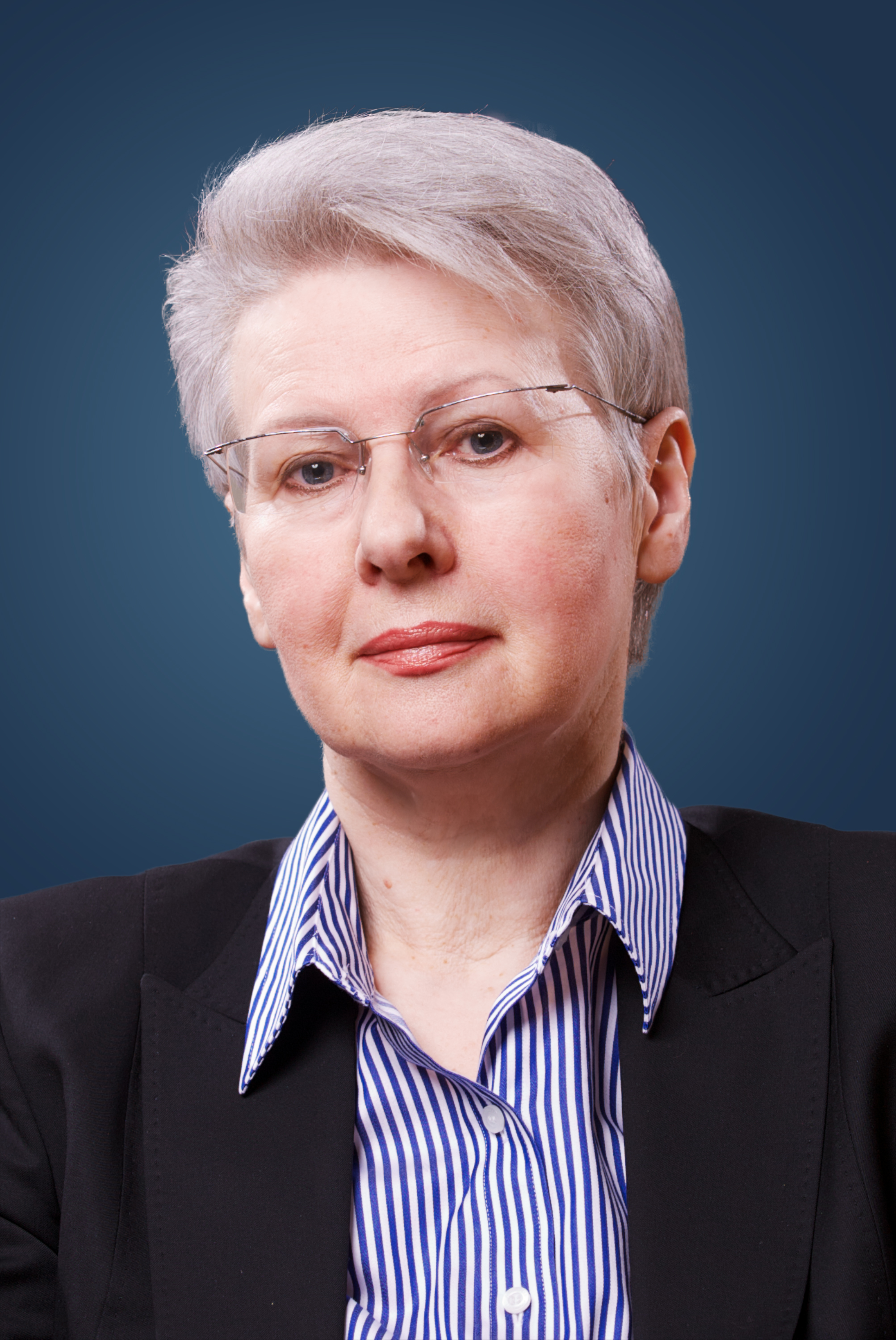
Former Senior Associate, Russian Domestic Politics and Political Institutions Program, Moscow Center
Shevtsova chaired the Russian Domestic Politics and Political Institutions Program at the Carnegie Moscow Center, dividing her time between Carnegie’s offices in Washington, DC, and Moscow. She had been with Carnegie since 1995.
Recent Work
Lilia Shevtsova
Lilia Shevtsova
Carnegie does not take institutional positions on public policy issues; the views represented herein are those of the author(s) and do not necessarily reflect the views of Carnegie, its staff, or its trustees.

In an interview, Ian Lustick and Eli Clifton discuss their new book on why a prominent ally has so much influence in America.

Michael Young

By failing to address Palestinian representation, the current process is bound to lead to just another temporary arrangement.

Nathan J. Brown

Just look at Iraq in 1991.

Marwan Muasher

A coalition of states is seeking to avert a U.S. attack, and Israel is in the forefront of their mind.
Michael Young

Baku may allow radical nationalists to publicly discuss “reunification” with Azeri Iranians, but the president and key officials prefer not to comment publicly on the protests in Iran.

Bashir Kitachaev