

Commentary
Dmitri Trenin
{
  "authors": [
    "Dmitri Trenin"
  ],
  "type": "commentary",
  "centerAffiliationAll": "",
  "centers": [
    "Carnegie Endowment for International Peace",
    "Carnegie Russia Eurasia Center"
  ],
  "collections": [],
  "englishNewsletterAll": "",
  "nonEnglishNewsletterAll": "",
  "primaryCenter": "Carnegie Russia Eurasia Center",
  "programAffiliation": "",
  "programs": [],
  "projects": [],
  "regions": [
    "Russia"
  ],
  "topics": [
    "Political Reform",
    "Security"
  ]
}
Source: Getty
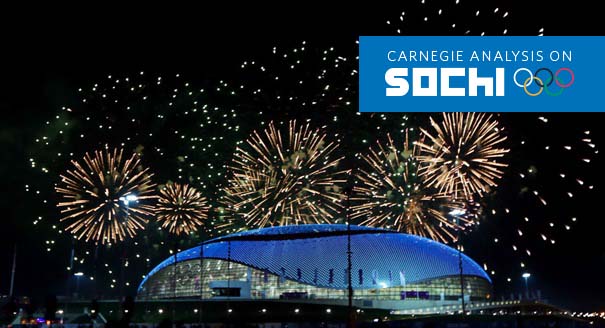
Although Russia has failed to get at the Winter Olympics the one prize it particularly coveted, the ice hockey title, it managed to win a far more important victory—in ensuring that the Games, the athletes, and spectators were safe. However, making Russia safer remains a challenge.
Although Russia has failed to get at the Winter Olympics the one prize it particularly coveted, the ice hockey title, it managed to win a far more important victory—not in the overall medals count, although it counts—but in ensuring that the Games, the athletes and spectators were safe.
With so many worries just before the Olympics, all made credible by the terrible double suicide attacks in Volgograd on New Year's Eve, this was a feat that particularly deserves recognition. We may never know how realistic the threat of terrorist attack actually was, but the Russian security services did their very best.
They were certainly motivated by President Vladimir Putin's constant, intense and very personal attention to the issue, but it must also be that the services have learned a lot in the last decade and a half. Their level of professionalism has definitely improved, as far as counter-terrorism is concerned, even if counter-insurgency— for example, in Dagestan—still underperforms.
Keeping Sochi safe for the Olympics has been highly important, but, with the Games over, making Russia safer remains a challenge. Rising to that challenge requires embedding counter-insurgency within a broader political and economic strategy for the North Caucasus, and preventing terrorist attacks demands a much higher degree of mutual confidence between the law enforcers and ordinary citizens.
Former Director, Carnegie Moscow Center
Trenin was director of the Carnegie Moscow Center from 2008 to early 2022.
Recent Work
Dmitri Trenin
Dmitri Trenin
Carnegie does not take institutional positions on public policy issues; the views represented herein are those of the author(s) and do not necessarily reflect the views of Carnegie, its staff, or its trustees.

Just look at Iraq in 1991.

Marwan Muasher

Baku may allow radical nationalists to publicly discuss “reunification” with Azeri Iranians, but the president and key officials prefer not to comment publicly on the protests in Iran.

Bashir Kitachaev
The country’s leadership is increasingly uneasy about multiple challenges from the Levant to the South Caucasus.

Armenak Tokmajyan
In an interview, Daniela Richterova speaks about her book on Czechoslovakia’s Cold War ties to Palestinian groups and others.

Michael Young
In addressing Hezbollah’s disarmament, the Lebanese state must start by increasing its own leverage.
Michael Young