

Commentary
Just look at Iraq in 1991.
Marwan Muasher
{
  "authors": [
    "Alexandra McLees"
  ],
  "type": "commentary",
  "centerAffiliationAll": "",
  "centers": [
    "Carnegie Endowment for International Peace",
    "Carnegie Russia Eurasia Center"
  ],
  "collections": [],
  "englishNewsletterAll": "",
  "nonEnglishNewsletterAll": "",
  "primaryCenter": "Carnegie Endowment for International Peace",
  "programAffiliation": "",
  "programs": [],
  "projects": [],
  "regions": [
    "Russia",
    "Eastern Europe",
    "Ukraine"
  ],
  "topics": [
    "Political Reform",
    "Economy",
    "Trade",
    "Foreign Policy"
  ]
}
Source: Getty
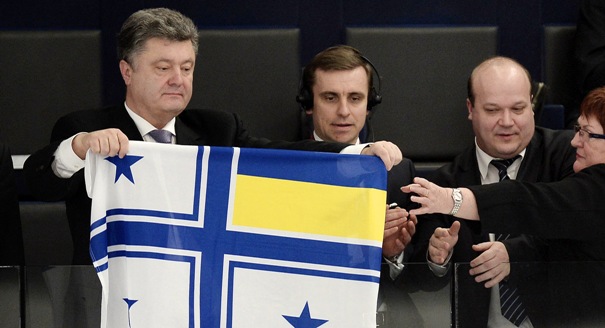
Ukrainian oligarchs face a very real threat of seeing parts of their business empires disrupted by a political crisis over which they have no control.
It’s a tough time to be a Ukrainian oligarch.
The March 13 arrest of Dmytro Firtash, a prominent Ukrainian oligarch, in response to a request from FBI, has been portrayed in dramatic terms. “An absolutely seismic event,” explained Standard Bank’s Tim Ash. Thanks to his central role in the country’s lucrative and shadowy gas trade, Firtash has been a key player in Ukraine’s notoriously corrupt political scene for more than a decade.
After the fall of President Victor Yanukovych’s government, most of Ukraine’s oligarchs were quick to change their tune, making sweeping statements appealing to the general public about the need for unity, strong anti-corruption measures, and rule of law. Two of Ukraine’s two wealthiest men, Rinat Akhmetov and Viktor Pinchuk, have tried to demonstrate their loyalty to the revolution and to portray the interdependence of business and government in a positive light. (Pinchuk caveated his comments a bit, saying “in such times in Ukraine big business can play a role temporarily in government.”)
The sharp deterioration in ties with Moscow puts these figures in a very awkward spot. Several Ukrainian oligarchs depend on access to the Russian market for their livelihood. When Moscow tried to apply pressure on Kyiv last year not to sign the Association Agreement and DCFTA with the European Union, it picked its targets very carefully. First Pinchuk’s steel company Interpipe was singled out via the cancellation of favorable import quotas that limited access to the Russian market. Then there was the ban on popular sweets from factories owned by Petro Poroshenko, a possible candidate in the upcoming presidential election set for May.
Now, with Moscow fomenting instability and inter-ethnic tensions in the country’s most economically dynamic regions, things could get even worse. Ukrainian oligarchs face a very real threat of seeing parts of their business empires disrupted by a political crisis over which they have no control. The regulatory body of the Russian-controlled Customs Union is hiking import tariffs for a range of pipes, a move that could cost Pinchuk hundreds of millions of dollars in new losses. (The Russian market accounted for 25-30 percent of Interpipe’s output last year). While no hard data has been released, it seems likely that two-way trade between Russia and Ukraine will be among the first casualties of the recent breakdown in relations. The game is also changing in Kyiv where sweeping lustration proposals could completely exclude figures who served under Yanukovych from government positions.
Deep-seated corruption and a fractious political culture have given Ukraine’s oligarchs plenty of room to survive and even thrive. The sudden disappearance of Viktor Yanukovych and his rapacious “Family” has created new political space and opportunities for these figures to exploit. But the growing gap between Kyiv and Moscow is a different matter entirely. Ukraine’s oligarchs may yet be able once again to protect their financial and political interests. Or the conflict may rip them in half. Only time will tell.
Alexandra McLees
Former Junior Fellow, Russia and Eurasia and Energy and Climate Programs
Carnegie does not take institutional positions on public policy issues; the views represented herein are those of the author(s) and do not necessarily reflect the views of Carnegie, its staff, or its trustees.

Just look at Iraq in 1991.

Marwan Muasher

A coalition of states is seeking to avert a U.S. attack, and Israel is in the forefront of their mind.

Michael Young

Baku may allow radical nationalists to publicly discuss “reunification” with Azeri Iranians, but the president and key officials prefer not to comment publicly on the protests in Iran.

Bashir Kitachaev
The country’s leadership is increasingly uneasy about multiple challenges from the Levant to the South Caucasus.

Armenak Tokmajyan
In an interview, Ishac Diwan looks at the merits and flaws in the draft legislation distributing losses from the financial collapse.
Michael Young