

Commentary
Thomas de Waal
{
  "authors": [
    "Thomas de Waal"
  ],
  "type": "commentary",
  "centerAffiliationAll": "",
  "centers": [
    "Carnegie Endowment for International Peace",
    "Carnegie Europe",
    "Carnegie Russia Eurasia Center"
  ],
  "collections": [],
  "englishNewsletterAll": "",
  "nonEnglishNewsletterAll": "",
  "primaryCenter": "Carnegie Europe",
  "programAffiliation": "",
  "programs": [],
  "projects": [],
  "regions": [
    "Russia",
    "Eastern Europe",
    "Ukraine",
    "Western Europe"
  ],
  "topics": [
    "Political Reform",
    "Economy",
    "Foreign Policy"
  ]
}
Source: Getty
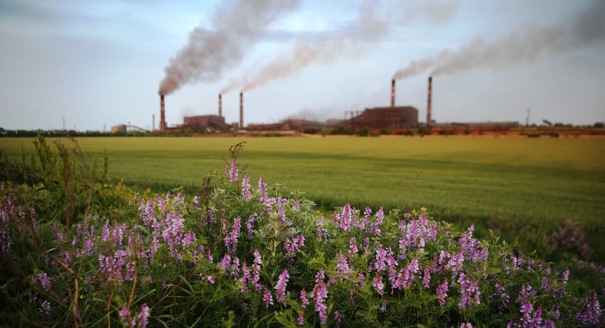
Ukraine looks set to sign a free trade deal with the European Union. However, the EU and Russia have fundamentally different ideas about what its impact will be. Now it is time for an independent study in order to fill out the political argument with some real economic data.
The election is over and Ukraine has a chance to stabilize itself. But the fundamental dilemma that precipitated the crisis last year remains.
No one seriously expects a Ukraine that is still deeply divided to make a move either toward NATO or the Eurasian Union. But the issue of Ukraine’s European choice is unavoidable.
Ukraine badly needs a path out of economic mismanagement and failure. The country’s new president, Petro Poroshenko, supported by the majority of public opinion, sees this happening through closer European integration. That means signing up to the EU’s Deep and Comprehensive Free Trade Area (DCFTA), which will give the country privileged access to the European single market in return for re-structuring of the economy to meet EU standards.
The report talked about “the threat of the erosion of free trade relations in the CIS” if Ukraine were to sign the DCFTA with Brussels.
Glazyev made the same allegations at the Yalta European Strategy summit in September last year: an EU-Ukraine free-trade deal would make Ukraine’s industry uncompetitive; it would fundamentally alter Ukraine’s trade with Russia, forcing Russia to raise tariffs to defend itself against the new economic reality to the west.
After the Yalta conference, Poroshenko parried that Ukraine was still waiting for Moscow to set out its demands, “Because Russia is our main trading partner and we want to be absolutely transparent in this process. If they think that there might be any danger to their economy, they should let us know and we should take it into account.”
Europeans argued that a DCFTA constituted the best long-term hope Ukraine had of pulling itself out of the mire. It will get good access to the world’s largest free-trade zone, growth rates will go up, and corruption will be gradually squeezed out of the system.
Two economists, Veronika Movchan and Ricardo Giucci, predict that a DCFTA could add 11.8 percent to Ukraine’s GDP.
The European Union has a good track record of proving that economic integration spreads prosperity and political stability. But it was naïve and over-bureaucratic in the way it set about implementing its Ukraine policy, in particular in its failure to engage Russia diplomatically and intellectually.
As Clifford Gaddy and Barry Ickes point out in an excellent analysis, neither Europe nor Russia can afford to carry the burden of turning around Ukraine’s economy on their own. They need to do it together.
On current trends, Poroshenko will get his free trade deal with the EU and Russia will continue to oppose it on the grounds that it undermines its national interest.
So it is time surely for a respected international organization to do a study that analyses what will be the real impact on Russia of Ukraine joining the DCFTA. Then at least this over-heated political argument can be filled out with some real economic data.

Senior Fellow, Carnegie Europe
Thomas de Waal is a senior fellow at Carnegie Europe, specializing in Eastern Europe and the Caucasus.
Recent Work
Thomas de Waal
Thomas de Waal
Carnegie does not take institutional positions on public policy issues; the views represented herein are those of the author(s) and do not necessarily reflect the views of Carnegie, its staff, or its trustees.

By failing to address Palestinian representation, the current process is bound to lead to just another temporary arrangement.

Nathan J. Brown

The armed forces champion a form of capitalism that is generating revenue, but its reliance on rent faces diminishing returns, leaving the country with massive sunk costs and deferred returns, deepening dependency on external borrowing.

Yezid Sayigh

Just look at Iraq in 1991.

Marwan Muasher

A coalition of states is seeking to avert a U.S. attack, and Israel is in the forefront of their mind.

Michael Young

Baku may allow radical nationalists to publicly discuss “reunification” with Azeri Iranians, but the president and key officials prefer not to comment publicly on the protests in Iran.

Bashir Kitachaev