

Commentary
Dmitri Trenin
{
  "authors": [
    "Dmitri Trenin"
  ],
  "type": "legacyinthemedia",
  "centerAffiliationAll": "",
  "centers": [
    "Carnegie Endowment for International Peace",
    "Carnegie Russia Eurasia Center"
  ],
  "collections": [],
  "englishNewsletterAll": "",
  "nonEnglishNewsletterAll": "",
  "primaryCenter": "Carnegie Russia Eurasia Center",
  "programAffiliation": "",
  "programs": [],
  "projects": [],
  "regions": [
    "Russia",
    "Eastern Europe",
    "Ukraine"
  ],
  "topics": [
    "Security",
    "Foreign Policy"
  ]
}
Source: Getty
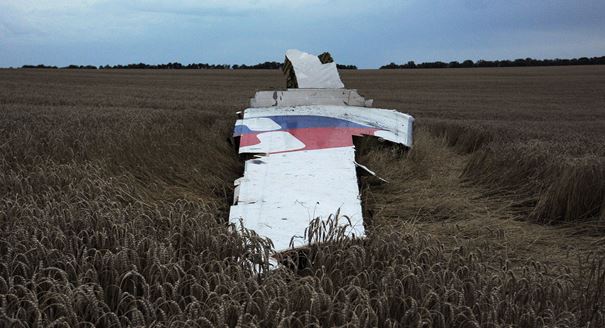
The MH17 crisis within the larger Ukraine crisis is likely to lead to the politicization of the conflict.
Source: Global Times
The downing of MH17 marks the latest peak in tensions between Russia, on the one hand, and the US and its allies, on the other. Mainstream US and European media are already treating Russia as a pariah state, and are demanding crippling sanctions against it, along with a complete isolation of the "Putin regime."
The event hit Moscow just as it seemed it had learned to navigate the turbulent waters of the Ukraine crisis. The Obama administration was having difficulties persuading reluctant Europeans to follow Washington in applying tougher sanctions.
Worse, the discovery of two US agents spying on Germany put the relationship between Berlin and Washington under new strain. France was sticking to its commitment to deliver the first of the two warships commissioned by Russia. The Italian foreign minister deemed friendly toward Russia looked poised to take over Catherine Ashton's job as the EU foreign policy chief.Within Ukraine, a German diplomatic effort supported by France and aided by the Swiss presidency in the Organization for Security and Co-operation in Europe was making progress. A contact group was established to facilitate a dialogue between Kiev and Donbass.
Ukrainian President Petro Poroshenko was even coming under pressure from German Chancellor Angela Merkel to restrain his forces and reach out to the rebels. The rebels encircled 5,000 Ukrainian troops near the Russian border.
Elsewhere, Russia also appeared to be strengthening its position. Relations with China acquired a new dimension as a result of a 30-year, $400-billion natural gas deal. Reacting to that, Japanese and South Korean companies joined forces in order to consolidate and expand their own presence in Russia.
The BRICS summit in mid-July in Fortaleza, Brazil, established a prototype international financial institution outside Western control. Russian President Vladimir Putin seemed to be on the ball during his recent weeklong tour of Latin America, strengthening old friendships with Cuba and Nicaragua, and making new friends in Argentina and Brazil.
On July 17, however, this positive trend was suddenly reversed. Moscow was branded a mass murderer, its protégés in Donbass put beyond the pale. The EU could no longer play it softly with sanctions, in particular the Dutch, with their extensive trading relations with Russia. Malaysians and other Asians, whom Moscow was wooing, were enraged.
Kiev won a huge public relations victory over its enemies in Donbass and their Moscow backers. The Ukrainian government troops resumed the offensive, retaking several towns and villages.
President Putin, who had been called a master tactician even by those who did not sympathize with him, now appeared to have overplayed his hand.
Some even compared him with Soviet leader Nikita Khrushchev, who had to back down during the 1962 Cuban missile crisis and was replaced two years later, with some predicting a similar fate for the current Kremlin incumbent.
Against the background of a horrible tragedy, this feeling of vindication and triumph on the one side, and frustration and consternation on the other, did not last long, however.
The US intelligence leak on Tuesday suggested there was no definite evidence proving who pulled the trigger, essentially exonerating Russia. For their part, the Russians, while not directly accusing Ukraine, produced satellite imagery and radar control data that posed a number of hard and interesting questions. Putin did not back down on his support for the insurgents, but urged them to cooperate with the investigation, which they did.
While receiving the plane's black boxes from the rebels, the Malaysians treated them as a local authority, and not, as Kiev would have it, "terrorists." The Europeans postponed imposing new sanctions on Russia yet again.
The MH17 crisis within the larger Ukraine crisis is likely to lead to the politicization of the conflict.
It is quite clear that, absent massive military support or a large-scale invasion by Russia, both of which are increasingly unlikely, the insurgency will probably morph over time into guerrilla warfare.
For Kiev, however, Donbass and much of Ukraine's southeast, will remain a difficult territory.
There, Putin will be changing tactics and strategy, but not his long-term goals. The notorious fractiousness of the Ukrainian elite and the country's dire financial and economic situation leave the field wide open for maneuvering.
Former Director, Carnegie Moscow Center
Trenin was director of the Carnegie Moscow Center from 2008 to early 2022.
Recent Work
Dmitri Trenin
Dmitri Trenin
Carnegie does not take institutional positions on public policy issues; the views represented herein are those of the author(s) and do not necessarily reflect the views of Carnegie, its staff, or its trustees.

In an interview, Ian Lustick and Eli Clifton discuss their new book on why a prominent ally has so much influence in America.

Michael Young

By failing to address Palestinian representation, the current process is bound to lead to just another temporary arrangement.

Nathan J. Brown

Just look at Iraq in 1991.

Marwan Muasher

A coalition of states is seeking to avert a U.S. attack, and Israel is in the forefront of their mind.
Michael Young

Baku may allow radical nationalists to publicly discuss “reunification” with Azeri Iranians, but the president and key officials prefer not to comment publicly on the protests in Iran.

Bashir Kitachaev