

Commentary
Judy Dempsey
{
  "authors": [
    "Judy Dempsey"
  ],
  "type": "legacyinthemedia",
  "centerAffiliationAll": "dc",
  "centers": [
    "Carnegie Endowment for International Peace",
    "Carnegie Europe"
  ],
  "collections": [
    "Transatlantic Cooperation",
    "Europe’s Southern Neighborhood"
  ],
  "englishNewsletterAll": "ctw",
  "nonEnglishNewsletterAll": "",
  "primaryCenter": "Carnegie Europe",
  "programAffiliation": "EP",
  "programs": [
    "Europe"
  ],
  "projects": [],
  "regions": [
    "Europe",
    "Western Europe",
    "Germany",
    "Iran"
  ],
  "topics": [
    "Foreign Policy",
    "Security",
    "Military"
  ]
}
Source: Getty
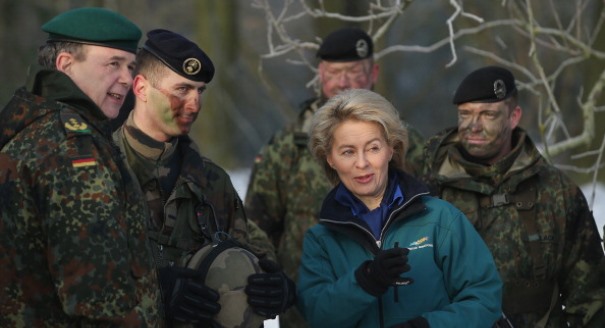
Germany has expressed its readiness to join the coalition of the willing against the Islamic State. But can the country’s military forces live up to its NATO engagement?
Source: Deutsche Welle
Speaking to Deutsche Welle’s Quadriga, Judy Dempsey discussed the German public’s low appetite for warfare, which in turn partly explains the relative poor state of the German military forces. However, Dempsey argued that this was a problem not only for Germany, and that demilitarization had also been witnessed in France, the UK, and the Netherlands over the last few years, demonstrating that there was clearly a “war weariness after Iraq, after Afghanistan, and after the botched mission in Libya.”Dempsey explained that even though public opinion in Germany might be opposed to war, the country’s political elite is now choosing to go against it and rethink the world order’s “predictability.” She also recommended that German Defense Minister Ursula von der Leyen and her advisers should not let the issue of the present state of the German army disappear, but should make the subject accessible and widen the debate.

Nonresident Senior Fellow, Carnegie Europe
Judy Dempsey is a nonresident senior fellow at Carnegie Europe
Recent Work
Judy Dempsey
Judy Dempsey
Carnegie does not take institutional positions on public policy issues; the views represented herein are those of the author(s) and do not necessarily reflect the views of Carnegie, its staff, or its trustees.

By failing to address Palestinian representation, the current process is bound to lead to just another temporary arrangement.

Nathan J. Brown

The armed forces champion a form of capitalism that is generating revenue, but its reliance on rent faces diminishing returns, leaving the country with massive sunk costs and deferred returns, deepening dependency on external borrowing.

Yezid Sayigh

Morocco and Algeria, each in its own way, are having to navigate the global economic fallout of the U.S.-Israeli military campaign against Iran.

Yasmine Zarhloule
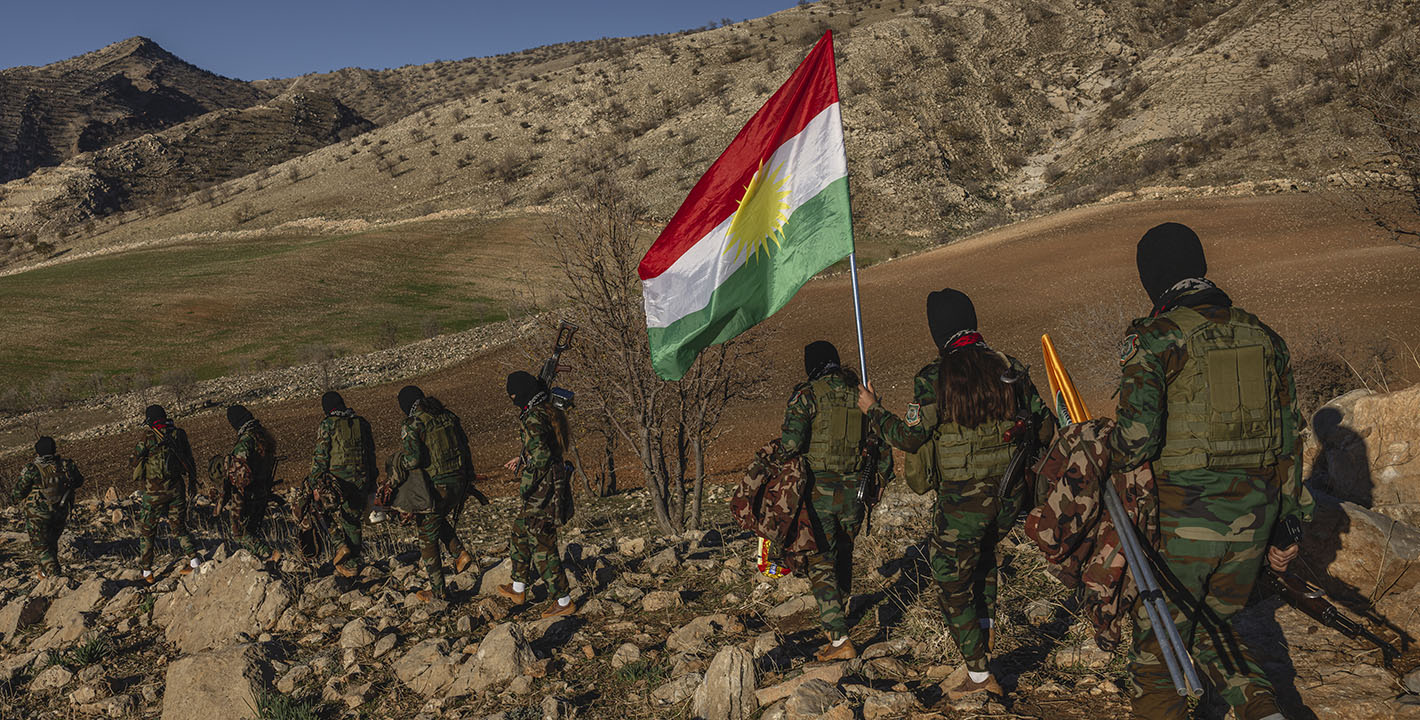
Following its deal with the United States, Iran may act against Iraq-based dissidents.
Wladimir van Wilgenburg

This will be the region’s most representative tournament, amid broad changes in its footballing landscape.

Issam Kayssi