

Article
Carole Nakhle
{
  "authors": [
    "Carole Nakhle"
  ],
  "type": "other",
  "centerAffiliationAll": "dc",
  "centers": [
    "Carnegie Endowment for International Peace",
    "Malcolm H. Kerr Carnegie Middle East Center"
  ],
  "collections": [],
  "englishNewsletterAll": "menaTransitions",
  "nonEnglishNewsletterAll": "",
  "primaryCenter": "Malcolm H. Kerr Carnegie Middle East Center",
  "programAffiliation": "MEP",
  "programs": [
    "Middle East"
  ],
  "projects": [],
  "regions": [
    "Levant",
    "Lebanon",
    "Middle East"
  ],
  "topics": [
    "Economy",
    "Climate Change"
  ]
}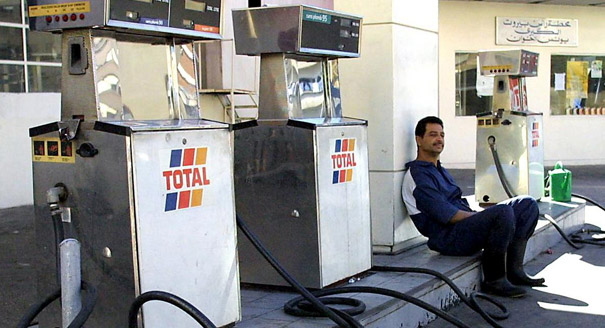
Source: Getty
Lebanon’s petroleum fiscal regime must clearly define the laws and regulations of the country’s oil and gas sector and set a framework for hydrocarbon wealth between the government and its investors.
Source: Institut des Finances Basil Fleihan
The Lebanese ministry of Finance is currently reviewing the taxation system in view of establishing a specific fiscal regime for petroleum activities. Such regime needs to finely define the features of the oil and gas sector and set the main framework for profit sharing of the hydrocarbon wealth between the government and the investors, whose interests diverge more often than they converge.The components of a fiscal regime are often misunderstood. Though the corporate income tax forms the system's corner stone, it remains one of numerous taxation and para-taxation tools that constitute the fiscal regime for petroleum activities in any country. Investors examine the regime in its totally, when assessing the investment attractiveness of a country.
In fact, fiscal regime of petroleum activities have become hihgly sophisticated worldwide, sharing many common features that are difficult to classify according to a specific terminology, at least from an economic perspective. The fact remains that different fiscal regimes may lead to the same desired results in terms of restrictions or overall economic outcomes. The system deign and thus consistency, including the interactions between the various fiscal and parafiascal instruments, as well as the details concerning the bundle fiscal tools imposed are far more important elements than the type of fiscal regime that is chosen.
Former Nonresident Scholar, Middle East Center
Nakhle was a nonresident scholar at Carnegie Middle East Center, specializing in international petroleum contracts and fiscal regimes for the oil and gas industry, world oil and gas market developments, energy policy, and oil and gas revenue management.
Recent Work
Carole Nakhle
Carole Nakhle
Carnegie does not take institutional positions on public policy issues; the views represented herein are those of the author(s) and do not necessarily reflect the views of Carnegie, its staff, or its trustees.

Huawei pushed hard to enter the Egyptian data centers market, until the Americans made a better offer.

Angie Omar

The accord represents a pivotal moment in the region to avert a security vacuum in the Gulf.


Azeema Cheema, Mohanad Hage Ali

In an interview, Jason Burke discusses his sweeping account of the “revolutionists” who so shaped the 1970s and early 1980s.

Michael Young
Lying at the heart of Lebanon’s dysfunction is an inability to secure accountability and institutional legitimacy.

Maha Yahya
In an interview, Sohaib Jawhar analyzes the profound changes in the ties between the neighboring countries.
Michael Young