

Commentary
Alexey Malashenko
{
  "authors": [
    "Alexey Malashenko"
  ],
  "type": "commentary",
  "centerAffiliationAll": "",
  "centers": [
    "Carnegie Endowment for International Peace",
    "Carnegie Russia Eurasia Center"
  ],
  "collections": [],
  "englishNewsletterAll": "",
  "nonEnglishNewsletterAll": "",
  "primaryCenter": "Carnegie Russia Eurasia Center",
  "programAffiliation": "",
  "programs": [],
  "projects": [],
  "regions": [
    "Russia",
    "Western Europe",
    "France"
  ],
  "topics": [
    "Security",
    "Civil Society",
    "Religion",
    "Economy"
  ]
}
Source: Getty
An optimal model for the painless existence of Muslims in an alien cultural and religious environment has not yet been found and is unlikely to appear in the near future. In essence, Europe is dealing with a conflict of identities, which continues to increase.
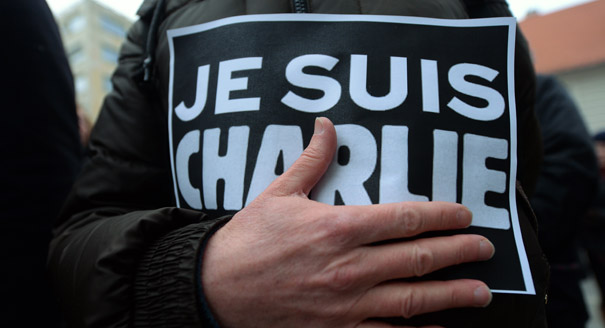
The string of terrorist attacks in France—the killing of twelve staff members at the magazine Charlie Hebdo on January 7 and the murder of four hostages at a kosher grocery store on January 9—has drawn an amazingly impressive response. A million and a half marchers took to the streets in Paris alone, and up to 5 million people took part in rallies across France. Almost 60 heads of state showed up for the Paris march. Civil society joined forces with politicians, which does not happen all that often.
This reaction from Europeans should make a strong impression on Muslims. Most of them also oppose extremism, which disrupts the normal course of their lives, exacerbates difficulties adapting to European realities, and creates an air of intolerance. Islam is being increasingly judged based on the actions of religious extremists. Acts of terrorism similar to the ones in Paris tend to isolate Muslims from the rest of society.
One of the difficulties facing the Muslim community is adjusting to the culture of their new home. Unfortunately, the record reflects the fact that an optimal model for the painless existence of Muslims in an alien cultural and religious environment has not yet been found and is unlikely to appear in the near future. Assimilation is all but impossible; it is evident that adaptation has been very problematic, and multiculturalism, in which many put a lot of stock, has effectively failed. In essence, Europe is dealing with a conflict of identities, which continues to increase.
The controversy surrounding cartoons of the Prophet Muhammad represents a clear and dangerous illustration of this development. It is highly unlikely that a compromise on this particular subject will ever be reached. The fact that many media outlets reprinted the cartoons as a token of solidarity with their fallen colleagues can be interpreted as a display of their commitment to freedom of expression even at risk to their lives, but it is also a challenge to Muslims, a provocation.
In this context, Russia’s position is quite interesting. On the one hand, the Kremlin unequivocally condemned the terrorist attacks—in fact, nothing short of that could have been expected. On the other hand, the Russian foreign minister rather than the president represented the country at the anti-terrorism rally (the Ukrainian impasse played a role here). In a sense, the Chechen leader Ramzan Kadyrov, who effectively dons the hat of a federal-level politician, has expressed Moscow’s views on events in France with his condemnation of the Mohammad cartoons. The official Russian propaganda machine has frequently assailed the Western media and Western society as a whole for its “excessive freedoms” that lead to “total permissiveness.” In fact, in this, Russian and Islamic ideologues find themselves in agreement.
Former Scholar in Residence, Religion, Society, and Security Program
Malashenko is a former chair of the Carnegie Moscow Center’s Religion, Society, and Security Program.
Recent Work
Alexey Malashenko
Alexey Malashenko
Carnegie does not take institutional positions on public policy issues; the views represented herein are those of the author(s) and do not necessarily reflect the views of Carnegie, its staff, or its trustees.

The armed forces champion a form of capitalism that is generating revenue, but its reliance on rent faces diminishing returns, leaving the country with massive sunk costs and deferred returns, deepening dependency on external borrowing.

Yezid Sayigh
In an interview, Elizabeth Thompson recalls how the country formulated a liberal constitution in 1920, before being denied by France and Britain.

Michael Young

Just look at Iraq in 1991.

Marwan Muasher

Baku may allow radical nationalists to publicly discuss “reunification” with Azeri Iranians, but the president and key officials prefer not to comment publicly on the protests in Iran.

Bashir Kitachaev

The country’s leadership is increasingly uneasy about multiple challenges from the Levant to the South Caucasus.

Armenak Tokmajyan