

Research
- +8
William J. Burns, Michael Chertoff, Catherine Ashton, …
{
  "authors": [
    "William J. Burns"
  ],
  "type": "legacyinthemedia",
  "centerAffiliationAll": "",
  "centers": [
    "Carnegie Endowment for International Peace",
    "Carnegie Russia Eurasia Center",
    "Carnegie China"
  ],
  "collections": [
    "Iranian Proliferation"
  ],
  "englishNewsletterAll": "",
  "nonEnglishNewsletterAll": "",
  "primaryCenter": "Carnegie China",
  "programAffiliation": "",
  "programs": [],
  "projects": [
    "Eurasia in Transition"
  ],
  "regions": [
    "North America",
    "United States",
    "South America",
    "Middle East",
    "Iran",
    "East Asia",
    "China"
  ],
  "topics": [
    "Political Reform",
    "Democracy",
    "Economy",
    "Trade",
    "Foreign Policy",
    "Nuclear Policy",
    "Civil Society",
    "Security",
    "Military"
  ]
}
Source: Getty
Three organizing principles to guide the use of American power in a fragmented world.
Source: National Interest
The international landscape facing the United States is as crowded, chaotic and competitive as it has been in any of our lifetimes. American global preeminence may not last forever. Betting on its imminent demise, however, would be deeply unwise.
All the standard indicators of national power project that the United States will remain the most significant global player for at least several decades. During this window, the United States has a genuine strategic opportunity to shape a twenty-first-century international order that reflects new realities and dynamics; guards against regional hegemons and nonstate security threats; and updates the rules of the road and institutions essential to safeguarding the global commons and sustaining American interests and values.Three organizing principles should guide the use of American power in a fragmented world.
First, effective projection of American power requires reinforcing America’s economic, political and moral foundations. America today is in continuing need of renewal. Even in the midst of a robust recovery, we face no shortage of pressing economic challenges. At a time in which we are working hard to mobilize coalitions abroad, we cannot seem to mobilize them at home. And as long as we fail to protect the civil rights of all our citizens, the resonance of our example will continue to suffer.
Second, we need to continue to rebalance our priorities and strategic investments across regions of the world. We also need to rebalance our power portfolio—prioritizing diplomacy backed by force, as opposed to force backed by diplomacy, and long-term affirmative investments in development aid and liberal trade along with near-term punitive actions like sanctions.
That is why completing the Trans-Pacific Partnership is so critical for our staying power in the Asia-Pacific. It is why finding a stable mix of competition and cooperation in relations with a rising China is so central to regional and international order. It is why investing in strategic partnership with India remains essential, and why reinvigorating transatlantic ties through a new trade agreement and a common approach to revived challenges from Russia will be crucial. It is why a strong, verifiable agreement with Iran is the best of the available alternatives to prevent and deter Iran from developing a nuclear weapon—even as we must ensure its rigorous execution and embed it in a wider strategy for reassuring our friends and pushing back against threatening Iranian behavior across the Middle East. And it is why active focus on the Western Hemisphere, and the opportunities it offers as an emerging center of gravity in the global energy market, is so necessary.
Finally, American power should seek to reshape global rules of the road and institutions to fit new realities. We cannot afford to wait for other forces and other events to reshape the international system for us. The failure thus far to adapt the International Monetary Fund or to engage constructively on the Asian Infrastructure Investment Bank offers a striking recent example of the risks of ceding the initiative. There is simply too much at stake over the next few years in the realms of commerce, climate and cyberspace, among many other overarching issues, to react rather than act.
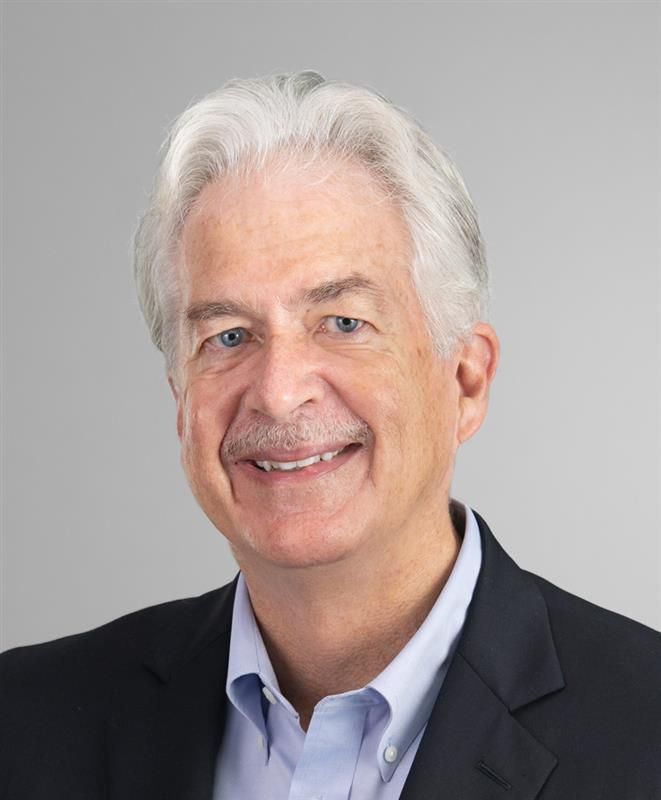
Former Carnegie President (2015-2021)
A former career diplomat, William J. Burns served as director of the CIA, deputy secretary of State, and ambassador to Russia and Jordan. Burns was also president of the Carnegie Endowment for International Peace from 2015 to 2021.
Recent Work
William J. Burns, Michael Chertoff, Catherine Ashton, …
William J. Burns
Carnegie does not take institutional positions on public policy issues; the views represented herein are those of the author(s) and do not necessarily reflect the views of Carnegie, its staff, or its trustees.

In an interview, Rozina Ali discusses her new book on the rise and manifestations of Islamophobia in the United States.

Michael Young

In an interview, Ian Lustick and Eli Clifton discuss their new book on why a prominent ally has so much influence in America.
Michael Young

As the U.S. stumbles in its war with Iran, we are likely to see an acceleration of its disengagement from the region.
Michael Young

Middle Eastern states should welcome an accelerated U.S. disengagement from their region.
Michael Young

In an interview, former ambassador Charles Freeman assesses the Trump administration’s war against Iran.
Michael Young