

Commentary
In an interview, Ian Lustick and Eli Clifton discuss their new book on why a prominent ally has so much influence in America.
Michael Young
{
  "authors": [
    "Milan Vaishnav",
    "Sadanand Dhume"
  ],
  "type": "legacyinthemedia",
  "centerAffiliationAll": "dc",
  "centers": [
    "Carnegie Endowment for International Peace"
  ],
  "collections": [],
  "englishNewsletterAll": "ctw",
  "nonEnglishNewsletterAll": "",
  "primaryCenter": "Carnegie Endowment for International Peace",
  "programAffiliation": "SAP",
  "programs": [
    "South Asia"
  ],
  "projects": [],
  "regions": [
    "South Asia",
    "India"
  ],
  "topics": [
    "Political Reform",
    "Economy",
    "Foreign Policy"
  ]
}
Source: Getty
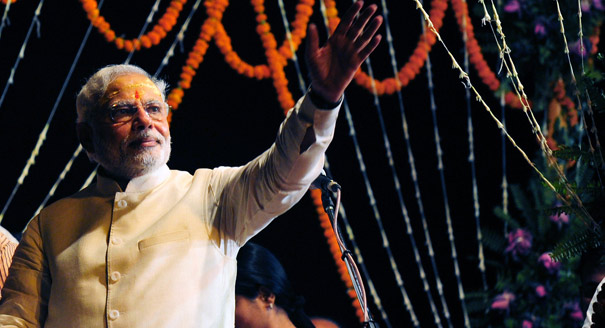
On the eve of Modi’s second visit to the United States, what are the outcomes of the U.S.-India Strategic and Commercial Dialogue and what is the status of the bilateral relationship?
Source: Bloomberg TV India
On the eve of Modi’s second visit to the United States, Carnegie’s Milan Vaishnav and Sandanand Dhune from the American Enterprise Institute discussed the outcomes of the U.S.-India Strategic and Commercial Dialogue, the BJP’s reform agenda, and the impact of upcoming state elections in Bihar. On U.S.-India cooperation, Vaishnav noted an increasingly convergent position regarding Pakistan. He also spoke of China, saying that whether or not the text of the joint statement has anything to say about China, the People’s Republic nonetheless looms large in the subtext of the U.S.-India relationship. On the economy, Vaishnav contended that India is trending in the right direction compared to other emerging markets, but not improving with the speed that most people hoped it would. A lot of reform, Vaishnav concluded, still needs to be done.

Director and Senior Fellow, South Asia Program
Milan Vaishnav is a senior fellow and director of the South Asia Program and the host of the Grand Tamasha podcast at the Carnegie Endowment for International Peace. His primary research focus is the political economy of India, and he examines issues such as corruption and governance, state capacity, federalism, and electoral behavior. He also conducts research on the Indian diaspora.
Sadanand Dhume
Council on Foreign Relations
Carnegie does not take institutional positions on public policy issues; the views represented herein are those of the author(s) and do not necessarily reflect the views of Carnegie, its staff, or its trustees.

In an interview, Ian Lustick and Eli Clifton discuss their new book on why a prominent ally has so much influence in America.

Michael Young

By failing to address Palestinian representation, the current process is bound to lead to just another temporary arrangement.

Nathan J. Brown

The armed forces champion a form of capitalism that is generating revenue, but its reliance on rent faces diminishing returns, leaving the country with massive sunk costs and deferred returns, deepening dependency on external borrowing.

Yezid Sayigh

Just look at Iraq in 1991.

Marwan Muasher

A coalition of states is seeking to avert a U.S. attack, and Israel is in the forefront of their mind.
Michael Young