

Article
C. Raja Mohan, Darshana M. Baruah
{
  "authors": [
    "C. Raja Mohan"
  ],
  "type": "legacyinthemedia",
  "centerAffiliationAll": "dc",
  "centers": [
    "Carnegie Endowment for International Peace",
    "Carnegie India"
  ],
  "collections": [],
  "englishNewsletterAll": "ctw",
  "nonEnglishNewsletterAll": "",
  "primaryCenter": "Carnegie India",
  "programAffiliation": "SAP",
  "programs": [
    "South Asia"
  ],
  "projects": [],
  "regions": [
    "South Asia",
    "Pakistan",
    "India"
  ],
  "topics": [
    "Foreign Policy"
  ]
}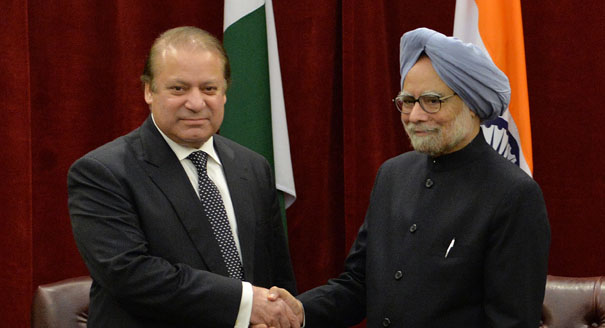
Source: Getty
Arguments about the diplomatic process in South Asia demonstrate how dysfunctional the South Asian Association for Regional Cooperation has become. India must be patient with Pakistan, while remaining engaged with others in the region.
Source: Indian Express
The arguments about political courtesy and diplomatic protocol at the South Asian home ministers conference last week suggests how dysfunctional the regional forum, SAARC, has become. It is one thing to express political differences between India and Pakistan that are real and have, for long, limited the progress of SAARC. It is entirely another matter when the diplomatic process itself becomes so disagreeable that the SAARC leaders can’t break bread together.
If SAARC is a political disaster, what happens to the regional strategy of Prime Minister Narendra Modi? Hasn’t the PM invested considerable political energy in SAARC in the name of “neighbourhood first”? After the unpleasant atmospherics that marked Home Minister Rajnath Singh’s visit to Pakistan, does it make any sense for Modi to travel to Islamabad to attend the SAARC summit, later this year?Modi’s first diplomatic act two years ago was the invitation he extended to the leaders of the SAARC countries to attend the inauguration of his tenure as PM. Modi also announced a number of new initiatives at the SAARC summit in Kathmandu at the end of 2014. But Pakistan’s reluctance to sign the South Asian Motor Vehicle Agreement, that was ready for signature at the Kathmandu summit, made it quite clear that the civilian leaders in Islamabad were not free to build South Asian regionalism. As it enthusiastically embraces economic integration with China, Pakistan throws a wet blanket on any move at trans-border commercial cooperation with India — negotiated either bilaterally or collectively under SAARC.
Modi’s first diplomatic act two years ago was the invitation he extended to the leaders of the SAARC countries to attend the inauguration of his tenure as PM. Modi also announced a number of new initiatives at the SAARC summit in Kathmandu at the end of 2014. But Pakistan’s reluctance to sign the South Asian Motor Vehicle Agreement, that was ready for signature at the Kathmandu summit, made it quite clear that the civilian leaders in Islamabad were not free to build South Asian regionalism. As it enthusiastically embraces economic integration with China, Pakistan throws a wet blanket on any move at trans-border commercial cooperation with India — negotiated either bilaterally or collectively under SAARC.
This was not the first time, or the last, that Pakistan pulled back from agreements that its senior officials actively participated in drafting. There was, for example, a massive effort in the last years of the UPA government on bilateral trade liberalisation as well as efforts to boost energy and electricity exports. The initiative simply faded away as Islamabad held back. More recently, at the 2014 Kathmandu summit, Modi offered to build a SAARC satellite. The initiative, too, has been stalled by Pakistan.
When Rawalpindi pulled the plug on mutually-beneficial agreements, Delhi in the past simply threw up its hands. This time around though India is doing something very different: to move forward with other members of the SAARC. By deciding to sign the multilateral motor vehicle agreement with Bangladesh, Bhutan and Nepal, Modi has given a big boost to regional economic cooperation in the eastern part of the subcontinent. This process also opens the door for sub-regional economic cooperation that is allowed under the SAARC charter. India’s regional satellite will no longer be “SAARC satellite” because of Pakistan’s veto. But there nevertheless will be a “South Asian satellite”, thanks to Modi’s insistence on expanding civilian space cooperation with the rest of the subcontinent.
India’s new approach has been called by some as “SAARC Minus Pakistan”. That moniker is not accurate. For the new approach does not mean India will simply give up on SAARC or Pakistan. What Delhi has done is to create a pragmatic “two-speed SAARC” that will not let Pakistan hold others in the region to ransom. Pakistan is free to choose its economic partners and decide a preferred set of partners. India, after all, can’t compel a sovereign Pakistan to cooperate. That does not, however, mean the rest of the subcontinent must remain a hostage to Pakistan’s problems with India.
The decision to send Rajnath Singh to participate in the SAARC home ministers conference also underlines Delhi’s refusal to give up on the regional forum. Singh was one of the few cabinet-rank ministers to attend the conference. In the run-up to the visit, the political signals from Islamabad were quite clear that Rajnath Singh was not welcome. But Delhi chose to exercise its right and interest in attending the conclave and making its arguments before the regional forum.
The Rajnath Singh episode brings to the fore the kind of scenarios that await India at the SAARC summit, later this year, that Modi plans to attend. There will be many sceptics in Delhi who will say it’s pointless for the Indian prime minister to travel to Islamabad, when there are no agreements to be signed and there is no guarantee of even a warm reception. We are not even talking of security problems that will be raised by the agencies who will point to the current negative mood in Pakistan.
The PM, however, will be well-advised to reaffirm his commitment to visit Pakistan for the SAARC summit later this year. He should not allow the current difficulties come in the way of his long-term strategy to alter the structure of India’s relations with Pakistan. Nor should he let the sections in Pakistan’s elite that are hostile to India undermine the SAARC.
India’s patience with Pakistan and persistence with SAARC, however, must be complemented by a very active engagement with the rest of the subcontinent through all available means, unilateral, bilateral, sub-regional and trans-regional.
This article was originally published by the Indian Express.
Former Nonresident Senior Fellow, Carnegie India
A leading analyst of India’s foreign policy, Mohan is also an expert on South Asian security, great-power relations in Asia, and arms control.
Recent Work

C. Raja Mohan, Darshana M. Baruah


Alexander Gabuev, Paul Haenle, C. Raja Mohan, …
Carnegie does not take institutional positions on public policy issues; the views represented herein are those of the author(s) and do not necessarily reflect the views of Carnegie, its staff, or its trustees.

In an interview, Ian Lustick and Eli Clifton discuss their new book on why a prominent ally has so much influence in America.

Michael Young

By failing to address Palestinian representation, the current process is bound to lead to just another temporary arrangement.

Nathan J. Brown

Just look at Iraq in 1991.

Marwan Muasher

A coalition of states is seeking to avert a U.S. attack, and Israel is in the forefront of their mind.
Michael Young

Baku may allow radical nationalists to publicly discuss “reunification” with Azeri Iranians, but the president and key officials prefer not to comment publicly on the protests in Iran.

Bashir Kitachaev