

Commentary
Aron Lund
{
  "authors": [
    "Aron Lund"
  ],
  "type": "legacyinthemedia",
  "centerAffiliationAll": "dc",
  "centers": [
    "Carnegie Endowment for International Peace",
    "Malcolm H. Kerr Carnegie Middle East Center"
  ],
  "collections": [
    "Arab Awakening"
  ],
  "englishNewsletterAll": "menaTransitions",
  "nonEnglishNewsletterAll": "",
  "primaryCenter": "Carnegie Endowment for International Peace",
  "programAffiliation": "MEP",
  "programs": [
    "Middle East"
  ],
  "projects": [],
  "regions": [
    "Middle East",
    "Syria",
    "Russia",
    "Levant"
  ],
  "topics": [
    "Political Reform",
    "Security",
    "Military",
    "Foreign Policy"
  ]
}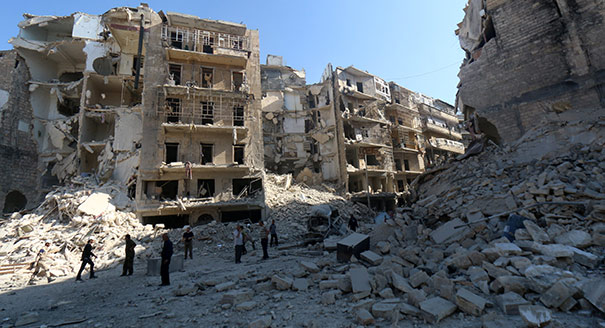
Source: Getty
As violence grips Eastern Aleppo, few opportunities for peace and humanitarian assistance appear viable.
Source: Century Foundation
“In a maximum of two months, two and a half months, the city of eastern Aleppo at this rate may be totally destroyed,” United Nations Special Envoy Staffan de Mistura told a news conference in Geneva on October 6. “Thousands of Syrian civilians, not terrorists, will be killed and many of them wounded.”
For months, the Syrian and Russian air forces have pummeled the rebel-held enclave in Eastern Aleppo with high explosives and even incendiary weapons. Peace talks and truce plans have failed to make any headway, and the insurgents have failed in their repeated attempts to break the siege. De Mistura now turned to the Al Qaeda-offshoot, formerly known as the Nusra Front and now as Fateh al-Sham—which according to the UN has some 900 hundreds fighters holed up in Eastern Aleppo among a total of 8,000 insurgents—with a dramatic proposal:
“If you did decide to leave in dignity, and with your weapons, to Idlib or anywhere you wanted to go, I personally am ready physically to accompany you,” said de Mistura. The soft-spoken, 69-year-old Swedish-Italian diplomat would seem an unlikely sight on the cratered and rubble-strewn roads of Eastern Aleppo, but here he was, proposing himself as a solitary human shield to evacuate the jihadis in return for an end to the bombing.
Syria’s factions are not likely to take up the diplomat’s offer, if recent history is any guide. Yet, the government, and its backers, including Russia and Iran, seem confident that their strategy to encircle Aleppo will work, and that restoring control over Syria’s economic capital is now only a matter of time. Absent a major reversal of fortune, the Syrian government sees a path to a form of victory. Where does that leave the United Nations, or the United States and other rebel backers? More pressingly, where does it leave Syria’s civilians...
Former Nonresident Fellow, Middle East Program
Aron Lund was a nonresident fellow in the Middle East Program and the author of several reports and books on the Syrian opposition movement.
Recent Work
Aron Lund
Aron Lund
Carnegie does not take institutional positions on public policy issues; the views represented herein are those of the author(s) and do not necessarily reflect the views of Carnegie, its staff, or its trustees.
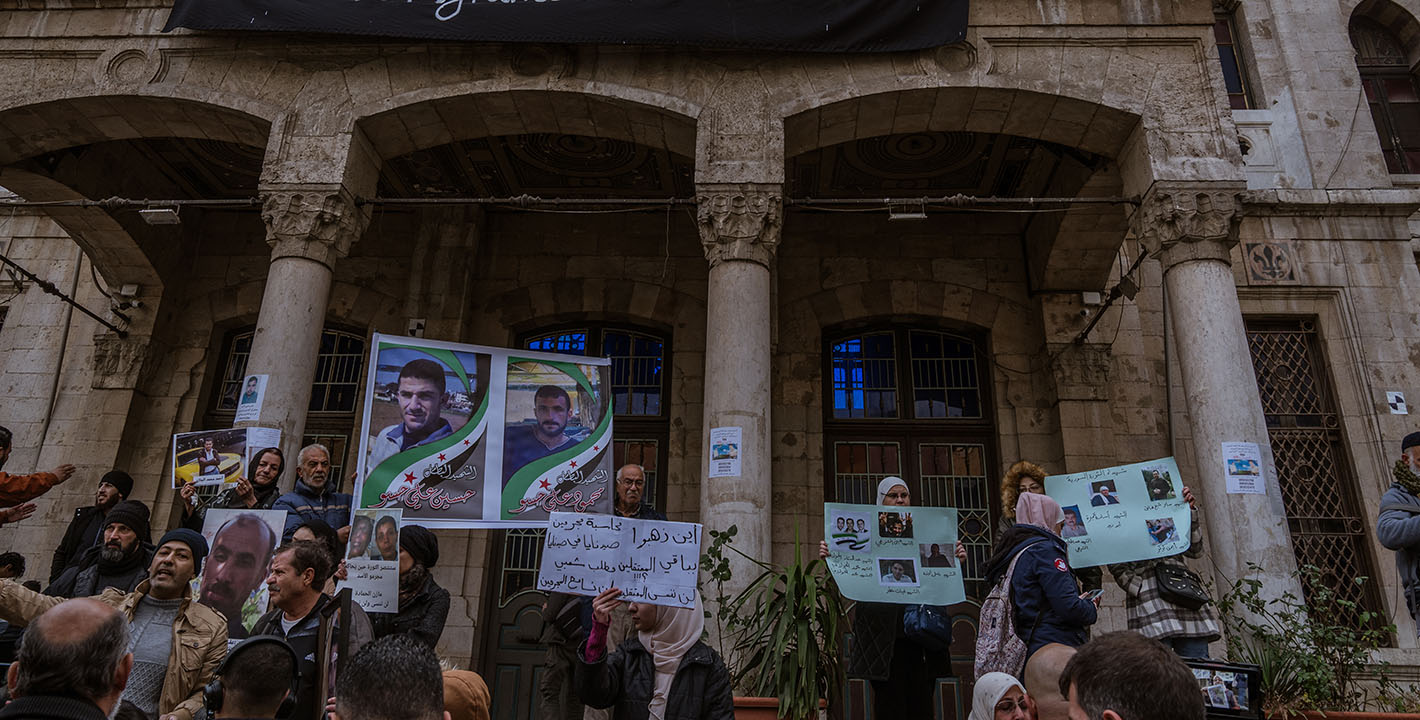
Reconciliation councils are emerging throughout the country to mediate in intracommunal disputes, many from the war years.
Natacha Danon
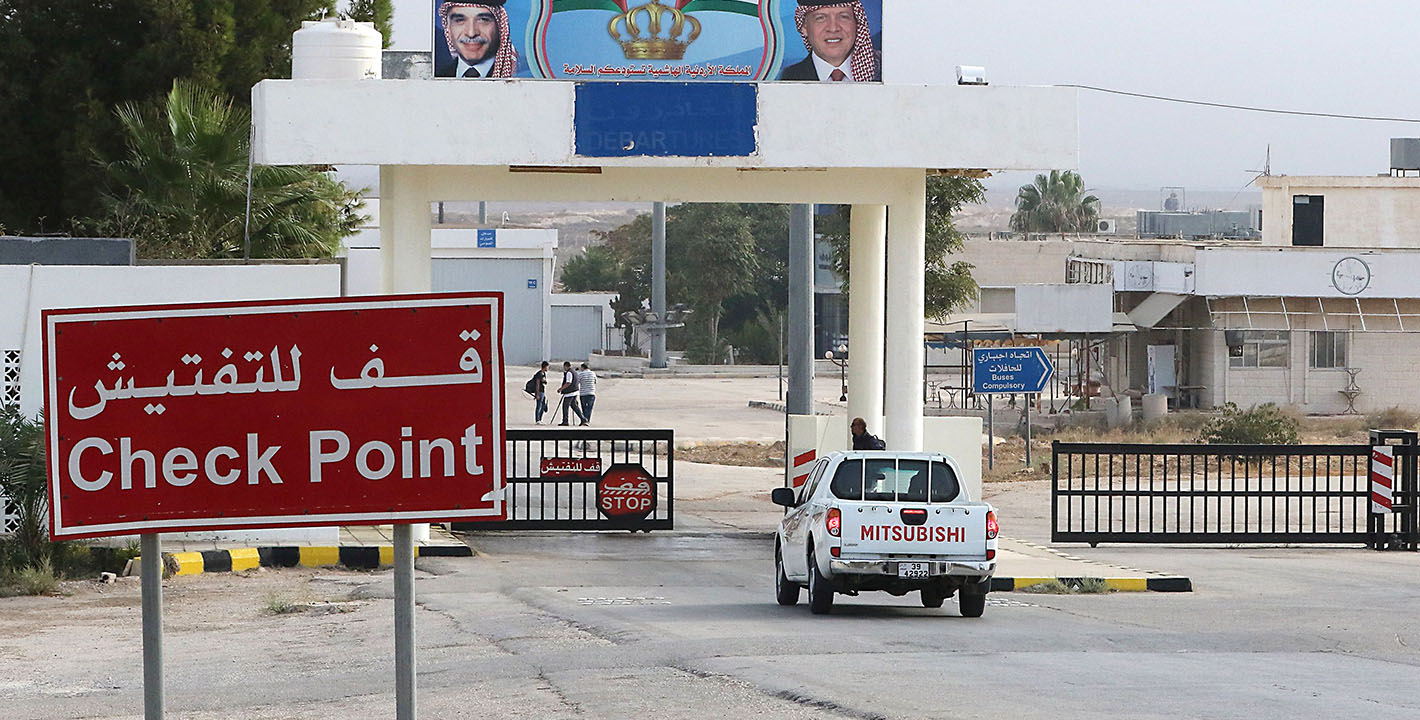
The civil war in Syria may have ended, but the country continues to serve as a source for the trafficking of illegal substances into and via Jordanian territory.

Armenak Tokmajyan, Laith Qerbaa
As the U.S.-led Coalition withdraws, the Kurds’ reliance on Baghdad, and on themselves, will only increase.
Wladimir van Wilgenburg

In an interview, Ian Lustick and Eli Clifton discuss their new book on why a prominent ally has so much influence in America.

Michael Young

As the U.S. stumbles in its war with Iran, we are likely to see an acceleration of its disengagement from the region.
Michael Young