

Commentary
By failing to address Palestinian representation, the current process is bound to lead to just another temporary arrangement.
Nathan J. Brown
{
  "authors": [
    "Constantino Xavier",
    "Darshana M. Baruah"
  ],
  "type": "other",
  "centerAffiliationAll": "",
  "centers": [
    "Carnegie Endowment for International Peace",
    "Carnegie India"
  ],
  "collections": [],
  "englishNewsletterAll": "",
  "nonEnglishNewsletterAll": "",
  "primaryCenter": "Carnegie India",
  "programAffiliation": "",
  "programs": [],
  "projects": [],
  "regions": [
    "South Asia",
    "India",
    "Western Europe"
  ],
  "topics": [
    "Economy",
    "Foreign Policy",
    "Security"
  ]
}
Source: Getty
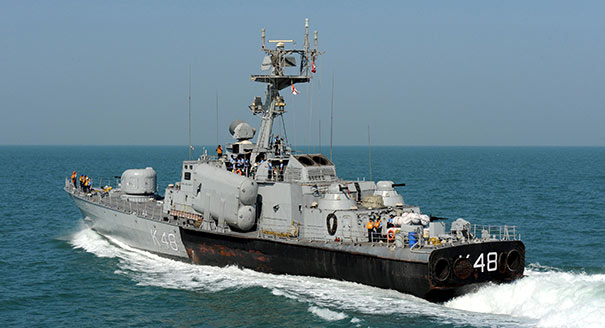
The Indian Ocean today is critical for the future of the EU and India.
Source: Global Public Policy Institute
The Indian Ocean today is critical for the future of the EU and India. The rise of piracy in the late 2000s demonstrated the pernicious effect non-traditional security threats can have on European and Indian economic growth prospects. While both aim to ensure a rules-based order, cooperative multilateralism, and sustainable growth and stability in the Indian Ocean Region, the European Union and India have rarely partnered to pursue these shared interests. Two deeply entrenched myths explain the absence of this dialogue and the consequent lack of cooperation: Indian perceptions of the EU as a strategic non-entity and irrelevant strategic actor beyond its borders; and similarly, European perceptions of an introverted India that is hesitant to take on a leadership role beyond South Asia and unwilling to work together with other middle powers. Based on consultations with policymakers and experts under the EU-India Policy Dialogue on Global Governance and Security, this brief emphasizes that, despite such perceptions, in practice the EU and India’s initiatives in the Indian Ocean are widely congruent and complementary.
Former Fellow, Carnegie India
Constantino Xavier was a fellow at Carnegie India, based in New Delhi. His research focus is on India’s foreign policy, with emphasis on relations with its neighboring countries and South Asian regional security.

Former Nonresident Scholar, South Asia Program
Darshana M. Baruah was a nonresident scholar with the South Asia Program at the Carnegie Endowment for International Peace where she directs the Indian Ocean Initiative.
Carnegie does not take institutional positions on public policy issues; the views represented herein are those of the author(s) and do not necessarily reflect the views of Carnegie, its staff, or its trustees.

By failing to address Palestinian representation, the current process is bound to lead to just another temporary arrangement.

Nathan J. Brown

The armed forces champion a form of capitalism that is generating revenue, but its reliance on rent faces diminishing returns, leaving the country with massive sunk costs and deferred returns, deepening dependency on external borrowing.

Yezid Sayigh

Just look at Iraq in 1991.

Marwan Muasher

A coalition of states is seeking to avert a U.S. attack, and Israel is in the forefront of their mind.

Michael Young

Baku may allow radical nationalists to publicly discuss “reunification” with Azeri Iranians, but the president and key officials prefer not to comment publicly on the protests in Iran.

Bashir Kitachaev