

Commentary
In an interview, Rozina Ali discusses her new book on the rise and manifestations of Islamophobia in the United States.
Michael Young
{
  "authors": [
    "Toby Dalton",
    "Jon Wolfsthal"
  ],
  "type": "legacyinthemedia",
  "centerAffiliationAll": "dc",
  "centers": [
    "Carnegie Endowment for International Peace",
    "Carnegie China"
  ],
  "collections": [
    "U.S. Nuclear Policy",
    "Korean Peninsula"
  ],
  "englishNewsletterAll": "ctw",
  "nonEnglishNewsletterAll": "",
  "primaryCenter": "Carnegie Endowment for International Peace",
  "programAffiliation": "NPP",
  "programs": [
    "Nuclear Policy"
  ],
  "projects": [],
  "regions": [
    "North America",
    "United States",
    "East Asia",
    "South Korea",
    "North Korea",
    "China"
  ],
  "topics": [
    "Security",
    "Foreign Policy",
    "Nuclear Policy",
    "Arms Control"
  ]
}
Source: Getty
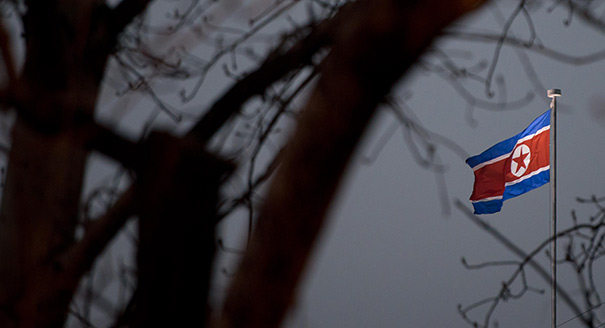
North Korea has nuclear weapons, something that won’t change anytime soon. As bad as this is, recognizing that status in a way that paves the road for South Korea to follow suit would be even worse.
Source: Politico Magazine
Secretary of State Rex Tillerson is in Asia this week on his first major trip abroad—and he’s walking into the most acute nuclear threat America and its allies face: North Korea. As ExxonMobil, CEO, Tillerson was used to difficult negotiations with authoritarian leaders, but Kim Jong Un presents an entirely different sort of challenge—a dangerous leader now armed with nuclear weapons who threatens his neighbors and regional and even global stability. This is the big leagues of international diplomacy and security.
Last week, the reclusive regime in Pyongyang fired off a salvo of medium-range ballistic missiles into the Sea of Japan, further demonstrating its growing nuclear potential. The pressure on the Trump White House to take some kind of remedial action – punitive, defensive or transactional – to deal with North Korea grows apace.
The reason these tests are so worrisome is because at some point in the not-too-distant future, North Korea will be able to put a nuclear warhead on a long-range missile and brandish it against the United States. President Trump has already drawn a red line, flatly declaring, “It won’t happen.” So far, the U.S. has delivered an anti-ballistic missile system to South Korea and leaned on the Chinese to lean on Kim, but the White House has yet to outline any kind of a strategy for stopping him.
None of the options available to President Trump are attractive, but several are fraught with dangerous side effects. The worst ideas would spark an armed conflict or undermine South Korea’s confidence in U.S. security guarantees, potentially pushing Seoul to develop its own nuclear weapons.
The White House policy review on North Korea apparently is assessing all options, ranging from negotiations to preemptive military action. Good. Direct engagement is always worth considering, especially for a new team. And with Beijing seemingly on board with tighter sanctions on Pyongyang – if the recent announcement of a Chinese cutoff of coal purchases is real – the combination of international economic pressure and talks is surely worth considering.
But the temptation to do “something” should not blind American officials or experts to the very real risks of negotiating anything short of a comprehensive agreement. A temporary freeze on missile and nuclear developments sounds better than an unconstrained and growing threat. It is also, possibly, the most logical and necessary first step toward an overall agreement between the U.S. and North Korea. But the risk that North Korea will cheat or hide facilities during a negotiated freeze is great. And any deal negotiated without full buy-in from Seoul and Tokyo could leave U.S. allies feeling increasingly vulnerable to U.S. policy whims. This is one reason the North Korea problem is so complex: The U.S. must consider not just its own security needs, but those of Japan and South Korea.
The politics of any deal with North Korea are especially tricky in Seoul, now facing a presidential election and an uncertain redirection in policy toward the North. On Friday, South Korean President Park Geun-hye was impeached over a corruption scandal involving one of her top aides. A new president might not be elected until early May, paralyzing the country’s foreign policy just as Tillerson and Trump are trying to engage the region. At the same time, there is growing support in South Korea for developing a nuclear capability to counter North Korea—the result of a number of military, political and sociological factors, not the least of which are concerns about the reliability of the United States as a security provider. Seoul’s security officials also fear U.S. direct negotiations with the North that would undercut American security commitments, or leave South Korea on the outside looking in.
Reassuring nervous allies is very difficult, perhaps tougher than deterring obstinate adversaries. It’s already hard enough for Washington to meet South Korea’s demands for protection. Over the last dozen years, careful effort to strengthen the U.S.-Korean alliance has resulted in a bilateral security relationship that many American and Korean experts judge to be the strongest in decades. Yet nervous South Korean officials want more—including the stationing or regular rotation of U.S. “strategic assets” (read: aircraft that can deliver nuclear weapons) on the Korean Peninsula and enhanced participation in U.S. nuclear planning. Suggestions that America redeploy tactical nuclear weapons in Korea are never far away.
One way Tillerson will be successful is if he uses his visit to Seoul to understand why South Koreans are fearful and how U.S. policy eases or exacerbates these fears. He’ll also have to know when it’s safe to disappoint them. Seeking a negotiated “freeze” on North Korean development of long-range missiles, for instance, would reduce U.S. exposure to North Korean nuclear weapons, but also would consolidate the nuclear threat South Korea already faces. This is unavoidable. Yet, taking action to prevent Pyongyang from developing capabilities to threaten the U.S. mainland with nuclear weapons should strengthen the credibility of U.S. commitments to come to South Korea’s defense in the event of hostilities on the Peninsula. Tillerson will need to reassure South Koreans that a freeze can be in both Seoul and Washington’s interest so long as it does not come at too high a price. That is why North Korea’s proposed trade of a nuclear freeze in exchange for an end to U.S.-South Korea military exercises should be unacceptable.
So what should Trump do? The best approach – unsatisfying as it may be – is to ensure that any negotiations with North Korea not only rely on Chinese leverage, but are accompanied by a regular and sustained effort to convince South Koreans of the durability of U.S. security commitments. In this way, the Trump administration can evaluate the costs and benefits of competing approaches while keeping the big picture in mind. Another way of stating this is that the U.S. must align short-term tactics with long-term regional strategy. Actions, real or perceived, that diminish the security of U.S. allies could over the long term result in a region in which all of the actors have nuclear weapons. Avoiding that dangerous future must be a major U.S. foreign policy goal.
North Korea has nuclear weapons, something that won’t change anytime soon. As bad as this is, recognizing that status in a way that paves the road for South Korea to follow suit would be even worse. This is a risk the Trump administration will have to confront, and it should not do so blindly.

Senior Fellow and Co-director, Nuclear Policy Program
Toby Dalton is a senior fellow and co-director of the Nuclear Policy Program at the Carnegie Endowment. An expert on nonproliferation and nuclear energy, his work addresses regional security challenges and the evolution of the global nuclear order.
Former Nonresident Scholar, Nuclear Policy Program
Jon Wolfsthal was a nonresident scholar with the Nuclear Policy Program.
Carnegie does not take institutional positions on public policy issues; the views represented herein are those of the author(s) and do not necessarily reflect the views of Carnegie, its staff, or its trustees.

In an interview, Rozina Ali discusses her new book on the rise and manifestations of Islamophobia in the United States.

Michael Young

In an interview, Ian Lustick and Eli Clifton discuss their new book on why a prominent ally has so much influence in America.
Michael Young

As the U.S. stumbles in its war with Iran, we are likely to see an acceleration of its disengagement from the region.
Michael Young

Middle Eastern states should welcome an accelerated U.S. disengagement from their region.
Michael Young

In an interview, former ambassador Charles Freeman assesses the Trump administration’s war against Iran.
Michael Young