

Commentary
Just look at Iraq in 1991.
Marwan Muasher
{
  "authors": [
    "Marc Grossman",
    "Tom West"
  ],
  "type": "other",
  "centerAffiliationAll": "dc",
  "centers": [
    "Carnegie Endowment for International Peace"
  ],
  "collections": [],
  "englishNewsletterAll": "ctw",
  "nonEnglishNewsletterAll": "",
  "primaryCenter": "Carnegie Endowment for International Peace",
  "programAffiliation": "SAP",
  "programs": [
    "South Asia"
  ],
  "projects": [],
  "regions": [
    "South Asia",
    "Afghanistan"
  ],
  "topics": [
    "Security",
    "Foreign Policy"
  ]
}
Source: Getty
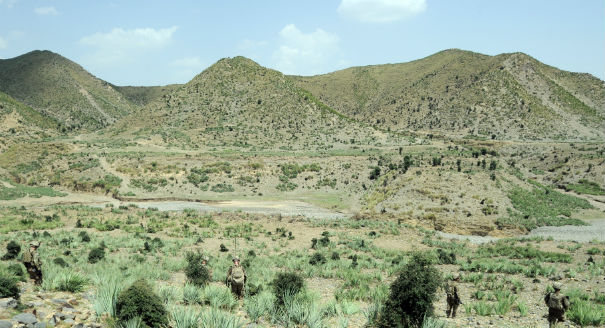
While calling for an “integrated” approach to the region, Trump left to others the arduous task of shaping and implementing diplomatic and military details.
Source: Yale Global Online
WASHINGTON: Few knew what to expect as Donald Trump stood before an audience of US soldiers to announce his administration’s policy toward Afghanistan and South Asia, given his repeated calls in the past for a US withdrawal from Afghanistan and a shocking response to the violent acts of neo-Nazis and the KKK in Charlottesville, Virginia, a few days earlier on August 15.
In fact, while wrapped in his trademark hyperbole, the president’s comments outlined a reasonable way forward. He supported a conditions-based rather than calendar-driven approach to America’s troop presence, correctly not specifying an exact number of new forces. Trump was right to say that “the consequences of a rapid exit are both predictable and unacceptable,” and so he called for US forces to focus on the counterterrorism mission while providing more training and operational support for Afghan forces. While calling for an “integrated” approach to the region, Trump left to others the arduous task of shaping and implementing diplomatic and military details.
On July 20 inYaleGlobal, we highlighted five questions we thought the Trump administration should address about Afghanistan. The president’s address on August 21 dealt with most of them.
1) What is the US mission in Afghanistan? US forces are in Afghanistan, Trump said, to prevent “the resurgence of safe havens that enable terrorists to threaten America” by “obliterating ISIS” and “crushing Al Qaeda” while providing more training and operational support for Afghan forces. Trump added that US troops would seek to prevent the Taliban from taking over Afghanistan, saying that “strategically applied force” could encourage a political settlement with the Taliban. American soldiers will have the mandate to do more in support of Afghan operations against the Taliban.
2) Will more US troops encourage other nations to send more soldiers? Trump said that the United States will ask NATO allies and partners for more troops and funding. Sadly, he did so without recognizing the substantial human and material sacrifices others have made in Afghanistan. So far, NATO allies have supported America’s new policy but have lowered expectations of additional troop commitments. Germany’s Defence Minister Ursula von der Leyen said she did not see Germany “in the front row of people who should be asked for more soldiers” since Germany increased its troops there by 18 percent in 2016, bringing the German contingent to 980. Italy, with more than 800 troops in Afghanistan, declined to comment. The British, too, appear unlikely to increase their commitment of 600 troops. Whether the Australians will send additional forces is an open question.
3) Is the Kabul government up to the task of leading its armed forces against a committed insurgency? Trump emphasized his high expectations that Afghan leaders take ownership of their country’s future. In a positive sign, President Ashraf Ghani recently agreed to a new “compact” for wide-ranging reforms. Afghan CEO Abdullah Abdullah welcomed Trump’s rejection of further US efforts for nation-building. That’s “our job,” he said.
4) Will the nations of the larger region play a constructive role to contribute to a secure Afghanistan and stable region? The president condemned Pakistan for its support for extremists, saying “no partnership can survive a country’s harboring of militants and terrorists who target US service members and officials.” Trump invited India to “help us more with Afghanistan, especially in the area of economic assistance and development.” The address did not mention China, Russia or Iran, all countries with significant influence in the region and facing varying levels of criticism from Trump in the past.
Pakistani leaders condemned Trump’s “false narrative” of safe havens. Prime Minister Shahid Abbasi’s office called for “immediate US efforts” to target terrorists on Afghan soil and deplored “Indian policies inimical to peace in the region.”
Indian officials welcomed Trump’s “determination to enhance efforts to overcome the challenges facing Afghanistan.” Playing up Beijing’s role as Pakistan’s “all-weather friend,” Chinese Foreign Minister Yang asked Secretary of State Rex Tillerson in a phone call to “attach importance to Pakistan’s important role in Afghanistan and respect Pakistan’s sovereignty and legitimate security concerns.”
5) Can an increase in US troops and more intense engagement in the fighting create conditions for a peace settlement among Afghans? “Someday,” Trump said, “after an effective military effort, perhaps it will be possible to have a political settlement that includes elements of the Taliban in Afghanistan. But nobody knows if or when that will ever happen.” His language recognizes the reality of Taliban’s current strategy, which is to fight on all fronts, including merciless attacks on civilians. Taliban spokesman Zabiullah Mujahid warned that that if the United States didn’t withdraw its troops, “soon Afghanistan will become another graveyard for this superpower in the 21st century.”
As Henry Kissinger reminds us in World Order, while “Americans hold that every problem has a solution; Chinese think that each solution is an admission ticket to a new set of problems.” As we move forward with a new approach to Afghanistan, new questions will appear.
Finally, will the president follow through on the outlined strategy? Things will certainly go wrong in Afghanistan, some of them very quickly and with great human costs. Americans, US allies, and friends will wonder which President Trump delivered the Afghanistan speech, and any uncertainty about US commitment will undermine the strategy. Is the president committed to the policy he announced on August 21, or is another shift simply a tweet away?
This article was originally published in Yale Online Global.
Marc Grossman
Ambassador Marc Grossman is a vice chairman of the Cohen Group. A US Foreign Service Officer for 29 years, he retired in 2005 as Under Secretary of State for Political Affairs. The ambassador was the US Special Representative for Afghanistan and Pakistan, 2011 to 2012, and a Kissinger Senior Fellow at Yale in 2013.
Former Nonresident Scholar, South Asia Program
Tom West was a nonresident scholar in the South Asia Program at the Carnegie Endowment for International Peace and an associate vice president at the Cohen Group.
Carnegie does not take institutional positions on public policy issues; the views represented herein are those of the author(s) and do not necessarily reflect the views of Carnegie, its staff, or its trustees.

Just look at Iraq in 1991.

Marwan Muasher

A coalition of states is seeking to avert a U.S. attack, and Israel is in the forefront of their mind.

Michael Young

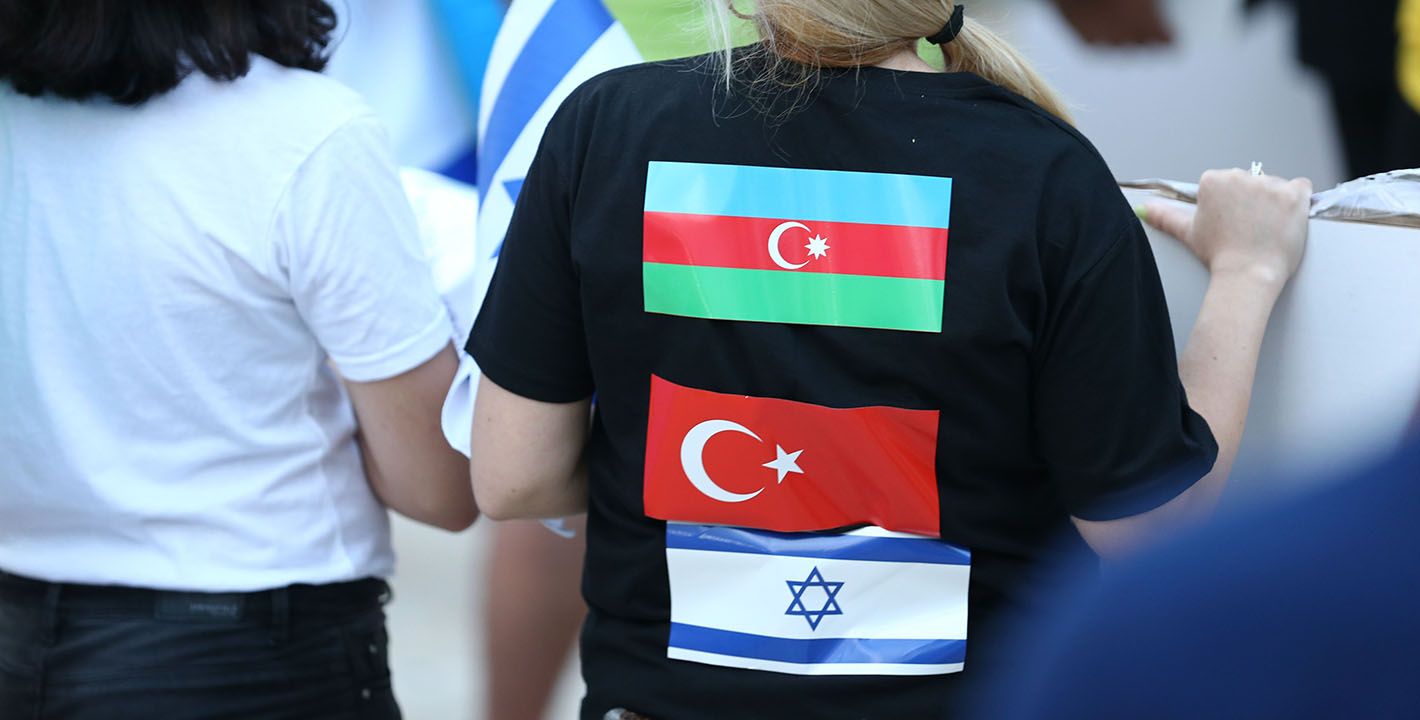
Baku may allow radical nationalists to publicly discuss “reunification” with Azeri Iranians, but the president and key officials prefer not to comment publicly on the protests in Iran.

Bashir Kitachaev
The country’s leadership is increasingly uneasy about multiple challenges from the Levant to the South Caucasus.

Armenak Tokmajyan
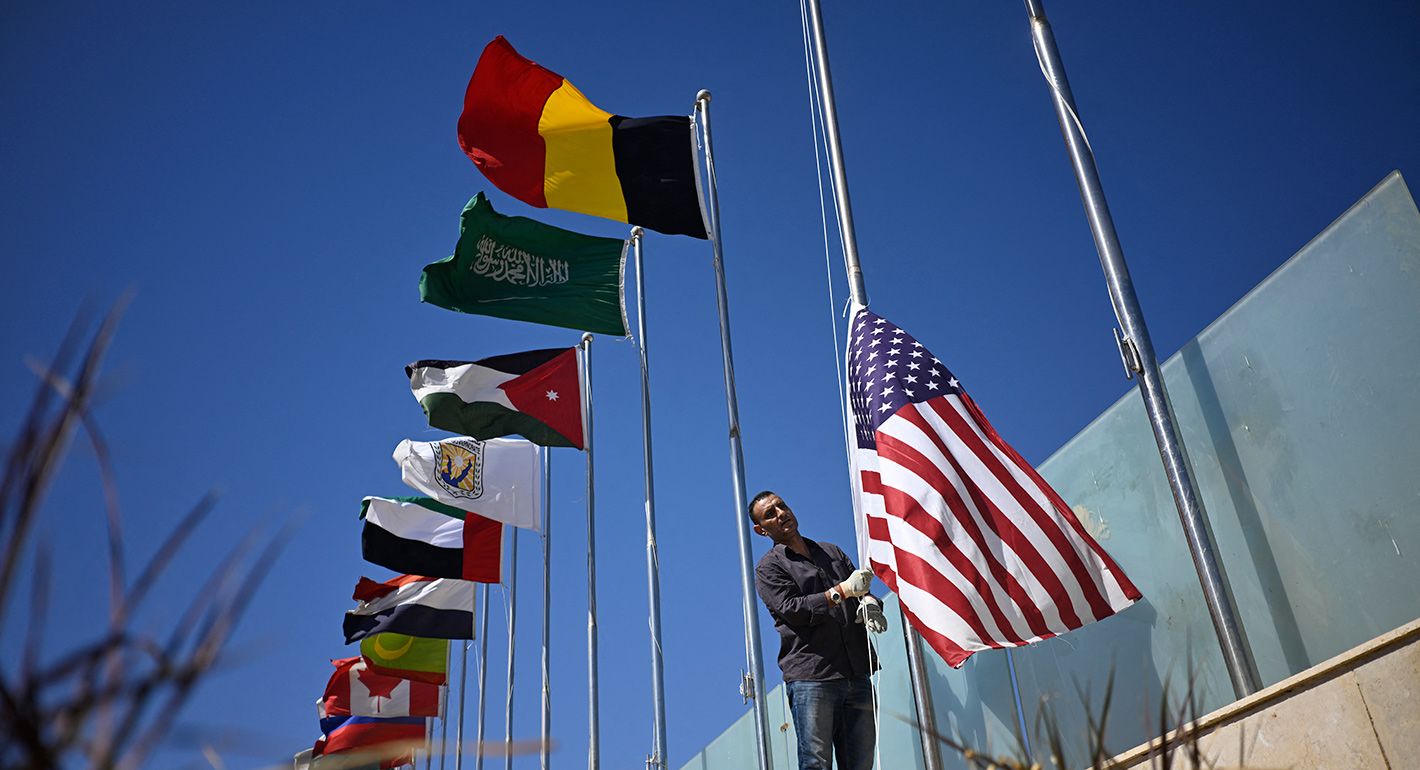
The countries of the region have engaged in sustained competition that has tested their capacities and limitations, while resisting domination by rivals. Can a more stable order emerge from this maelstrom, and what would it require?

Hamza Meddeb, Mohamed Ali Adraoui