

Article
Paul Stronski
{
  "authors": [
    "Paul Stronski"
  ],
  "type": "other",
  "centerAffiliationAll": "dc",
  "centers": [
    "Carnegie Endowment for International Peace"
  ],
  "collections": [],
  "englishNewsletterAll": "ctw",
  "nonEnglishNewsletterAll": "",
  "primaryCenter": "Carnegie Endowment for International Peace",
  "programAffiliation": "russia",
  "programs": [
    "Russia and Eurasia"
  ],
  "projects": [
    "The Return of Global Russia: A Reassessment of the Kremlin’s International Agenda"
  ],
  "regions": [
    "North Africa",
    "Sudan",
    "Libya",
    "Algeria",
    "Southern, Eastern, and Western Africa",
    "Russia",
    "Mali"
  ],
  "topics": [
    "Security",
    "Military",
    "Foreign Policy"
  ]
}
Source: Getty
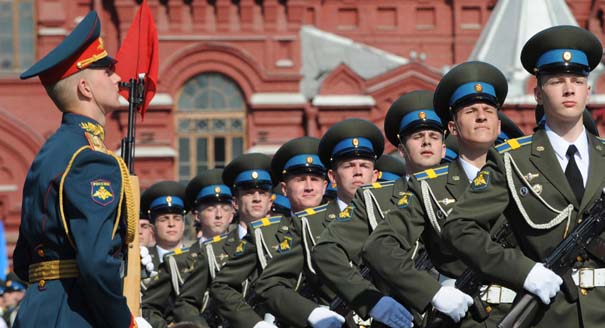
Given rising defense spending across Africa and concerns about Islamist extremism in some countries, Russia sees the continent as an area of opportunity for growth.
Source: World Politics Review
In mid-December, the United Nations granted Russia an exemption to the arms embargo on the Central African Republic, after a petition from Moscow to supply the country’s embattled military with light arms and ammunition, according to reporting by the AFP. The second-largest arms exporter in the world after the United States, Russia already sells billions of dollars in weapons annually across Africa. In an email interview, Paul Stronski, a senior fellow in the Russia and Eurasia program at the Carnegie Endowment for International Peace, discusses Russia’s arms trade with Africa, the proliferation of small arms and light weapons, and how arms sales fit into Russia’s broader approach to the continent.
Paul Stronski: Russia has always been a significant supplier of arms to Africa, dating back to the Soviet era. At that time, the Soviet arms trade was largely confined to countries that were ideologically aligned, or at least friendly to the Soviet Union, giving the commercial relationships clear Cold War overtones. Russian arms sales to the continent in the past decade, however, have been commercially driven. They are also important in shoring up the Russian military-industrial complex—an important industry and key constituency of the Putin regime’s domestic support in terms of people who both control the industry and the factory workers who are employed by it.
With only about 12 percent of Russian arms exports going to Africa in 2016, the continent is not an overwhelmingly large market in terms of Russia’s total sales. It is, however, an important market as Africa is second only to Asia-Oceana, which accounts for 68 percent, as a destination for Russian arms, according to the Stockholm International Peace Research Institute. And given rising defense spending across Africa and concerns about Islamist extremism in some countries, Russia sees the continent as an area of opportunity for growth....
This article was originally published by World Politics Review.

Former Senior Fellow, Russia and Eurasia Program
Paul Stronski was a senior fellow in Carnegie’s Russia and Eurasia Program, where his research focuses on the relationship between Russia and neighboring countries in Central Asia and the South Caucasus.
Recent Work
Paul Stronski
Paul Stronski
Carnegie does not take institutional positions on public policy issues; the views represented herein are those of the author(s) and do not necessarily reflect the views of Carnegie, its staff, or its trustees.

In an interview, Ian Lustick and Eli Clifton discuss their new book on why a prominent ally has so much influence in America.

Michael Young

By failing to address Palestinian representation, the current process is bound to lead to just another temporary arrangement.

Nathan J. Brown

The armed forces champion a form of capitalism that is generating revenue, but its reliance on rent faces diminishing returns, leaving the country with massive sunk costs and deferred returns, deepening dependency on external borrowing.

Yezid Sayigh

Morocco and Algeria, each in its own way, are having to navigate the global economic fallout of the U.S.-Israeli military campaign against Iran.

Yasmine Zarhloule
This will be the region’s most representative tournament, amid broad changes in its footballing landscape.

Issam Kayssi