

Commentary
James Schwemlein
{
  "authors": [
    "James Schwemlein"
  ],
  "type": "other",
  "centerAffiliationAll": "dc",
  "centers": [
    "Carnegie Endowment for International Peace"
  ],
  "collections": [],
  "englishNewsletterAll": "ctw",
  "nonEnglishNewsletterAll": "",
  "primaryCenter": "Carnegie Endowment for International Peace",
  "programAffiliation": "SAP",
  "programs": [
    "South Asia"
  ],
  "projects": [],
  "regions": [
    "South Asia",
    "Pakistan",
    "East Asia",
    "China"
  ],
  "topics": [
    "Economy",
    "Security"
  ]
}
Source: Getty
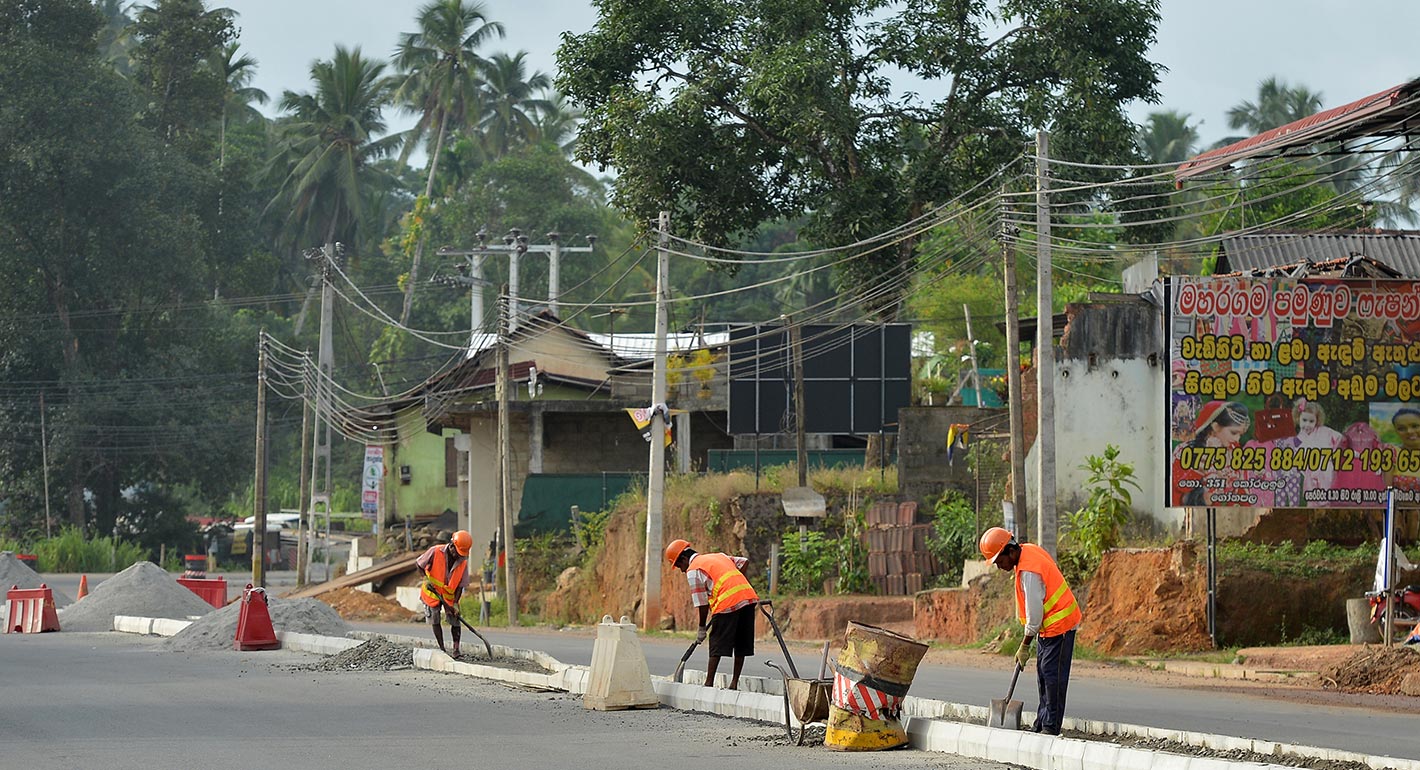
BRI recipient states undergoing democratic transitions are asserting greater influence over the direction of China’s efforts. This is likely to continue as long as China’s flawed business model remains unchanged.
Source: Asian Affairs
Much ink has been spilled about China’s Belt & Road Initiative (BRI), President Xi Jinping’s grand vision for leveraging China’s growing wealth to expand economic, political, and military influence. The initiative is typically defined as encompassing projects in some 65 countries across three continents, and in sum it represents the greatest directed investment in history with an estimated value of over $1 trillion over the lifetime of the initiative.1 But five years in, Xi’s “project of the century” is facing turbulence – from indications that China’s economy is slowing, routine construction and project management delays, and most interestingly efforts on the part of recipient countries to assert greater control over the direction of China’s efforts.
Much attention has been paid to the notion of local challenges to China’s BRI. But this commentary is misdirected. At this point, the issue is not an expansion of authoritarianism or the proliferation of a “China model.”2 Nor is it that local “pushback” marks emerging “resistance” to China’s effort, or indeed to China’s rise to great power status. Rather, what has been referred to as “pushback” or “resistance” should be understood narrowly as tactical efforts to amend, renegotiate, or cancel contracts or initiatives previously agreed and announced by Beijing and its local governmental partners. These signs need to be understood in more localized terms than they are typically applied. It is a mistake to confuse local efforts to assert greater influence or control over Chinese investments as a rebuke against China’s rise to global power status. Individual states may choose to curtail or alter Chinese investment plans, but China will remain a large, potentially dominant, actor in most Asian markets, despite tactical challenges against some of its individual programmes.3
This article posits that incidents where recipient states have attempt to assert greater influence share a common characteristic–democracy. Or, to be more precise, partial or flawed democracy.
1. https://www.fbicgroup.com/sites/default/files/B&R_Initiative_65_Countries_and_ Beyond.pdf (accessed 14 March 2019).
2. https://foreignpolicy.com/2018/05/16/on-chinas-new-silk-road-democracy-pays-atoll/ (accessed 14 March 2019).
3. https://www.foreignaffairs.com/articles/china/2018-10-24/why-democracies-areturning-against-belt-and-road (accessed 14 March 2019).

Former Nonresident Scholar, South Asia Program
James Schwemlein was a nonresident scholar in the South Asia Program at the Carnegie Endowment for International Peace.
Recent Work
James Schwemlein
James Schwemlein

Huawei pushed hard to enter the Egyptian data centers market, until the Americans made a better offer.

Angie Omar

The armed forces champion a form of capitalism that is generating revenue, but its reliance on rent faces diminishing returns, leaving the country with massive sunk costs and deferred returns, deepening dependency on external borrowing.

Yezid Sayigh

Just look at Iraq in 1991.

Marwan Muasher

Baku may allow radical nationalists to publicly discuss “reunification” with Azeri Iranians, but the president and key officials prefer not to comment publicly on the protests in Iran.

Bashir Kitachaev
In an interview, Ishac Diwan looks at the merits and flaws in the draft legislation distributing losses from the financial collapse.

Michael Young