

Article
Erik Brattberg, David Whineray
{
  "authors": [
    "David Whineray"
  ],
  "type": "other",
  "centerAffiliationAll": "dc",
  "centers": [
    "Carnegie Endowment for International Peace"
  ],
  "collections": [],
  "englishNewsletterAll": "ctw",
  "nonEnglishNewsletterAll": "",
  "primaryCenter": "Carnegie Endowment for International Peace",
  "programAffiliation": "EP",
  "programs": [
    "Europe"
  ],
  "projects": [],
  "regions": [
    "North America",
    "United States",
    "East Asia",
    "China",
    "Iran"
  ],
  "topics": [
    "Political Reform",
    "Democracy",
    "Foreign Policy"
  ]
}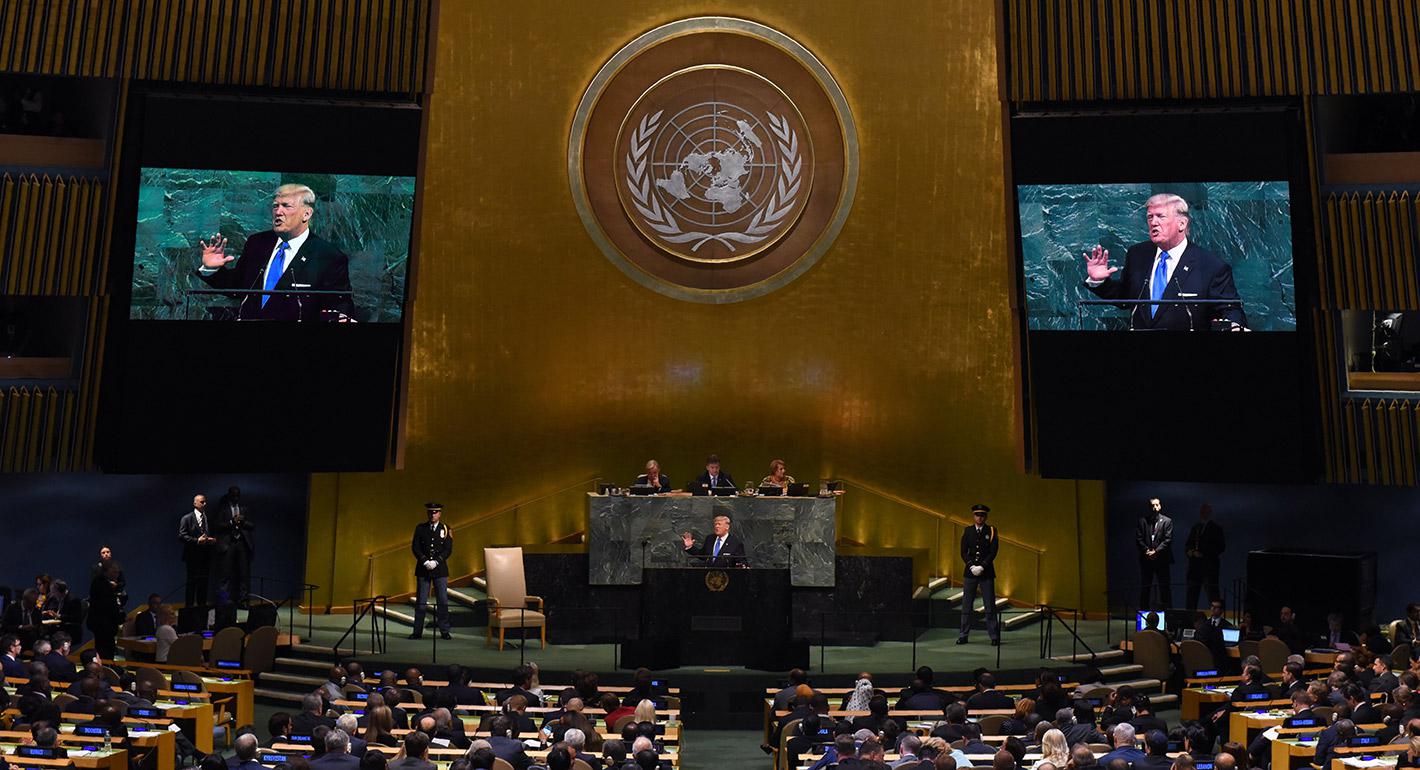
Source: Getty
The role and powers of the World Health Organization (WHO), for example, have emerged as a canvas onto which a variety of actors have projected their visions of the future of multilateralism.
Source: United Nations Center for Policy Research
Events surrounding the COVID-19 crisis have brought into focus the extent to which multilateralism generally, and the United Nations specifically, will be a central theatre for engagement between the United States and China in the years ahead. The role and powers of the World Health Organization (WHO), for example, have emerged as a canvas onto which a variety of actors have projected their visions of the future of multilateralism. However, to see how these engagements will play out, it is important to first have an understanding of the deeper, longerterm trendlines regarding US-China engagement at the UN before COVID-19 hit. This study aims to assist in providing that context.
This article was originally published by the Financial Times.
Former Nonresident Fellow, Europe Program
David Whineray was a nonresident fellow in the Europe Program at the Carnegie Endowment for International Peace in Washington, DC.
Recent Work
Erik Brattberg, David Whineray
David Whineray
Carnegie does not take institutional positions on public policy issues; the views represented herein are those of the author(s) and do not necessarily reflect the views of Carnegie, its staff, or its trustees.

In an interview, Ian Lustick and Eli Clifton discuss their new book on why a prominent ally has so much influence in America.

Michael Young

As the U.S. stumbles in its war with Iran, we are likely to see an acceleration of its disengagement from the region.
Michael Young

Huawei pushed hard to enter the Egyptian data centers market, until the Americans made a better offer.

Angie Omar

Middle Eastern states should welcome an accelerated U.S. disengagement from their region.
Michael Young

In an interview, former ambassador Charles Freeman assesses the Trump administration’s war against Iran.
Michael Young