

Article
Erik Brattberg, David Whineray
{
  "authors": [
    "David Whineray"
  ],
  "type": "commentary",
  "blog": "Strategic Europe",
  "centerAffiliationAll": "",
  "centers": [
    "Carnegie Endowment for International Peace",
    "Carnegie Europe"
  ],
  "collections": [],
  "englishNewsletterAll": "",
  "nonEnglishNewsletterAll": "",
  "primaryCenter": "Carnegie Endowment for International Peace",
  "programAffiliation": "",
  "programs": [],
  "projects": [],
  "regions": [
    "Western Europe",
    "Europe"
  ],
  "topics": [
    "Security",
    "Foreign Policy",
    "EU"
  ]
}
Source: Getty
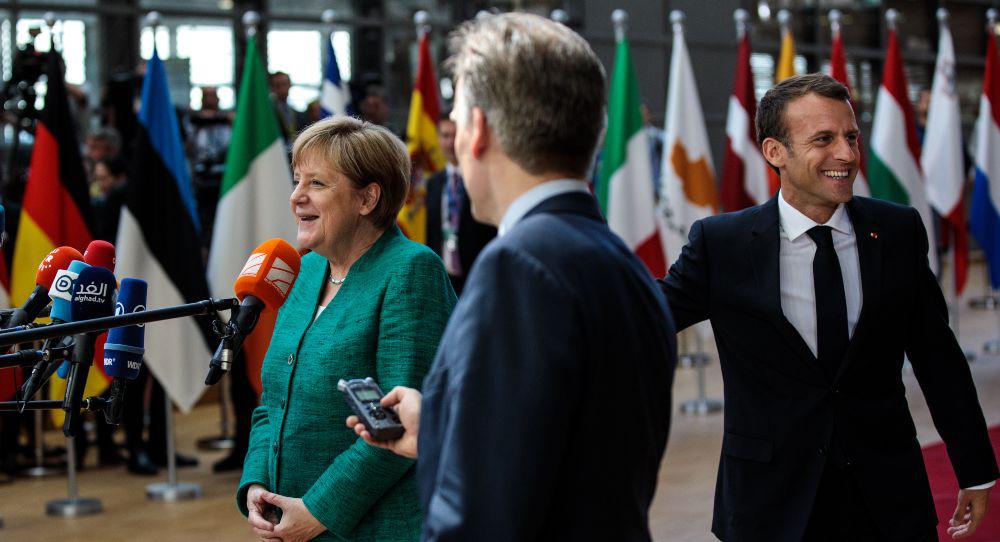
France and Germany have proposed creating a European Security Council to better enable Europe to think and act strategically. The jury is still out on whether such a council will be created.
Would a European Security Council (ESC) help address the deeper issues around Europe’s lack of political will and military capability? Which countries would sit on such a council, and how would it relate to NATO and the EU? Do Europeans even agree on what the main threats they face are?
The big questions remain, but Paris and Berlin likely see several benefits from establishing an ESC.
First, as a smaller body than the EU’s European Council and Foreign Affairs Council, an ESC could deliver faster European foreign policy positions, boosting European—and French and German—global influence. An ESC would also sidestep the difficulties of the unanimity requirement of EU Common Foreign and Security Policy (CFSP) positions and the recent trend of smaller EU member states becoming more assertive in CFSP negotiations.
Second, an ESC might deliver tougher European foreign policy positions more in line with Franco-German views. An ESC could get around the CFSP’s lowest-common-denominator problem and frustrate the Chinese (and Russian) strategy of picking off one or two smaller EU members through bilateral or economic pressure to block or water down CFSP positions—as, for example, Beijing successfully did on EU positions on the South China Sea.Third, an ESC could provide a new pan-European architecture to keep the UK connected with the European foreign policy orbit. This might mitigate the perceived post-Brexit risk of weakened European global influence if London aligned more with the outlook of U.S. President Donald Trump. An ESC would bring all Europe’s main foreign and security powers—whether inside or outside the EU—together.
Finally, for Paris, an ESC could advance a long-held objective of Europeans taking more control of European security with a new body that France dominates and, significantly, excludes the United States.
Beyond France and Germany’s ambitions, other EU member states might see an ESC as advancing their national interests too. The other three EU “bigs”—Italy, Poland, and Spain—might like it to see off a growing trend of increasing E3 (France, Germany, and UK) cooperation on European foreign policy making that excludes them.
For the EU “smalls,” they would have more influence over European foreign and security policy with some of them in an ESC than they would if E3 foreign policy cooperation increased or if the Foreign Affairs Council began to lose importance due to the difficulty in reaching unanimity among twenty-seven (in response to this, Berlin has also floated the idea of qualified majority voting on CFSP).
So would a European Security Council be a win-win for all? There are obstacles.
Some countries may be skeptical about addressing Europe’s weakness in projecting hard power with an institutional response instead of addressing the deeper, underlying issues of a lack of political will and military capability.
Furthermore, before an ESC could help Europe act more strategically, there would need to be a consensus on the threats and security priorities facing Europe and a European security strategy to address them. Do these currently exist?
Some Central Europeans may oppose the exclusion of the United States—the biggest European security power—and have reservations about a new body that increases French and German influence.
Others may be concerns that an ESC could sideline or replace the EU’s Foreign Affairs Council and undermine ambitions to establish the EU as a foreign and security policy player.
Finally, there is the impact on NATO. Some may worry about an ESC undermining the North Atlantic Council (NAC), NATO’s principal decisionmaking body, and the transatlantic alliance—especially at a time when it is being questioned on the other side of the Atlantic. They may favor giving the NAC a wider, more political role instead.
Even if a consensus was reached on the principle of creating an ESC, there may be disagreements on the detail. Would an ESC provide permanent membership and a veto to Europe’s major powers? If so, who? The E3 only? Or Italy, Poland, and Spain too? If not, would the E3 accept the authority of the ESC?
In short, the idea of an ESC could have traction, but there are significant questions too. As Europe’s predominant security actor, U.S. views will also be important. Would Washington support an ESC to increase burden sharing or oppose it because it would cut U.S. influence?
Either way, the transatlantic outlook of the Trump administration has led German Chancellor Angela Merkel and French President Emmanuel Macron to call for Europe to “take more responsibility.” A European Security Council fits this narrative. In many ways, it is an idea made in Washington.
Former Nonresident Fellow, Europe Program
David Whineray was a nonresident fellow in the Europe Program at the Carnegie Endowment for International Peace in Washington, DC.
Recent Work
Erik Brattberg, David Whineray
David Whineray
Carnegie does not take institutional positions on public policy issues; the views represented herein are those of the author(s) and do not necessarily reflect the views of Carnegie, its staff, or its trustees.

The EU can impose sanctions but struggles to enforce them without the United States. With Washington increasingly disinterested in backing European interests, the bloc must now fend for itself.


Nicu Popescu, Tiago Antunes

Russia is testing the waters of NATO’s mutual defense clause. What do strikes in Romanian territorial waters mean for the alliance’s posture toward Moscow?

Dimitar Bechev

With its public finances in shambles, the far right polling at 35 percent ahead of the 2027 presidential election, and a growing protest movement, is France’s crisis a threat to the EU’s geopolitical awakening?

Rym Momtaz, ed.

Ahead of a tough winter for Ukraine, Donald Trump’s swing back toward Russia bodes ill. But instead of panicking, Kyiv’s European allies are focusing on action.
Rym Momtaz

While the EU and European governments are embracing the much-lauded middle-power moment, this entails three difficult conundrums.

Richard Youngs