

Q&A
Dara Massicot, Aaron David Miller, Andrew S. Weiss
{
  "authors": [
    "Aaron David Miller"
  ],
  "type": "legacyinthemedia",
  "centerAffiliationAll": "",
  "centers": [
    "Carnegie Endowment for International Peace"
  ],
  "collections": [],
  "englishNewsletterAll": "",
  "nonEnglishNewsletterAll": "",
  "primaryCenter": "Carnegie Endowment for International Peace",
  "programAffiliation": "",
  "programs": [],
  "projects": [],
  "regions": [
    "Middle East",
    "Israel"
  ],
  "topics": [
    "Political Reform"
  ]
}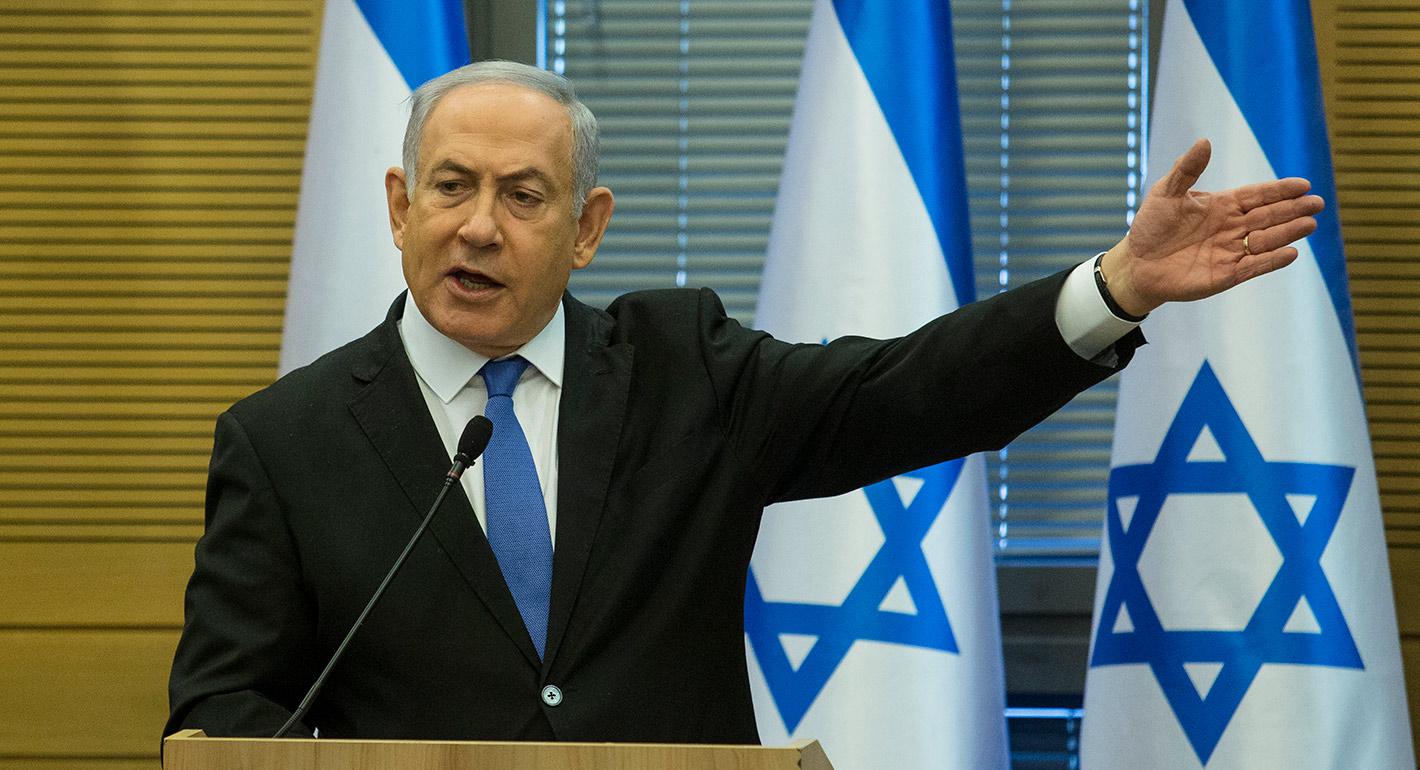
Source: Getty
To move forward with annexation Netanyahu will need to persuade himself no matter how alluring and attractive the upsides that the downsides are manageable.
Source: TIME
To annex or not to annex, that is indeed the question
Like a modern day Hamlet, Benjamin Netanyahu is pondering his next most critical decision.
Already the longest governing Prime Minister in Israel’s history and on the verge of starting a fifth term, Netanyahu appears to have made his choice. He recently told a group of Christian evangelicals that he was “confident” he’d be able to annex large parts of the West Bank. Indeed, the terms of his coalition agreement with his rival turned partner Benny Gantz allow him as of July 1 to introduce proposals to do precisely that.
But will he? He’s been Prime Minister now for almost a decade and a half and his support for annexation—which not coincidentally reappeared in April 2019 shortly before the first Israeli elections—has remained largely rhetorical. Netanyahu is preternaturally accomplished as a politician; and in many respects as a Prime Minister, too. But when it comes to major decisions in peace or war, he is no bold leader like Menachem Begin, Yitzhak Rabin, or Ariel Sharon...

Senior Fellow, American Statecraft Program
Aaron David Miller is a senior fellow at the Carnegie Endowment for International Peace, focusing on U.S. foreign policy.
Recent Work


Dara Massicot, Aaron David Miller, Andrew S. Weiss



Sophia Besch, Eric Ciaramella, Steve Feldstein, …
Carnegie does not take institutional positions on public policy issues; the views represented herein are those of the author(s) and do not necessarily reflect the views of Carnegie, its staff, or its trustees.

In an interview, Ian Lustick and Eli Clifton discuss their new book on why a prominent ally has so much influence in America.

Michael Young

As the U.S. stumbles in its war with Iran, we are likely to see an acceleration of its disengagement from the region.
Michael Young

It is improbable that Israel’s forthcoming elections will alter much in terms of how the country thinks about security.

Nathan J. Brown

The accord represents a pivotal moment in the region to avert a security vacuum in the Gulf.


Azeema Cheema, Mohanad Hage Ali

In an interview, Jason Burke discusses his sweeping account of the “revolutionists” who so shaped the 1970s and early 1980s.
Michael Young