

Commentary
By failing to address Palestinian representation, the current process is bound to lead to just another temporary arrangement.
Nathan J. Brown
{
  "authors": [
    "Miloš Pavković",
    "Fitim Gashi",
    "Iliriana Gjoni",
    "Dimitar Bechev"
  ],
  "type": "commentary",
  "centerAffiliationAll": "",
  "centers": [
    "Carnegie Endowment for International Peace",
    "Carnegie Europe"
  ],
  "collections": [
    "EU Integration and Enlargement"
  ],
  "englishNewsletterAll": "",
  "nonEnglishNewsletterAll": "",
  "primaryCenter": "Carnegie Europe",
  "programAffiliation": "",
  "regions": [
    "Europe",
    "Western Europe",
    "Western Balkans"
  ],
  "topics": [
    "EU",
    "Foreign Policy",
    "EU Enlargement"
  ]
}
Source: Getty
Three years after the Ohrid Agreement, Kosovo and Serbia remain far from normalization. To revive implementation, the EU should abandon its ambiguity and act as an even-handed arbitrator.
Normalizing relations between Kosovo and Serbia has been one of the EU’s most consequential diplomatic tests. Facilitated since 2011 by the European External Action Service (EEAS), the process has yielded over 240 meetings and thirty-eight separate agreements. Yet, commitments have consistently failed to be implemented. A landmark 2023 normalization agreement has underdelivered.
There are multiple reasons for this situation, to do both with Kosovo and Serbia themselves and with the EU. The union could resuscitate the process by engaging and applying conditionality in an evenhanded manner. It should also enlist the support of other international actors, notably the United States.
In the wake of Russia’s 2022 full-scale invasion of Ukraine, the EU—including key member states, such as France and Germany—pushed hard for a settlement in Kosovo. Kosovo declared its independence from Serbia in 2008; while it is recognized by most EU member states, its status continues to be contested by Serbia, Russia, and five EU members. In February 2023, a high-level meeting hosted by the EEAS in Brussels produced what many hoped would be a genuine breakthrough. Both sides accepted the Agreement on the Path to Normalization and, a month later in the Macedonian city of Ohrid, its Implementation Annex.
However, neither document was formally signed. Kosovo signaled its readiness to sign, while Serbia declined, leaving room for divergent interpretations and evasion. Still, the EU was at its most engaged: The union’s then foreign policy chief Josep Borrell personally chaired proceedings, a Joint Monitoring Committee was established, and optimism was briefly in the air.
The momentum did not last. Within weeks, Serbs boycotted local elections in Serb-majority northern Kosovo. Ethnic Albanian mayors were installed in the area with almost no Serb support. Special police units moved in. Clashes with the NATO-led peacekeeping force KFOR followed. Then, in September 2023, came an incident at the Banjska Monastery: A Kosovar police officer and three Serb militants were killed, after which the militants led by the then vice president of the Serb List political party had fled or were arrested. As one expert put it in an interview, “after Banjska, literally everything collapsed.”
What followed this initial phase was a prolonged period of stasis. Kosovo closed branches of Serbian banks; disputed the use of the Serbian dinar, instead requiring those in the north to use Kosovo’s official currency, the euro; and moved to close Serbia-run parallel institutions in northern Kosovo. The EU criticized these steps as uncoordinated and destabilizing. Serbia actively opposed Kosovo’s membership in the Council of Europe, in direct violation of the agreement Belgrade had just accepted. Borrell’s attempt to reconvene a high-level meeting collapsed. A donor conference envisioned by the annex was quietly abandoned. By 2025, political deadlock in Pristina, which went without a functioning government for much of the year, paralyzed the dialogue further.
Late 2025 and early 2026 ushered in a third phase, marked by cautious reengagement overseen by a new EU special envoy, Peter Sørensen. Unlike the highly personalized and intensive diplomacy under Sørensen’s predecessor, Miroslav Lajčák, the new phase has focused more on restoring procedural channels. Yet, what currently exists is managed stabilization, not genuine progress.
For all the progress made since 2023, the fact remains that not a single article of the Ohrid Agreement has been fully implemented by either party.
Serbia’s record is the worse of the two: Six of the ten articles applicable to it remain entirely unimplemented. Serbia has refused to treat Kosovo as a sovereign equal, blocked its memberships in international organizations, failed to prosecute those responsible for the Banjska attack, and declined to establish a permanent diplomatic mission in Pristina. The limited steps Belgrade has taken—accepting Kosovar vehicle license plates and identity documents—are best understood as crisis-management outputs rather than genuine compliance.
Kosovo’s scorecard is more mixed but contains an equally significant gap. Pristina has met its procedural and formal obligations and cooperated on efforts to locate people missing since the 1998–1999 Kosovo War. But Kosovo has not taken the step the EU has identified as the practical trigger for the whole implementation sequence: sending the draft statute of the planned Association/Community of Serb-Majority Municipalities (ASM) to the country’s constitutional court. The issue of protecting the rights of ethnic Serbs in northern Kosovo has been discussed for many years, and an intermunicipal body was proposed in 2013, but no action has followed. Pristina has taken several administrative measures in the north without coordinating with Belgrade, drawing sharp criticism from Brussels and Washington.
Behind the impasse in normalizing Kosovo-Serbia relations lie five structural challenges. The first and most fundamental is that domestic political incentives in both capitals consistently reward noncompliance: Commitments made in Brussels are abandoned when the two countries’ politicians return home.
Second—and closely related—is the collapse of constructive ambiguity. The Ohrid Agreement’s deliberate vagueness, once useful, now functions as cover for inaction. According to one interlocutor in Pristina speaking off the record, “the era of constructive ambiguity has exhausted its usefulness.”1
Third, the EU’s credibility has suffered. The union lacks enforcement tools, its planned donor conference was canceled, and Hungary vetoed financial penalties for Serbia. Meanwhile, restrictive EU measures applied to Kosovo without comparable consequences for Belgrade have fueled damaging perceptions of asymmetry.
Fourth, the ASM is simultaneously a genuine obligation Kosovo has not met, a precondition Serbia uses to block wider progress, and a subject of disinformation that has poisoned the politics around it. The integration of Kosovo’s ethnic Serbs has been treated as a box-checking exercise, which has ignored economic and social realities and produced fragile, reversible outcomes. At the same time, recent transitional arrangements—such as the March 2026 residence-permit framework for Kosovo Serb healthcare workers, teachers, and students linked to Serbia-run institutions—suggest that more gradual and service-oriented approaches are possible.
Finally, U.S. engagement has oscillated between absence and high-profile but unsustainable intervention.
The Kosovo-Serbia normalization process could still be reenergized. The EU must abandon its ambiguity, publish a transparent and enforceable implementation road map, and apply conditionality evenhandedly to both sides. As in the past, international support remains crucial. The United States should nominate ambassadors to both capitals and coordinate with—rather than seek to bypass—the EU.
Meanwhile, Serbia must stop blocking Kosovo’s international memberships and ensure real judicial accountability for the Banjska attack. And Kosovo should take genuine steps to implement the ASM in good faith, framing the association as a service-delivery mechanism, and refrain from unilateral measures in the north.
The challenge now for all sides is not to draft new agreements but to build the political will to honor existing ones.
This commentary is part of the project Supporting the EU Enlargement Through the Normalisation Process Between Serbia and Kosovo: Civil Society as a Driver of Progress. The commentary was supported by the Open Society Institute—Sofia Foundation through the Think Tanks for the Future of EU Enlargement Program.
Miloš Pavković
Chief Strategist, CEP Belgrade
Miloš Pavković is director of strategy and senior researcher at the European Policy Centre (CEP) in Belgrade.
Fitim Gashi
Executive Director, Sbunker
Fitim Gashi is executive director of the nongovernmental media organization Sbunker.

Research Analyst, Carnegie Europe
Iliriana Gjoni is a research analyst at Carnegie Europe, where she focuses on EU enlargement and Western Balkan politics.

Senior Fellow, Carnegie Europe
Dimitar Bechev is a senior fellow at Carnegie Europe, where he focuses on EU enlargement, the Western Balkans, and Eastern Europe.
Carnegie does not take institutional positions on public policy issues; the views represented herein are those of the author(s) and do not necessarily reflect the views of Carnegie, its staff, or its trustees.

By failing to address Palestinian representation, the current process is bound to lead to just another temporary arrangement.

Nathan J. Brown

Just look at Iraq in 1991.

Marwan Muasher

A coalition of states is seeking to avert a U.S. attack, and Israel is in the forefront of their mind.

Michael Young
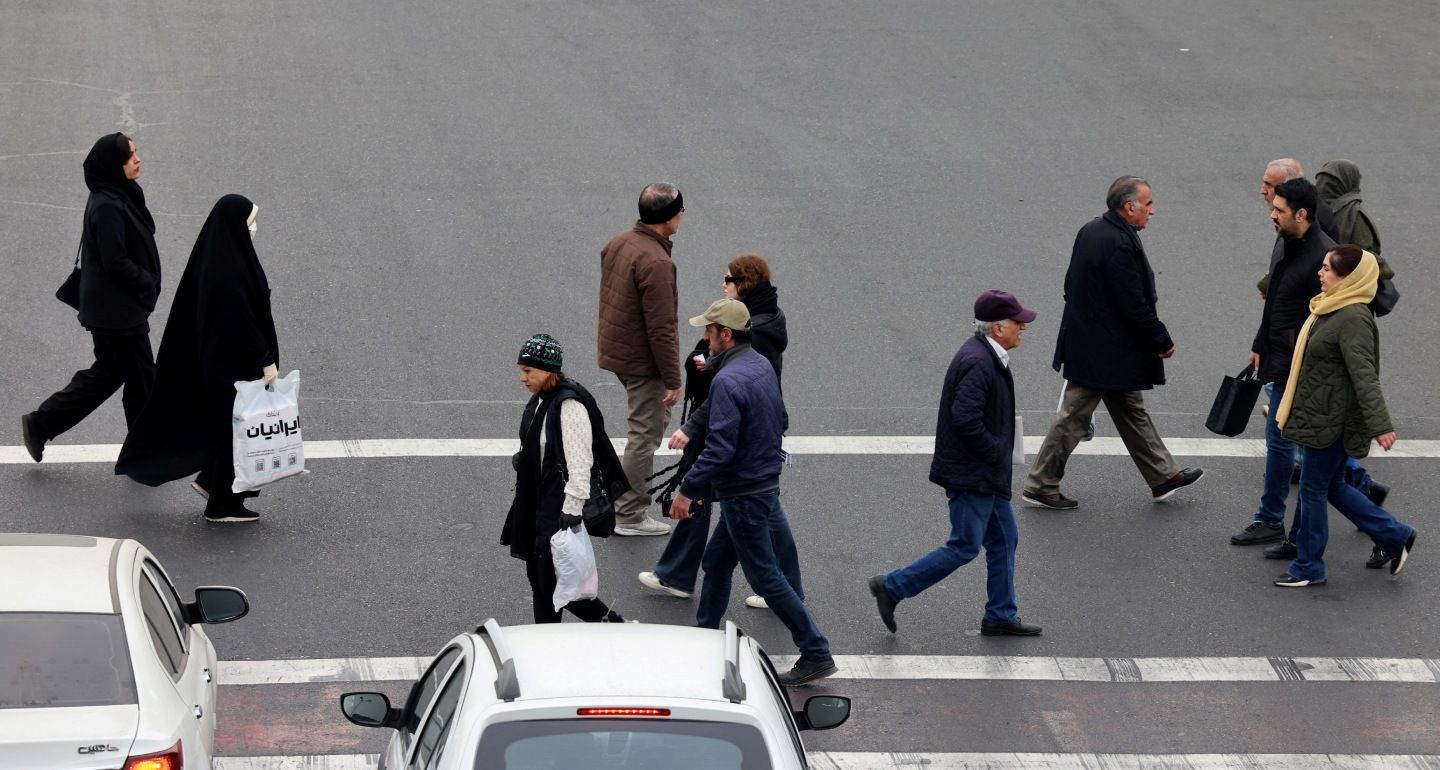
Baku may allow radical nationalists to publicly discuss “reunification” with Azeri Iranians, but the president and key officials prefer not to comment publicly on the protests in Iran.

Bashir Kitachaev
The country’s leadership is increasingly uneasy about multiple challenges from the Levant to the South Caucasus.

Armenak Tokmajyan