

Commentary
As the U.S. stumbles in its war with Iran, we are likely to see an acceleration of its disengagement from the region.
Michael Young

REQUIRED IMAGE
Source: publisher
Summary
Are Islam and democracy compatible? And are Islamists willing to accept a democratic order and work within it? Debate has swirled around these two grand questions for decades and has produced a broad variety of responses, often quite polarized. Whatever we may think about Islamists, the topic matters vitally because in the Middle East today they have few serious ideological rivals in leading opposition movements against a failing status quo. This paper argues that democracy and political Islam are potentially quite compatible in principle, and the record indicates as much.
Click on link above for the full text of this Carnegie Paper.
About the Author
Graham E. Fuller is a former vice-chair of the National Intelligence Council at the U.S. Central Intelligence Agency, a former senior political scientist at RAND, and currently an independent writer and analyst. He is the author of many books and
articles on the Muslim world. His latest book is The Future of Political Islam (2003).
Graham E. Fuller
Carnegie does not take institutional positions on public policy issues; the views represented herein are those of the author(s) and do not necessarily reflect the views of Carnegie, its staff, or its trustees.

As the U.S. stumbles in its war with Iran, we are likely to see an acceleration of its disengagement from the region.

Michael Young

The accord represents a pivotal moment in the region to avert a security vacuum in the Gulf.


Azeema Cheema, Mohanad Hage Ali

In an interview, Jason Burke discusses his sweeping account of the “revolutionists” who so shaped the 1970s and early 1980s.
Michael Young

Just look at Iraq in 1991.

Marwan Muasher
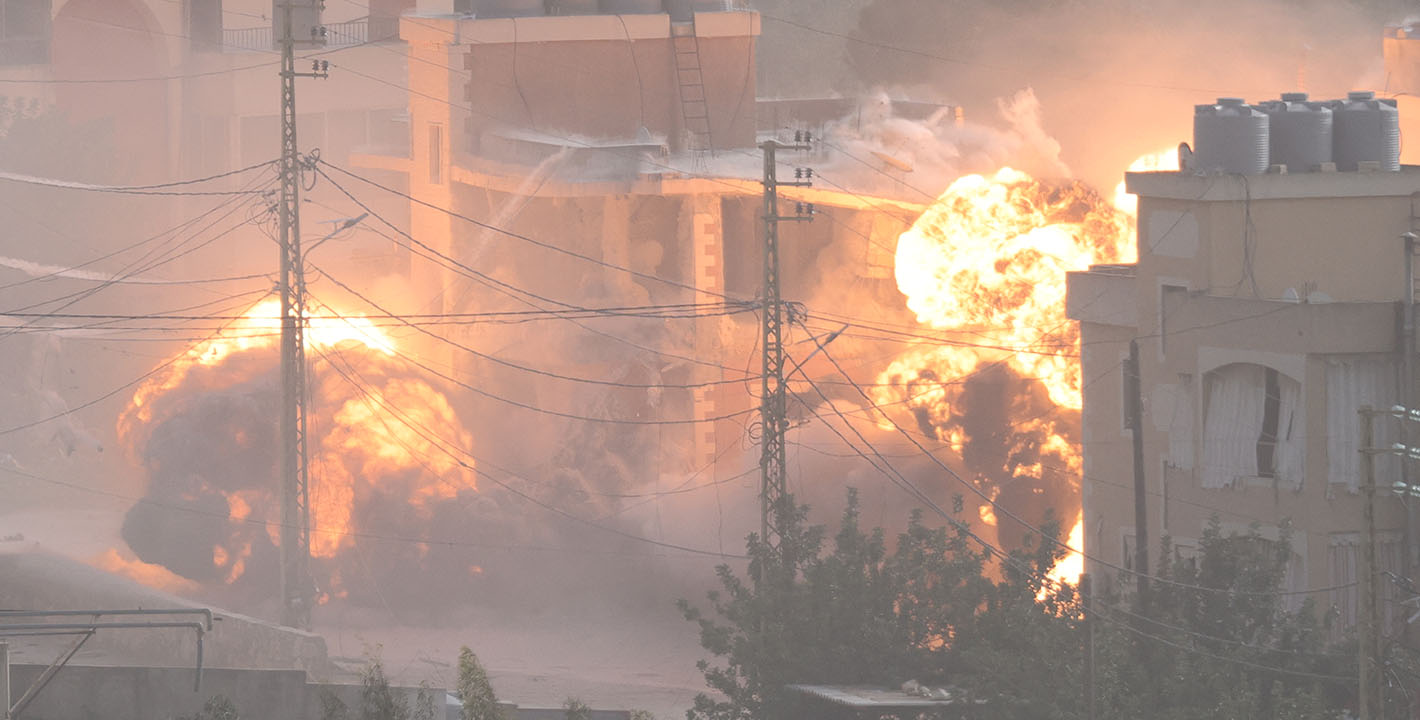
As Iran defends its interests in the region and its regime’s survival, it may push Hezbollah into the abyss.
Michael Young