

Commentary
Huawei pushed hard to enter the Egyptian data centers market, until the Americans made a better offer.
Angie Omar

REQUIRED IMAGE
Source: Carnegie Endowment
Summary
For nearly two decades the Middle East and North Africa (MENA) has languished in economic stagnation and lassitude. At a time when the logic of market-driven reform and exportoriented growth has become nearly canonical worldwide, the MENA region has proven steadfastly unenthusiastic about reform, shutting itself out of the benefits of economic globalization and falling behind most other regions in economic development.
At the same time, the MENA region has distinguished itself by spurning another worldwide trend: democratization. As democracy has spread in Latin America, Central and Eastern Europe, Asia, and sub-Saharan Africa, the Middle East has remained largely authoritarian, experiencing at most only mild liberalizing political reforms. This dual resistance to world trends is intriguing and resurrects the question of the relationship between political and economic reform. Is this dual resistance to reform coincidental? And what does this resistance say about whether and how Western policy makers and aid practitioners should try to link or sequence their efforts to promote political and economic reform in the region?
Click on link above for the full text of this Carnegie Paper.
About the Author
Eva Bellin is associate professor in the Department of Political Science at Hunter College/City University of New York. An expert on the political economy of the Arab world, she is the author of Stalled Democracy: Capital, Labor, and the Paradox of State-Sponsored Development (Ithaca: Cornell University Press, 2002). She was previously associate professor in the Department of Government at Harvard University.
A limited number of print copies are available.
Request a copy
Eva Bellin
Carnegie does not take institutional positions on public policy issues; the views represented herein are those of the author(s) and do not necessarily reflect the views of Carnegie, its staff, or its trustees.

Huawei pushed hard to enter the Egyptian data centers market, until the Americans made a better offer.

Angie Omar

The accord represents a pivotal moment in the region to avert a security vacuum in the Gulf.


Azeema Cheema, Mohanad Hage Ali

In an interview, Jason Burke discusses his sweeping account of the “revolutionists” who so shaped the 1970s and early 1980s.

Michael Young

The armed forces champion a form of capitalism that is generating revenue, but its reliance on rent faces diminishing returns, leaving the country with massive sunk costs and deferred returns, deepening dependency on external borrowing.

Yezid Sayigh
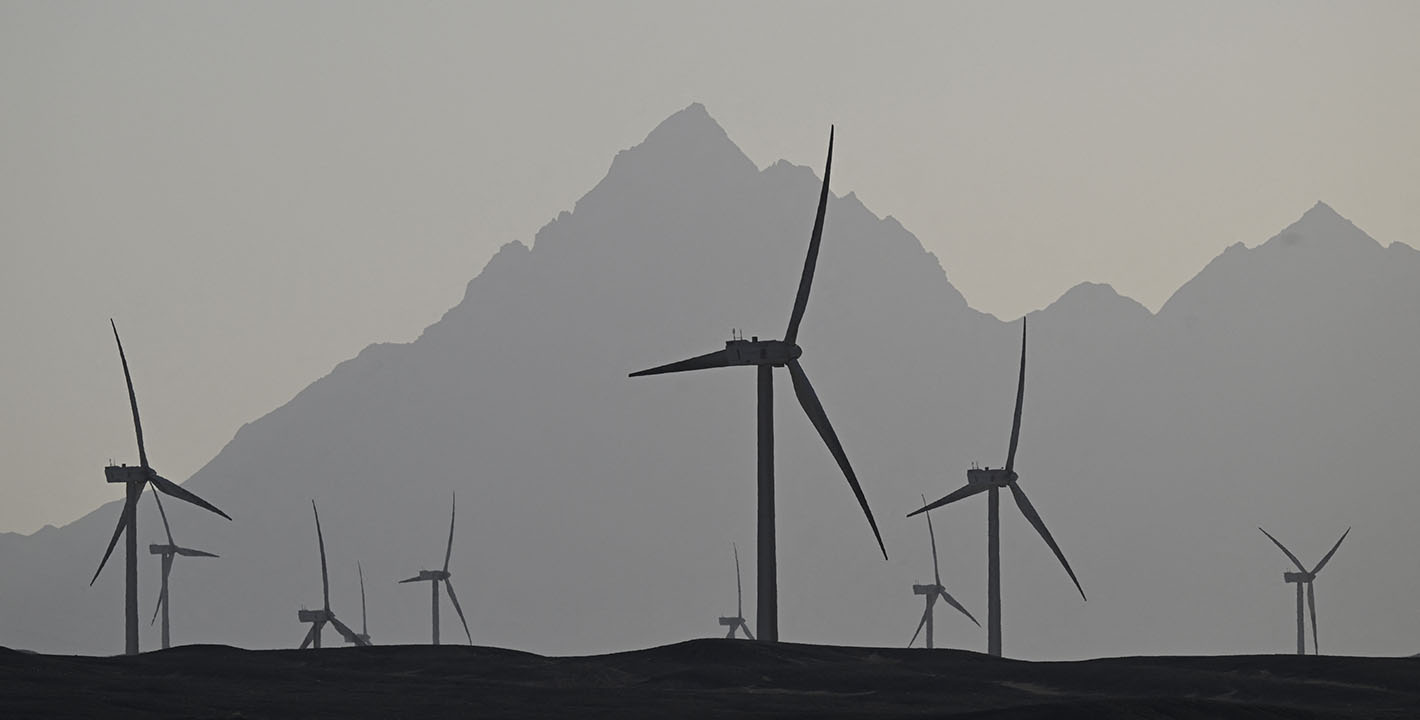
There is a disturbing structural parallel between the old global energy economy and the new green transition.
Angie Omar