

Commentary
Dmitri Trenin
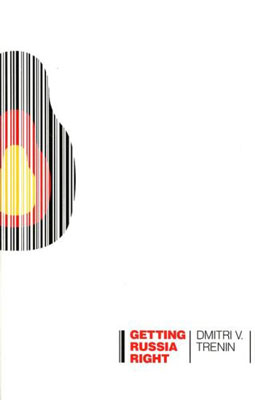
This book sheds new light on our understanding of contemporary Russia, providing Western audiences with an insider’s explanation of how the country has arrived at its current position and how the United States and Europe can deal with it more productively.
Source: Washington

Insightful and optimistic, Getting Russia Right offers policy makers, students, and stakeholders in the U.S.–Russia relationship an understanding of what Russia is—and is not. Russia will matter in the foreseeable future, and Trenin’s innovative and objective analysis provides an understanding that is crucial to rebuilding relationships among the world’s key players.
Dmitri V. Trenin is deputy director of the Carnegie Moscow Center, a senior associate of the Carnegie Endowment, and chair of the Moscow Center’s Foreign and Security Policy Program. He has been with the center since its inception in 1993. He is author of Russia’s Restless Frontier: The Chechnya Factor in Post-Soviet Russia (with Aleksei V. Malashenko, 2004) and The End of Eurasia: Russia on the Border Between Geopolitics and Globalization (2002), both published by the Carnegie Endowment.
“It is a pleasure to read a serious analysis by a Russian of contemporary Russia and its foreign policy that is not distorted by at best thinly veiled imperial nostalgia. One can agree with Trenin on many points and disagree also on many, but throughout one knows that one is dealing with a serious interlocutor, seriously concerned about the future of his important country—and who in some ways foreshadows the kind of elite that eventually will take Russia into the democratic West.”
—Zbigniew Brzezinski, counselor and trustee, Center for Strategic and International Studies, and national security adviser to President Carter from 1977 to 1981
"One could ask for no better guides than Trenin ... combine extraordinary intellectual sophistication and an ability to think outside their national skins with hardheaded realism—analytic skills applied equally well to Western policies toward their country."
—Robert Legvold, Foreign Affairs
"The great merit of Dmitri Trenin is that he offers an analysis of what Vladimir Putin has achieved more convincing than most and suggests the broad outlines of how the new Russia is shaping up: his book should be compulsory reading for any western diplomat or businessman whose business is to engage with Russia."
—Francis Ghilés, Politica Exterior
“Dmitri Trenin distills an enormous amount of wisdom in this concise, well written book. Russia matters, and the West needs to view it as an emerging capitalist society rather than a failed democratic polity. Property rights, a new middle class, and integration into world markets promise a way forward. Everyone interested in Russia should read this excellent book.”
—Joseph S. Nye, Jr., University Distinguished Service Professor, Harvard University, and author of Soft Power: The Means to Success in World Politics
Former Director, Carnegie Moscow Center
Trenin was director of the Carnegie Moscow Center from 2008 to early 2022.
Recent Work
Dmitri Trenin
Dmitri Trenin
Carnegie does not take institutional positions on public policy issues; the views represented herein are those of the author(s) and do not necessarily reflect the views of Carnegie, its staff, or its trustees.

By failing to address Palestinian representation, the current process is bound to lead to just another temporary arrangement.

Nathan J. Brown
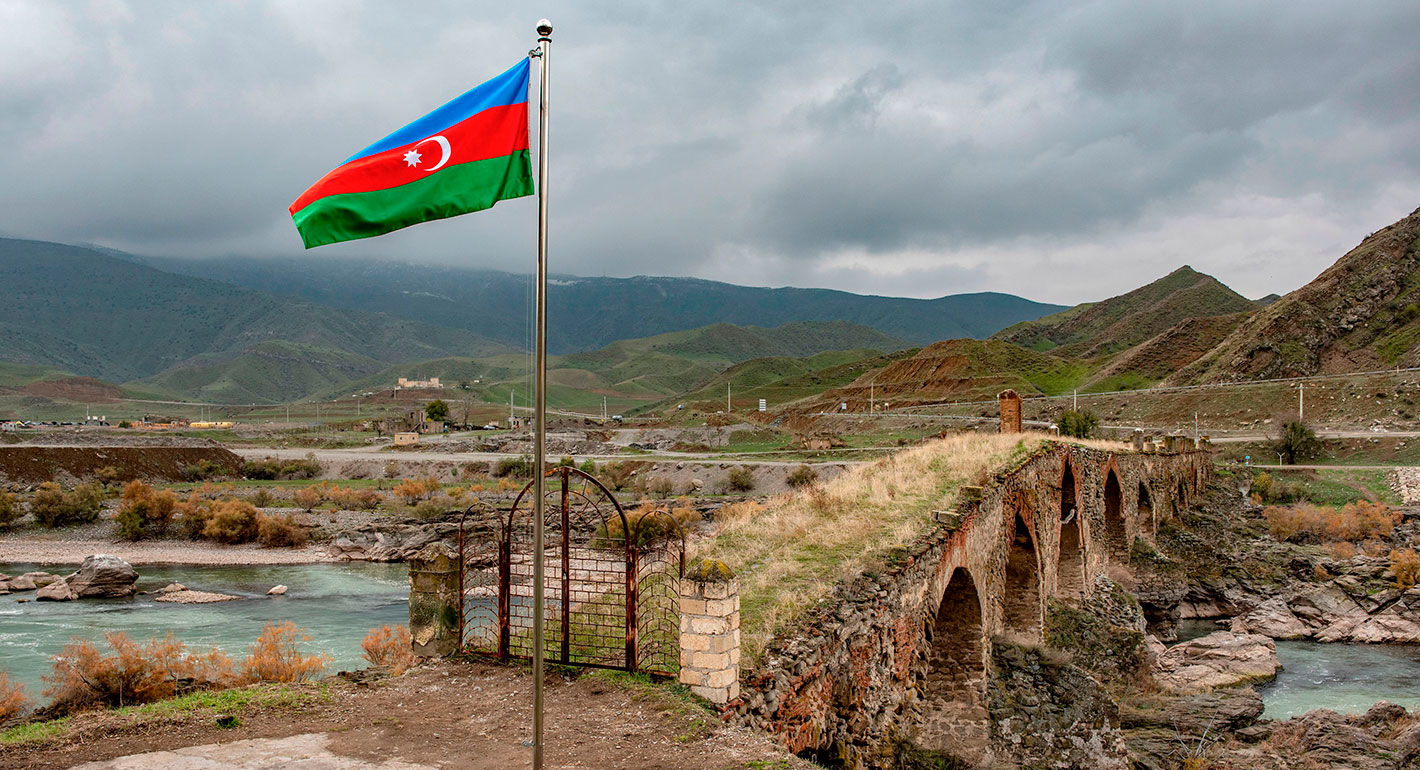
In an interview, Sergei Melkonian discusses Armenia’s and Azerbaijan’s careful balancing act among the United States, Israel, and Iran.

Armenak Tokmajyan

Just look at Iraq in 1991.

Marwan Muasher

A coalition of states is seeking to avert a U.S. attack, and Israel is in the forefront of their mind.

Michael Young

Baku may allow radical nationalists to publicly discuss “reunification” with Azeri Iranians, but the president and key officials prefer not to comment publicly on the protests in Iran.

Bashir Kitachaev