

Commentary
In an interview, Ian Lustick and Eli Clifton discuss their new book on why a prominent ally has so much influence in America.
Michael Young
Source: Getty
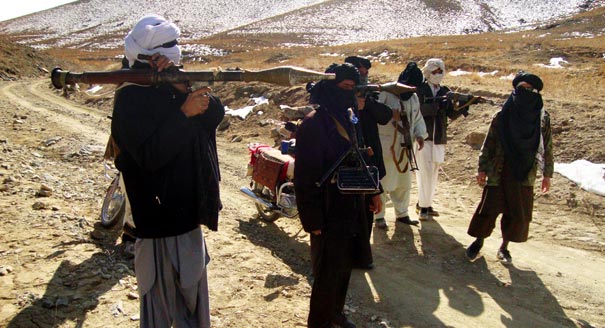
Afghanistan's hybrid form of governance, which draws on a mix of formal institutions and warlord-administered informal power, may be the only viable model for Afghanistan at present.
Afghanistan’s weak central government and limited resources make the informal networks employed by local warlords a viable option for governance. The country’s former warlords, made powerful governors by President Hamid Karzai, use both formal and informal powers to achieve security objectives and deliver development in their provinces.
Based on substantial in-country research and interviews, Dipali Mukhopadhyay examines the performance of two such governors, Atta Mohammed Noor and Gul Agha Sherzai, who govern the northern province of Balkh, and the eastern province of Nangarhar, respectively.
Key points:
Mukhopadhyay concludes:
“A ‘good enough’ governor, who can demonstrate success in counternarcotics, security, and economic and infrastructural development, becomes a valuable asset in the absence of unlimited resources, troops, and political will,” writes Mukhopadhyay. “Acknowledgment of hybrid governance need not mean the abandonment of formal institutional capacity building on the part of international, intervening organizations. Rather, they must adopt more realistic expectations of formal institutions.”
For a longer version of the arguments put forward in this paper, see Warlords, Strongman Governors, and the State in Afghanistan by Dipali Mukhopadhyay, available at http://www.amazon.com/Warlords-Strongman-Governors-State-Afghanistan/dp/1107023920.
Dipali Mukhopadhyay
Carnegie does not take institutional positions on public policy issues; the views represented herein are those of the author(s) and do not necessarily reflect the views of Carnegie, its staff, or its trustees.

In an interview, Ian Lustick and Eli Clifton discuss their new book on why a prominent ally has so much influence in America.

Michael Young

By failing to address Palestinian representation, the current process is bound to lead to just another temporary arrangement.

Nathan J. Brown

Just look at Iraq in 1991.

Marwan Muasher

A coalition of states is seeking to avert a U.S. attack, and Israel is in the forefront of their mind.
Michael Young

Baku may allow radical nationalists to publicly discuss “reunification” with Azeri Iranians, but the president and key officials prefer not to comment publicly on the protests in Iran.

Bashir Kitachaev