

Research
- +5
Alper Coşkun, Fatih Ceylan, Tacan İldem, …
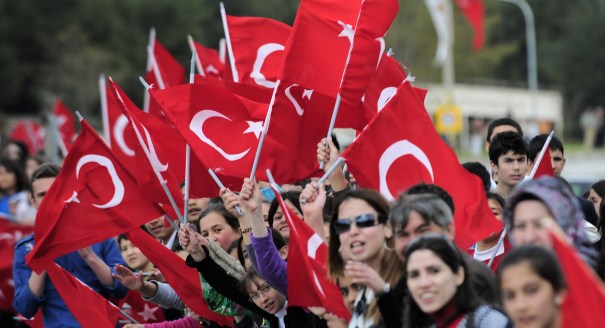
Source: Getty
While Turkey’s vote against additional UN Security Council sanctions on Iran was viewed by some as a sign that Turkey is drifting away from the West, in reality the relationship is much more complicated.
Turkey’s vote against additional UN Security Council sanctions on Iran this year was viewed by many observers as a sign that Turkey is drifting away from the West. In reality, Ankara’s relationship with the United States and the EU is much more complicated. Turkey’s ambitious foreign policy and growing influence present the West with an opportunity to demand that Turkey play a more constructive role in the international community.
There is no doubt that a reorientation of Turkish foreign policy is under way, an evolution that began after the ruling Justice and Development Party (AKP) rose to power in 2002. This transformation was underpinned by the strategic vision of Foreign Minister Ahmet Davutoglu, who pledged to establish Turkey as an important player in international diplomacy. Turkey’s new foreign policy has been driven by three key factors: reconceptualizing Turkey’s identity and international role, desecuritizing its foreign relations, and increasing its strength as a trading state.
As a result, Ankara has become a more confident and assertive international player, vastly improved its relations with Arab neighbors, and grown its economy to the sixteenth largest in the world. With a balanced web of relations with other countries, the EU and the United States no longer occupy the central place in Turkey’s foreign policy. While this does not mean that Turkey is moving away from the West—or that the West has lost Turkey—Turkey is striving to create more space in its neighborhood to further its ambitious foreign policy position.
As the West accepts Ankara’s new approach and growing stature, the challenge for the EU and the United States is to ensure Turkey remains anchored to Western interests. For the EU, this includes adopting a more welcoming attitude toward Turkey, such as jump-starting the stalled EU accession process. The EU should also seek an institutionalized foreign policy dialogue with Turkey to address their shared desire for regional stability.
For its part, the United States must accept that its interests and Turkey’s are more likely to diverge in the future—as is the case with Iran. In this instance and in others, as the United States grants more leeway to Turkey in pursuing a broader foreign policy, it must ensure that Turkish policy makers share the costs and benefits of providing solutions to global challenges.
By insisting that Turkey adopt this more normative approach to foreign policy, the West can help Ankara become a true international partner and serve as a role model for other emerging powers in the future.

Senior Fellow, Carnegie Europe
Sinan Ülgen is a senior fellow at Carnegie Europe in Brussels, where his research focuses on Turkish foreign policy, transatlantic relations, international trade, economic security, and digital policy.
Recent Work

Alper Coşkun, Fatih Ceylan, Tacan İldem, …
Carnegie does not take institutional positions on public policy issues; the views represented herein are those of the author(s) and do not necessarily reflect the views of Carnegie, its staff, or its trustees.

Reconciliation councils are emerging throughout the country to mediate in intracommunal disputes, many from the war years.
Natacha Danon
The civil war in Syria may have ended, but the country continues to serve as a source for the trafficking of illegal substances into and via Jordanian territory.


Armenak Tokmajyan, Laith Qerbaa

As the U.S.-led Coalition withdraws, the Kurds’ reliance on Baghdad, and on themselves, will only increase.
Wladimir van Wilgenburg

In an interview, Ian Lustick and Eli Clifton discuss their new book on why a prominent ally has so much influence in America.

Michael Young

As the U.S. stumbles in its war with Iran, we are likely to see an acceleration of its disengagement from the region.
Michael Young