

Article
Frederic Grare
Source: Getty
After a decisive victory, the PML-N has a historic chance to consolidate democracy in Pakistan, but its relationship with the military is more ambivalent.
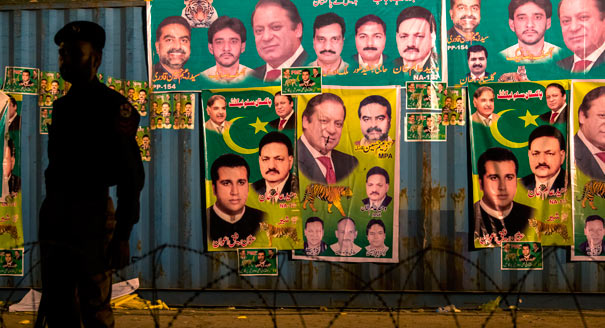
After weeks of speculation and intense campaigning, the result of Pakistan’s 2013 general election is clear. The Pakistan Muslim League of former prime minister Nawaz Sharif (PML-N) has scored a decisive victory, offering a historic chance to consolidate democracy in Pakistan. The PML-N may have gained control over the political sphere, but its relationship with the military is ambivalent. Currently stable civil-military relations may just be the product of a potentially fleeting convergence of interests.
Official results are still trickling in, but the PML-N will likely end up with just short of the 137 seats required to secure a simple majority. It will form the government, and each of Pakistan’s major parties will govern a province. The PML-N will form the provincial government in Punjab, the Pakistan Peoples Party (PPP) will form a coalition with the Muttahida Quami Movement in Sindh, Imran Khan’s Pakistan Tehreek-e-Insaf (PTI) will govern Khyber Pakhtunkhwa, and Baloch and Pashtun nationalists will lead Balochistan.
The election demonstrates that democratic aspirations are a reality in Pakistan. Despite the unprecedented level of violence throughout the country during the campaign—at least 25 people were killed on election day alone—and the threats of extremist organizations, some 60 percent of voters went to the polls. By comparison, only 44 percent had voted in the 2008 general election.Both the turnout levels and the overwhelming victory of the PML-N indicate that any dissatisfaction that may have been festering, particularly the youth’s widely reported disgust with PML-N and PPP politicians, has failed to translate into actual political gains for political newcomers. Local electoral dynamics prevailed and gave the PML-N a near-majority of seats. The PTI made a creditable showing, especially in winning Khyber Pakhtunkhwa, but it remains a very distant third behind the two traditional national parties.
The PML-N’s large victory will not necessarily guarantee good governance, but it does ensure governmental stability at Pakistan’s political center. The PML-N will most likely have to form a coalition, but it will unquestionably be the dominant force.
In terms of foreign policy, the agenda of U.S.-Pakistan relationship in the near future will be dictated by the U.S. withdrawal from Afghanistan, and most positions have already been established. Like every other party, the PML-N surfed a wave of anti-Americanism during the campaign, but it fundamentally favors good working relations with the United States. The PML-N was associated with the internal Pakistani discussion on the reopening of NATO’s overland supply routes to Afghanistan after a friendly fire incident killed 24 Pakistani soldiers in 2011 and is unlikely to revisit that dossier. Moreover, Nawaz Sharif has declared his willingness to establish good relations with the United States. This suggests that the new government is unlikely to seriously reevaluate its relationship with Washington, though its relations with extremist groups may continue to be an irritant in the relationship.
Pakistan’s civilian governments have typically faced significant challenges when it comes to the security establishment, which has a great deal of control over Pakistan’s foreign and defense policies. But Sharif’s relations with the military should be relatively serene.
With the PML-N’s broad civilian mandate, Pakistan’s security establishment will find it more difficult to activate its political proxies, pressure the government, and exert undue influence on policy. And though Sharif’s history with the military is spotty—during his last stint as prime minister, he sacked two influential chiefs of army staff—the two forces’ interests are converging. The PML-N’s views on security and foreign policy dovetail with those of the military, making open disagreement less likely, at least in the short term.
As the PML-N moves to exercise more control in the realm of security and foreign policy, it could find common ground with the military in an effort to curb and eventually eradicate Pakistan’s domestic political violence, which has been a chief concern of Pakistani voters and the military establishment alike. Sharif has proposed a dialogue with the Taliban and certain extremist groups in southern Punjab. In a different time, this could have proven a viable strategy—other countries have enjoyed some success in reducing violence by incorporating radicals into the political mainstream. Historically speaking, however, such a strategy works best when the target organizations are already in decline. This is hardly the case in today’s Pakistan, where extremist and sectarian violence is on the rise all over the country.
Meanwhile, the troubled Indo-Pakistani dynamic could destabilize the civil-military balance. Making peace with India remains the main point of contention between civilians and the army.
Pakistan’s previous government had initiated a timid process of rapprochement with India, a policy that would have been impossible without at least the tacit approval of the military. Talking to senior Indian journalist Karan Thapar during the campaign, Sharif indicated his willingness to resolve all pending issues, including the Kashmir dispute, peacefully. He also signaled that he would deny anti-India extremist groups safe haven in Pakistan, forbid all anti-India speeches including by Lashkar-e-Taiba spokesman Hafez Saeed, and launch investigations into the 1999 Kargil War and the 2008 Mumbai terrorist attacks. In these endeavors, he will most likely enjoy strong support from at least part of the PML-N’s traditional allies in the business community. But it remains to be seen just how much rapprochement the generals will allow.
For now at least, the military is dependent on Sharif: it needs him to get the country out of a dangerous situation of economic decline and diplomatic isolation. But paradoxically, if Sharif were to succeed in a wholesale renovation of Pakistan’s economy and standing in the world, he could push the army out of politics altogether, an outcome that could be unacceptable to Rawalpindi.
In the end, the relationship between the new prime minister and the military will be highly ambivalent. Establishing civilian dominance over the military will be at best an incremental process. The foreign policy of the new government is likely to be just a reflection of that reality.

Former Nonresident Senior Fellow, South Asia Program
Frédéric Grare was a nonresident senior fellow at the Carnegie Endowment for International Peace, where his research focuses on Indo-Pacific dynamics, the search for a security architecture, and South Asia Security issues.
Recent Work
Frederic Grare
Frederic Grare
Carnegie does not take institutional positions on public policy issues; the views represented herein are those of the author(s) and do not necessarily reflect the views of Carnegie, its staff, or its trustees.

By failing to address Palestinian representation, the current process is bound to lead to just another temporary arrangement.

Nathan J. Brown

Just look at Iraq in 1991.

Marwan Muasher

A coalition of states is seeking to avert a U.S. attack, and Israel is in the forefront of their mind.

Michael Young
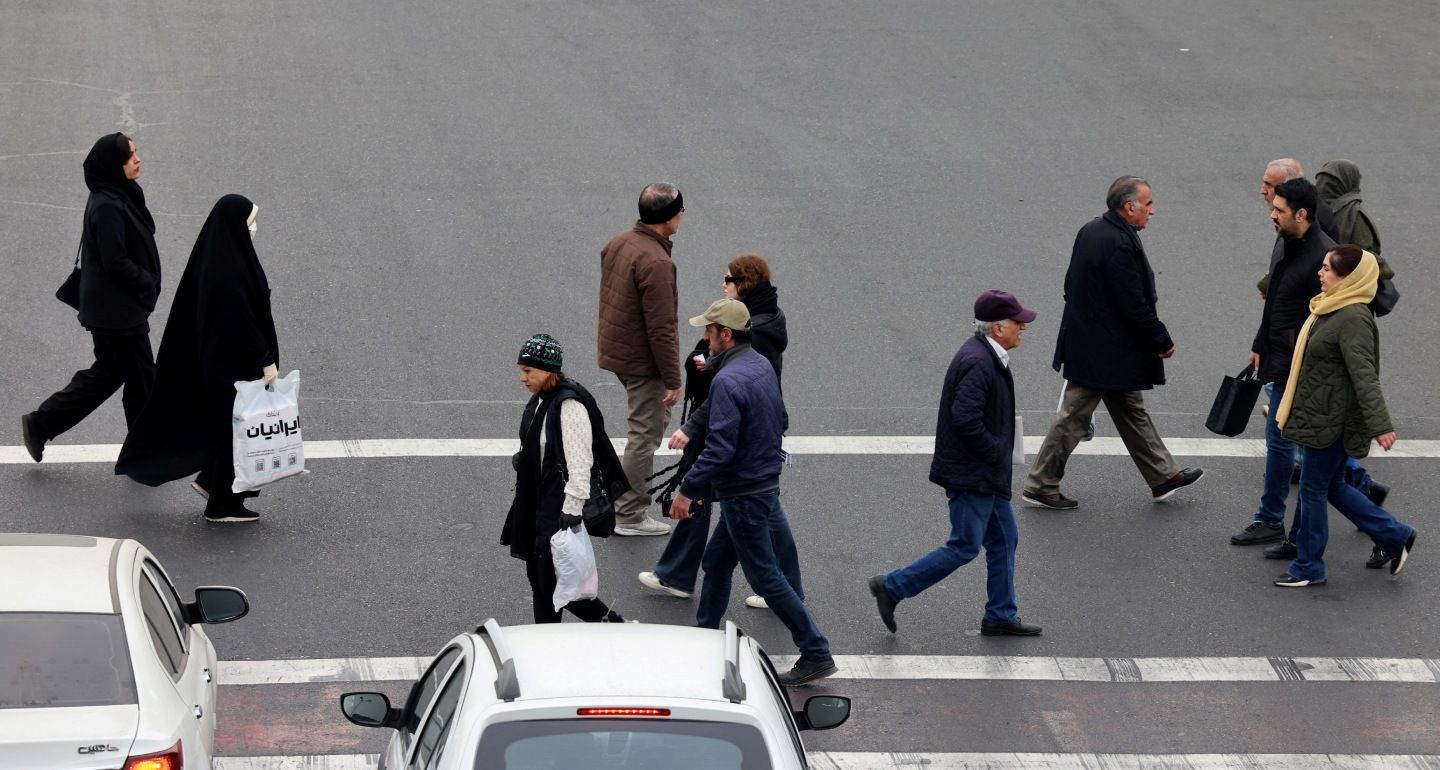
Baku may allow radical nationalists to publicly discuss “reunification” with Azeri Iranians, but the president and key officials prefer not to comment publicly on the protests in Iran.

Bashir Kitachaev
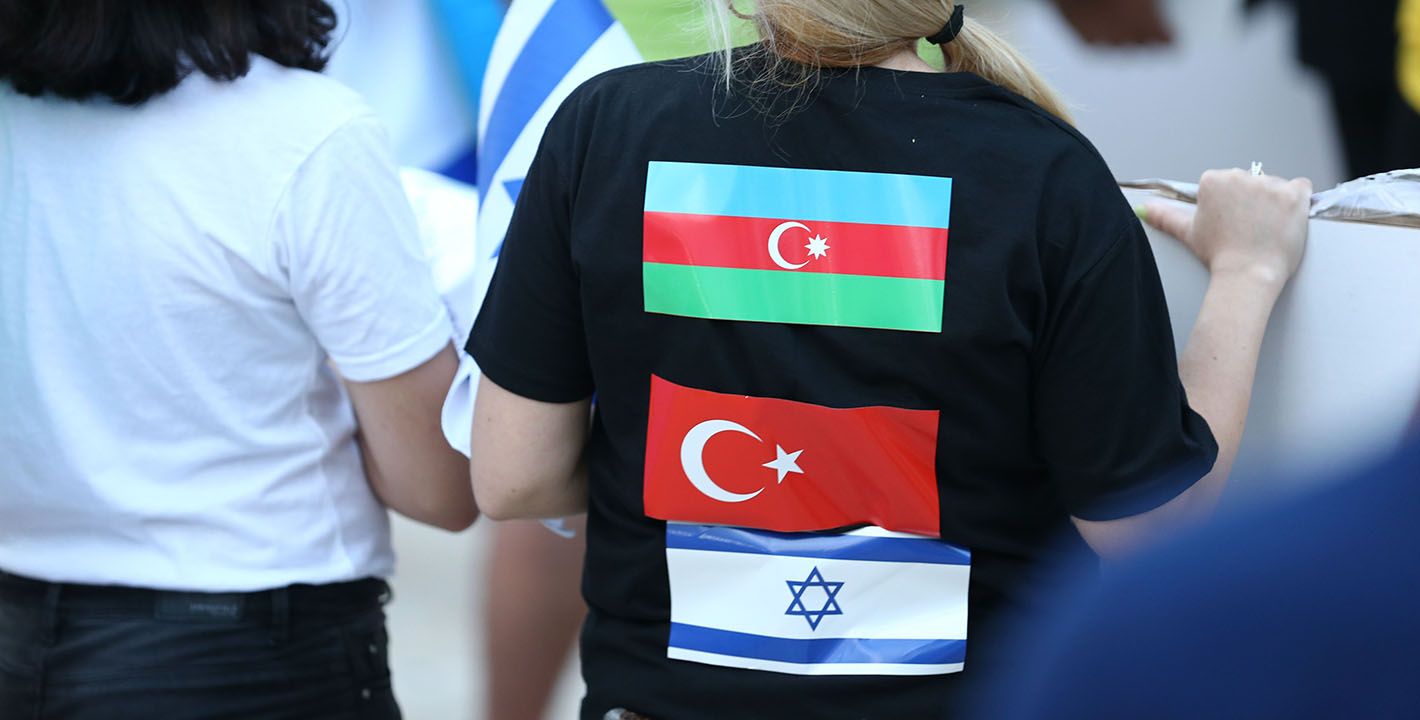
The country’s leadership is increasingly uneasy about multiple challenges from the Levant to the South Caucasus.

Armenak Tokmajyan