

Commentary
As talks begin between Washington and Tehran, Beirut has an opening to advance a regional plan for the party’s disarmament.
Michael Young
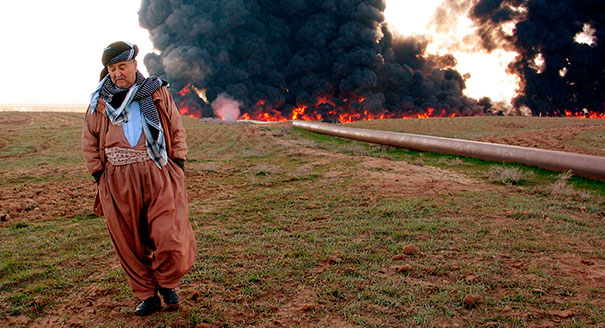
Source: Getty
The political and economic dysfunction known as the “oil curse” is a complex, structural phenomenon, caused largely by poor management or investment of oil revenues by the governments of oil-producing countries.
The political and economic dysfunction known as the “oil curse” is a complex, structural phenomenon, caused largely by poor management or investment of oil revenues by the governments of oil-producing countries. Because this syndrome is taking an increasing toll on oil operations, the oil industry has a strong economic incentive to take affirmative steps, collectively, to mitigate it. And the industry is uniquely positioned to do so.
Maximize corporate social responsibility outlays. Companies can share the most effective methods, promote diversified economic development and good resource governance, and spend funds collectively to increase their impact.
Work more intensively with host governments to improve the management of oil proceeds. The industry can offer collective advice on opportunities for enhanced socioeconomic development and optimized use of oil revenues.
Expand anticorruption measures. Companies could, for example, consider minimum standards expected of a host government before they will bid on new concessions. They could also advocate with Western governments to develop tougher corruption and environmental standards that all oil companies must meet to compete for contracts in producing countries.
Much has been written about the “oil curse,” a complex of political and economic dysfunctions afflicting nearly all oil-producing countries to some degree.1 The presence of oil in a country can have major benefits—and it does not automatically lead to the oil curse. But if not managed properly or efficiently by the host government, the massive influx of oil revenues can distort a country’s economic fundamentals, fuel corruption, and create conditions that trigger conflict. Countries with oil are twice as likely to experience civil war as those without.2
The oil industry stands to gain from undertaking a remedial effort that would improve governance and reduce corruption. This in turn would reduce operating costs, increase production, raise standards of living for the people in these countries, and create new demand and markets.
Western governments, international nongovernmental organizations (NGOs), and multilateral organizations have therefore launched initiatives, often in partnership with the oil industry, to promote transparency, good governance, and social welfare in troubled oil-rich countries (see appendix B for a description of these initiatives). But, though well-meaning, these efforts have failed—so far—to make a perceptible dent in corruption or to significantly reduce political and economic dysfunction.
Oil industry professionals recognize that this dysfunction takes a financial toll on operations and shareholders (some 59 percent of projects came in over projected budgets, according to a 2014–2015 survey3) and delays the development of major markets for industry products (see appendix A for information about the rapidly rising capital costs of developing projects). What is less well understood is the interplay between economic dysfunction, corruption, and instability or insecurity.4A better understanding of this dynamic, and of the root causes of the oil curse, would help a major and uniquely positioned stakeholder—the oil industry—work effectively to mitigate it.
The oil industry stands to gain from undertaking such a remedial effort. Improving governance and reducing corruption would increase stability. This in turn would reduce operating costs, increase production, raise standards of living for the people in these countries, and create new demand and markets.
First, a better understanding of the cascading repercussions of so-called Dutch disease and corruption—the primary drivers of oil curse symptoms—is needed.
Oil-producing countries commonly experience some degree of Dutch disease, which is primarily caused by a host country’s inefficient management of the massive influx of dollar-valued oil revenues.
Dutch disease is almost unavoidable in countries whose primary export is oil. As foreign funds flow in to pay for oil, the country’s real exchange rate begins to appreciate. The country’s exports become more expensive and imports cheaper. Local manufacturing and agriculture suffer as exports decrease and local prices for domestic production begin to rise. This inflation hurts populations not sharing in the oil boom. Dutch disease has shrunk the agricultural and manufacturing sectors of many developing oil-producing countries, including Algeria, Colombia, Ecuador, Nigeria (where oil production undermined the preexisting cocoa, palm oil, and rubber industries),5 Trinidad, and Venezuela. Despite the economic growth fueled by oil revenues, the loss of jobs and economic opportunities in the agriculture and manufacturing sectors can impose hardship on large numbers of people, often the poorest members of society.6
The loss of jobs in the nonresource sectors is not offset by a sufficient number of employment opportunities in the oil sector. Oil is capital intensive, typically employing a relatively small number of highly trained workers. Governments often address rising unemployment by using the new oil revenues to enlarge the public sector, creating unproductive jobs and thus stunting economic growth.
Although developing countries are the hardest hit, even large, diversified economies like Canada and Australia have recently experienced the problems associated with Dutch disease in their oil-producing regions.7 After all, the term was coined by the Economist in 1977 to describe the economic shock experienced in the 1950s by Holland (hardly a developing country at the time), when gas extraction operations began in the North Sea. Holland subsequently imposed effective economic policies to solve the unexpected problems, demonstrating that Dutch disease, when it develops, can be mitigated.
To prevent Dutch disease, the most effective approach is to use oil revenues to invest and promote development in the nonresource sectors. For example, a December 2012 report by the United Nations Development Program advised the Kurdistan Regional Government in Iraq to develop the region’s agricultural and manufacturing sectors in order to move workers off of the government’s payroll and to ensure sustainable economic growth in the future.8
However, governments and key private-sector actors often focus their investments on the more profitable resource sector, inadvertently exacerbating the decline of other economic activities. When this happens, real estate and stock market values begin to inflate. Growth of the oil-based gross domestic product (GDP) may look encouraging, and luxury goods—mostly imported—are being bought and sold in capitals. However, in countries with poor governance, the wealth is usually unevenly distributed, and overall social welfare indicators often fail to improve.9 In one illustration of how the elite can benefit while the rest of a population does not, the eldest daughter of Angola’s president is reputed to be one of the world’s wealthiest women,10 yet Angola has the highest child mortality rate in the world.11 Hence, the well-known paradox of the oil curse: the oil revenues that should bring prosperity to a country too often do the opposite. In fact, over 60 percent of the world’s poorest people live in resource-rich countries, and their incomes are well below world averages.12
The purely economic aspects of Dutch disease can quickly spill over into the political domain. Because excessive reliance on finite resources with volatile prices can lead to wide fluctuations in national income, countries that become heavily dependent on oil revenues are at increased risk of political and social instability. Russia, Iraq, Angola, and nearly every other country with significant reliance on revenues from oil exports experienced macroeconomic shock when oil prices fell in late 2014. Budgets were cut nearly in half, with corresponding cuts in social outlays. Some countries faced sovereign default when oil prices fell far below their fiscal breakeven point.13 Venezuela’s inability to respond to the falling prices led to widespread civil unrest, the worst in a decade.14 Canada’s oil-rich Alberta Province also experienced an economic shock. As a result of sharp cuts in budgets, in the May 2015 provincial election, angry voters ousted the pro-oil Conservative Party, which had ruled for forty-four years.
A dysfunctional economy is not the only problem oil-producing countries may experience. Too often, oil-rich countries with weak institutions and little public accountability may succumb to systemic corruption.15 Tempted by massive revenues that they control, political elites in these countries have resorted to large-scale theft of oil revenues—and sometimes the oil itself. When royalties and taxes do reach government coffers, cronyism and fraud in the public procurement process mean that they are often diverted into the pockets of powerful elites, rather than invested in public goods. In some countries, the local content partners or purported nonprofits that receive corporate social responsibility (CSR) dollars do not provide economic opportunities or social benefits to the local population because they are elements of the patronage network controlled by corrupt officials or their family members.16 And corruption at the top of such systems is usually emulated at lower echelons, until street-level cops, teachers, and doctors become the bane of a poor population’s existence.
Oil companies based in the United States and the United Kingdom, where antibribery legislation is enforced, take the risk of prosecution for this crime seriously. Armies of compliance professionals analyze bribery risk and ensure that companies are staying within the letter of the law. In countries that are members of the Extractive Industries Transparency Initiative (EITI),17 oil companies also report the payments they make to governments as part of a multi-stakeholder effort to increase transparency.
Still, oil companies understandably take pains to avoid alienating host nation officials whose attitudes affect the fate of their multibillion-dollar investments. And oil companies have limited or no recourse when confronted with questionable government-specified local partners or when billions of dollars in oil revenues disappear before they reach host government coffers (as has happened in Nigeria, Libya, Brazil, and other countries suffering from acute corruption).
And it’s not just the populations of these countries that suffer. The private oil industry is hit too when corruption takes root in a government or a national oil company partner. Even when it doesn’t involve bribes, corruption is a tax on oil operations. When local contractors exist to capture revenues for the corrupt elite, their work is often substandard, expensive, or both. This increases the costs of a project (hence the term “patronage costs”), sometimes significantly. Corrupt officials frequently extract ancillary payments through customs clearance fees and warehousing fees and by modifying the terms of contracts. In 2015, Brazil erupted when the public learned that contractors of the national oil company, Petrobras, had inflated operational costs, requiring a nearly $17 billion “write-down” of public assets.18
There is a direct relationship between acute corruption and violence that in many places is so severe that it constitutes an international security challenge. Anger at acute corruption helped spark the 2014 revolution in Ukraine; it helps explain the Iraqi army’s collapse in June 2014 in the face of the Islamic State, as well as the growing strength of that jihadist group, the Taliban in Afghanistan, the spread of Boko Haram in Nigeria, and the fall of governments in Tunisia, Egypt, and Yemen. In the past decade, historic manifestations of corruption have driven indignant populations to a variety of extreme actions. Corruption can also fuel violent competition among evenly matched kleptocratic elites or symbiotic alliances between governments and dangerous transnational criminal organizations.
An oil company working in an acutely corrupt country may find itself caught between the government and the aggrieved population. Attacks on oil-production facilities and pipelines may occur when the population blames the companies for the perceived failure to deliver prosperity. The hollowed-out, corrupt security forces in some countries may constrain the legitimate use of force to protect the oil companies or to responsibly restore order should civil unrest or insurgency occur. Militant extremists make the argument that the corruption and abuse that populations suffer are due to the moral impurity of their national governments. Only if a government is organized according to God’s law, they argue, can public integrity be guaranteed. In desperation at the lack of recourse, many are swayed by these arguments.19
And there are other ways that oil has been linked to conflict. Oil enabled then Iraqi president Saddam Hussein to finance an army that attacked Iran, invaded Kuwait, and gassed Iraq’s Kurds. Far from uniting the country, Hussein’s oil-financed genocide alienated the Kurds from Iraq, perhaps forever. Sudan fought for decades—at a cost of over 1 million dead—in an ultimately futile effort to hold on to oil-rich South Sudan. While the civil war in the new country has its origins in the struggle for power between ethnic groups, oil facilities are the prizes for the combatants. The discovery of the Leviathan gas field off the coasts of Israel, Egypt, Turkey, Lebanon, Cyprus, and Syria in 2010 has exacerbated preexisting tensions, further increasing the risk of conflict in the region.
Poor governance, mismanagement of oil revenues, and acute corruption on the part of host governments have all contributed to increasing political and economic instability and conflict in oil-producing countries—with enormous costs to the oil industry.
Yet the conditions that can lead to this instability may be more complex, dynamic, and costly than the industry’s current risk analysis methodology suggests.20 The map below, based on a thorough assessment of an array of key risk factors conducted in early 2015 (see appendix C), provides a snapshot of political and economic instability in oil-producing countries.
The colors on the map correspond to the level of instability each country was facing in mid-2015, from “stable” green to “economically dysfunctional” yellow to “risky” orange to “insecure” red and black (black signifying that oil companies have experienced significant losses due to attacks, conflict, or theft—bunkering). Over half of oil-producing countries are “orange,” indicating significant risk that conditions will change in ways that negatively impact oil operations.
Given that large petroleum endowments located onshore in stable countries are becoming a thing of the past, oil companies increasingly face a choice between technically easy—but risky—oil and technically difficult projects (such as offshore or shale reservoirs) in more stable environments.
Transparency International (TI) predicts that in twenty years, as much as 90 percent of oil production will take place in developing countries, which are often unstable and/or insecure.21 Instability, along with increasing technical challenges, has caused a marked increase in the capital cost of petroleum projects over the past decade, making it essential that the oil industry develop better methods of predicting, and mitigating, unstable conditions.

Six countries—one from every region—illustrate the trends that signal increasing political and economic instability. They also demonstrate how swiftly corruption—whatever its origin—can destabilize an oil-producing country.
Countries designated green have:
Examples include Australia, Canada, Norway, the United Kingdom, and the United States.
There are several factors that differentiate green counties from other oil-producing countries. Their government officials are subject to more public oversight to ensure that the oil income, along with other tax receipts, is spent in ways that benefit the community.24 Stability and sovereign wealth funds, as well as direct payments to residents, are among the initiatives that have helped these countries effectively share oil wealth with their populations. For example, Norway uses a sovereign wealth fund to stabilize the impact of volatile oil prices and ensure benefits for future generations. The U.S. state of Alaska provides direct payments out of oil revenues to its residents, which has proved to be a tremendously popular benefit that no politician can oppose.25
Even so, stable countries can struggle to manage their oil wealth responsibly. It took time for Norway to establish a sovereign wealth fund that achieved satisfactory results. (It is worth noting that most stabilization funds have a dismal track record because corrupt governments can easily raid them.)26 Canada is struggling with economic contraction in oil-producing Alberta due to the plunge in prices that began in 2014. Oil operations in Australia have been disrupted by labor unrest. The United States faces public opposition in many parts of the country to hydraulic fracturing, or fracking, as well as offshore and Arctic drilling. Oil-producing regions of the United States are now confronting layoffs and economic contraction.
Notwithstanding their stable conditions, moreover, some oil companies view certain green countries as risky because of costly labor-related disruptions, or because their taxes, royalties, regulations, and permits can be revised retroactively or canceled after project funds have been invested.27
Norway demonstrates how a government’s commitment to transparency and fiscal responsibility can support long-term stability and prosperity. Norway ranks high on governance and transparency indicators. It has responsibly administered its sovereign wealth fund to provide for future generations. Its GDP growth rate of 2.2 percent (in 2014) is low compared to some other countries, but it is consistent with European neighbors that are also recovering from the 2008 global financial crisis. Norway still has challenges: its government works continuously to diversify its economy, and high labor costs can affect its competitiveness. Nevertheless, its low Gini coefficient—a common measure of income inequality—shows that Norway is investing its oil revenues in the welfare of its people. Even after the oil price collapse in 2014, Norway’s budget breakeven point is consistently below world oil prices. Norway’s population enjoys an excellent standard of living with high per capita income and a life expectancy of eighty-two years.28 Norway faces a very low risk of conflict.
Norway’s strong democratic institutions are the primary reason the country benefits from its oil resource. This situation is unlikely to change; thus, Norway’s volatility is low (see table 1).

Countries designated in yellow are worse off on the instability scale. They may have some or all of the following indicators:
Yellow countries include Brazil, Ghana, Kuwait, Malaysia, and Trinidad and Tobago, which is said to be a “poster child” of Dutch disease.29
In yellow countries, the population not only fails to benefit from the resource, it may actually be worse off because of it. These countries are therefore susceptible to civil unrest that may worsen over time.30 These symptoms are compounded when corruption or authoritarian governing systems are present. Ultimately, these problems can lead to more serious dysfunction, including conflict.
Malaysia is often said to be a rare success story among petroleum-rich countries, and it is one of the more successful economic performers in Asia, with a GDP growth rate of 6 percent in 2014. According to the World Bank, Malaysia’s population is comparatively well-off with per capita income (adjusted for purchasing power parity) of $22,850 in 2014 and average life expectancy of seventy-five years as of 2013.31
However, Malaysia has seriously mismanaged its two sovereign wealth funds and was caught unable to stabilize its economy when oil prices fell in 2014. Analysts have urged the country to take steps to improve the transparency and management of its sovereign wealth funds. Its prime minister is embroiled in a series of corruption scandals.32 The country is facing political and economic problems as a result. In August 2015, tens of thousands of protesters took to the streets calling for the prime minister to step down amid allegations he transferred $700 million from the indebted 1Malaysia Development Berhad (1MDB) sovereign wealth fund into his personal account.33 The county’s political uncertainty is reflected in a 7.5 percent risk premium (see chart).34
These characteristics put Malaysia at the top end of the “moderate” volatility window. However, the immediate risk of conflict remains low (see table 2).

Like Malaysia, Brazil is ranked yellow. But Brazil is further along the instability scale because acute corruption within its oil industry has caused political upheaval, economic dysfunction, and popular protests. In 2015, the magnitude of the losses (some estimate over $17 billion to date) in the Petrobras scandal enraged an already-skeptical population; over 1 million people took to the streets.35 The economy has suffered, with annual GDP growth of 0.1 percent in 2014 and projected to fall further in 2015. The scandal has caused widespread economic loss to oil company workers and the businesses that cater to them,36 and there is increasing evidence of capital flight as the middle class tries to preserve its savings.
Despite the country’s oil wealth, moreover, the population is largely poor—Brazil has one of the highest rates of income inequality in the world and the highest Gini coefficient of the countries surveyed. Brazil’s fiscal breakeven price is $76 per barrel, higher than world oil prices in mid-2015, perhaps reflecting the high costs of corruption.
Given these factors, any company that partnered with Brazil’s oil industry likely experienced high corruption-related costs. Some were caught in the wave of prosecutions that followed the discovery of the corruption.
Despite these serious problems, the strength of Brazil’s institutions, in particular a relatively independent judiciary, as well as public pressure for reform, may stave off actual conflict. Therefore, its level of volatility is assessed as moderate (see table 3).

Orange countries are characterized by complex, volatile, and unpredictable conditions, making the risk of unexpectedly high operating costs, disruption, or project failure greater than is often perceived. As a result, the production cost per barrel of oil tends to be higher than in green and yellow countries. Corruption, authoritarian governance, and poor economic policies impose hardship on local populations and make these countries more susceptible to conflict. The key factors may include some or all of the following:
Orange countries include Bahrain, Cambodia, Equatorial Guinea, Kazakhstan, Mozambique, Russia, and Vietnam.
Russia is experiencing authoritarian governance (rated “failing” by NRGI), acute corruption, economic crisis (the combination of the sharp drop in oil prices in 2014 and Western sanctions over the Ukraine crisis led to severe economic shock), and many of the precursors of conflict (including intimate involvement in the conflict raging next door in Ukraine). These conditions, coupled with sanctions, which have caused costly disruptions for Western oil companies,39 make Russia a high-risk prospect for the oil industry.
The country’s economic and political problems can be traced in large part to acute corruption, which analysts estimated in 2013 costs the country about $300 billion a year, a full 16 percent of its GDP.40 Such corruption causes massive losses in the oil and gas sector. For example, in 2011, Gazprom alone lost $40 billion to corruption and inefficiency, Anders Åslund of the Peterson Institute for International Economics estimated.41 These losses likely translate into increasing costs for Western oil companies operating in Russia (and also for China, which is increasingly investing in the Russian oil sector).
The high levels of corruption, coupled with economic distress, could spark conflict, as it did in Ukraine.42 While massive protests against election fraud in 2011 and 2012 were put down and defused by nationalist rhetoric, the Russian public remains critical of worsening conditions in the country; some popular protests in early 2015 about local grievances, corruption, and election fraud reflected a darkening public mood.43
Like many orange countries, conditions in Russia are volatile—and they could worsen significantly, and quickly (see table 4).

Countries designated in red are actively insecure. Key factors may include:
Examples of red countries include Cameroon, the Democratic Republic of the Congo, Egypt, Sierra Leone, and Venezuela.
These countries are characterized by failing or kleptocratic governments, widespread poverty, and shortened life expectancy. In addition, their populations suffer from the negative externalities of conflict, including high threats of injury, death, and property loss. In countries that have been unstable for a lengthy period, oil operations are often located offshore to mitigate the risks to the industry. When operations are located onshore, oil companies work in insular security compounds that have little contact with the surrounding communities. The practice of operating offshore or in secured compounds significantly increases production costs due to the higher costs of security, the need to build sophisticated infrastructure, higher salaries for expatriate personnel, increased outlays for social spending to secure local support for operations (the so-called social license to operate), and losses associated with delays and disruption.
Egypt demonstrates how suddenly a country can transition from orange to red, with devastating economic consequences. The Arab Spring was sparked in Tunisia when a despondent street vendor set fire to himself in late 2010 to protest acute corruption. Popular uprisings quickly spread across the Middle East, resulting in economic shock and political upheaval in Egypt. The Tahrir Square demonstrations in Cairo show that a corrupt government that seems stable often is not. Since 2011, Egypt has experienced popular uprising, the overthrow of its longtime dictator, democratic elections, more popular protests, a military coup, and a government crackdown. During that period, Egypt has experienced a below-trend GDP growth rate of around 2 percent, and the country has become indebted to international energy companies to the tune of about $8 billion, which it has struggled to pay back. Egypt is currently battling a jihadist insurgency in the Sinai and has suffered attacks on its tourist infrastructure.45 Its estimated country risk premium of 17 percent reflects its insecurity.
Because of the presence of an insurgency and what may be increasing insecurity, Egypt’s volatility is high (see table 5).

Black countries, like red countries, are experiencing political-economic dysfunction and active conflict, but they have advanced on the instability scale because oil companies have experienced significant economic losses as a result of the conflict. Losses and disruptions include:
Black countries include Iraq, Libya, Nigeria, Sudan, and South Sudan. These countries demonstrate that the oil curse is a curse for the oil industry as well as for the people living there.
Nigeria is a cautionary tale. Its history illustrates the instability that can intensify over time.
The discovery of major oil reserves in 1956 should have situated Nigeria for long-term economic growth and prosperity. However, political struggles for power and allegations of corruption triggered the first of many violent coups in 1963. Rather than providing the country with economic independence, the establishment of the Nigerian National Petroleum Company in 1977 ushered in an extended period of economic contraction, acute corruption, and increasing insecurity.
In recent years, Nigeria’s economy has become less volatile. In 2014, its annual GDP growth rate of 6.2 percent was higher than those of the other countries surveyed. However, Nigeria’s economy suffers from Dutch disease and all its ills. Despite oil revenues of over $1 trillion over the past fifty years, the majority of Nigerians still live below the poverty line, according to the World Bank.46
These disastrous results are largely due to the corruption—much of it oil-related—for which Nigeria has become sadly infamous. Perhaps the most egregious example was the late 2013 discovery that some $18 billion in oil revenues had failed to reach government coffers over a nineteen-month period.47
Several forms of oil-related violent instability have plagued Nigeria, including the Biafran War, which raged from 1967 to 1970, and repeated coups, which can be partially ascribed to competition for control of oil resources. Beginning in 2006, the Movement for the Emancipation of the Niger Delta (MEND) began attacking oil installations and disrupting operations. A 2009 amnesty program tamped down the worst of the violence, but since then, the tapping of pipelines and theft of crude, sometimes by the barge-load, have cost millions of barrels. Though estimates vary and may be impossible to verify, a figure of $6 billion a year lost to bunkering can be considered conservative.48 Resulting oil spills have degraded the Niger Delta, poisoning the people and destroying croplands and fish stock.
Even the Boko Haram insurgency, which broke out in 2005 in Nigeria’s impoverished northeast, far from the country’s oil fields—and which has transfixed the world with its brutal attacks, mass kidnappings, and revival of the slave trade—is seen by many Nigerians as a reaction to the government’s extreme corruption. Though Boko Haram has not directly attacked oil installations, its resilience and potential reach make it a factor in the industry’s security modeling.49
Compounding the corruption and insecurity, Nigeria’s oil policies and contract performance are among the worst. Pending oil legislation with uncertain implications for the sector, along with the threat that some existing fields might be nationalized, the government’s nonpayment of millions (and perhaps billions) of dollars of royalties to oil companies, and a dysfunctional rule of law environment have made Nigeria synonymous with the term oil curse. None of these circumstances is lost on the oil companies. Beginning in 2010, but at an accelerating rate since 2014, Chevron, ENI, Shell, Total, and other international oil companies launched a program of divestiture from their onshore blocks.
Due to corruption and poor policies, the fiscal breakeven cost per barrel in 2014 was a whopping $122 according to press reports.50 When oil prices fell below $50 in 2014, and Nigeria’s sovereign wealth fund was found to lack sufficient funds to counter the lost revenues, Nigeria’s government was forced to sharply cut its budget, leaving thousands of civil servants unpaid.
Despite the election of a reform-minded president in March 2015, Nigeria’s volatility level is assessed as low, meaning that it is unlikely to improve, and could hardly be worse for oil investments; the problems are too entrenched to shift quickly (see table 6).

These six countries illustrate the instability that can be triggered by the influx of oil revenues: economic dysfunction sets in or intensifies, governance weakens or becomes corrupt, and instability increases.51 As corruption and abuse of power mount, people suffer. Some are pushed to extreme reactions, causing conditions on the ground to become insecure. Companies experience increased production costs, delays, and complex, unpredictable conditions that complicate oil production and reduce profits (see table 7, see pages 18–19).

Oil industry professionals recognize that economic and political instability takes an economic toll on operations and need attention. What is less well understood is the precise nature of this instability and the cumulative costs it imposes on oil operations—or that this instability is not just a fact of life, but can intensify when oil revenues flow into a country. While the industry’s planners are adept at factoring in the cost of mitigating technical risks or providing security, they are less able to accurately quantify many of the other higher costs associated with the nontechnical context affecting a project.52 And, of course, the long time frame for contract negotiations, exploration, and production coupled with volatile conditions in many countries only adds to the uncertainty of cost estimating. As a result, many oil projects incur serious cost overruns and delays, especially “megaprojects” and those in unstable countries. Research shows that the larger the project and the more unstable the country, the greater the risk of failure.53
The capital cost of finding and developing petroleum projects has increased 300 percent since 2003, due in large part to waste, inefficiency, and delays associated with instability.
Neeraj Nandurdikar, director of the Oil & Gas Practice at Independent Project Analysis, estimated in 2015 that the capital cost of finding and developing petroleum projects has increased 300 percent since 2003, due in large part to waste, inefficiency, and delays associated with instability.54 Another analyst warns that these rising costs—which he puts at nearly 11 percent annually since 2000—are unsustainable: as capital expenses have increased, oil production has decreased by nearly 5 percent annually since 2009.55 As of early 2014—even before the fall in oil prices—profitability was down by 10–20 percent.56 The “new normal” of lower oil prices has imposed capital discipline and forced companies to find new ways to cut costs (see appendix A).
But there is evidence that companies have not fully incorporated these risks into their cost estimates. In a 2014 report, Spotlight on Oil and Gas Megaprojects, EY (formerly Ernst & Young) cited an industry-wide “optimism bias,” or a tendency to underestimate costs, especially in projects with large endowments,57 as the cause of the frequent inaccuracy in cost estimating.58 The optimism that projects will stay within the approximately 20 percent potential cost overrun range that planners usually forecast is not borne out by the numbers. As the report warned: “These repeated failures do raise serious questions as to the oil and gas industry’s ability to develop accurate, unbiased FID [final investment decision] budgets/schedules and subsequently to deliver to them.”59
The EY report recommended that the industry “do far more to mitigate and prepare for [the nontechnical causes of cost overruns and delays] so that their effects can be more adequately managed within the project environment.”60
Preliminary research reveals that mitigation planning and costs assessment are rarely part of the project planning process. A first step to reducing costs and delays, particularly those that are associated with unstable environments, might therefore be to develop a better understanding of the nature of the underlying conditions and their causalities, and then to consider approaches to mitigate or reduce these negative external conditions. This process will not be easy. It may not even seem fair, as the oil industry can hardly be blamed for all the underlying problems in the countries in which it operates. Still, working together with other companies to mitigate problems in a troubled country would be beneficial for all stakeholders. And there are some precedents for individual and collective action by the private sector in similar contexts.
The next step would be to include mitigation costs in project estimates. Industry decisionmakers need complete and accurate information about the projects they approve. Therefore, it would be wise to budget for potential mitigation expenses in cost estimates associated with specific projects.
Likewise, for the purposes of improving the accuracy of project estimating, it might make more sense even for current CSR outlays to be attributed to the projects with which they are associated, rather than placed in entirely separate budgets. The type of mitigation envisaged here is not the same as classic CSR spending, which is focused on gaining local support for operations (“social license to operate”) and providing poverty relief in the immediate neighborhood of oil operations. While CSR projects are generally not designed to contribute to broader economic development or reduce corruption, they could be.
Even though meaningful change may be slow in coming—and even though discretionary budgets are tight in the industry’s current low-profit environment—it is nevertheless in the industry’s interest to begin developing and implementing mitigation efforts as soon as practicable. There is no doubt that the oil industry suffers the consequences of these conditions; moreover, it is hardly alone. When corruption leads to conflict, other stakeholders are impacted, starting with the local population and the business community. Violence can spread across borders. The oil companies may be seen to represent the countries where they are domiciled, and other interests of those countries may come under attack. When conflict becomes serious, it may require outside military intervention. In this way, the problems become a security challenge to the global community.
There is widespread consensus that the political-economic dysfunctions experienced by too many oil-producing countries have a significant negative impact on everyone involved: local populations and the international community, as well as the oil industry itself. The significant transparency and CSR initiatives that different actors have launched over the past decade and more have not prevented the spread of instability affecting oil operations, nor have they sufficiently reduced corrupt practices in many places (see appendix B). The core symptoms of the oil curse constitute a structural problem that has proved to be resistant to piecemeal reforms. Clearly, no one country, company, or NGO can solve the problem alone. So the question arises: Why not try collective action led by the oil companies themselves?
Some fifteen years ago, the international mining industry was confronting enormous disruptions, largely connected with the real and perceived impact of its activities on local populations and the environment. Demonstrators were physically blocking mine gates, and access to capital markets was threatened. An initiative on the part of a few mining company CEOs resulted in the launch of the International Council of Mining and Metals. Gradually, the group established a set of voluntary standards to help mining companies promote sustainable development in countries in which they operate. Over time, more companies joined the initial group, and adherence to these standards reduced nontechnical risks, improved community relations, lowered costs by reducing the number of attacks, protests, and disruptions—and even was seen to provide member companies with a competitive advantage over nonmember rivals bidding on new concessions. The group’s president, Tony Hodge, believes that the industry’s collective conflict mitigation programs in 2002–2008 reduced the incidence of conflict. Tellingly, a soon-to-be-released study is expected to show that conflict increased sharply after these programs were curtailed in the wake of the 2008 fiscal crisis.61
A similar initiative, aimed at nuclear reactor vendors, was facilitated by the Carnegie Endowment for International Peace. The premise was that collective action could instill high operating standards in countries new to nuclear power, which in turn could help manage both real and reputational risks to the global nuclear industry. Over a three-year period, companies that export nuclear power technology—including Russian ones—worked together to hammer out principles for best practices in safety, security, environmental protection, and even business ethics.62 The principles effectively created a commitment that companies would not build a new nuclear power plant in a country whose infrastructure, regulatory authority, and safety planning do not meet certain international standards. Thus, the initiative helped raise the bar for nuclear energy in developing countries in ways that prevent the potentially unsafe construction and operation of power reactors. The adoption of this voluntary Nuclear Power Plant Exporters’ Principles of Conduct helped the industry weather some of the reputational damage caused by the 2011 Fukushima disaster in Japan.
The oil industry itself has at times engaged in collective action to address issues of common concern. Oil companies are noteworthy for their effort to share best practices to improve safety and to mitigate environmental risks. Some have successfully joined forces to advocate on such headaches as customs delays. Companies have worked together to leverage commercial opportunities and spread risk by forming investment consortiums and building infrastructure for shared use. The industry also has a successful track record of lobbying elected officials for political change benefiting the industry.
The EITI is yet another example of collective action supported by the oil industry, this one to improve transparency in oil-producing countries. Lessons learned from this multi-stakeholder effort may help the industry determine an approach that could further improve resource governance.63
Positive collective action is taking place today in Ghana, where the World Bank, the oil industry, and others are working together to ensure that new oil operations there help, not hurt, Ghana’s economy and people. This experiment presents a unique opportunity for the industry to analyze and document the best practices for preventing oil curse dysfunction. Nigeria presents another opportunity. If President Muhammadu Buhari is sincere about reversing the devastation that corruption has wrought on his country, the industry could partner with him to bring about meaningful change that would benefit all stakeholders.
The oil industry has a strong economic incentive to accurately assess whether countries are experiencing oil curse symptoms, and if so, to work collectively to assist governments in mitigating them. Drawing on their business expertise and knowledge of the industry, oil companies could establish a voluntary group to issue a charter of recommendations.
Industry leaders could consider the following suggestions as a potential starting point for what could become a groundbreaking charter:
Governments of countries with significant petroleum endowments have every incentive to adopt the best possible policies to provide economic growth, stable operating environments, and social benefits for their populations. Yet many have not yet implemented such policies, for whatever reason. Therefore, collective action by the oil industry to mitigate the economic and political dysfunction that can accompany oil revenues—with the aim of reducing associated costs in the long run—is in the economic interest of the industry, and could yield significant benefits to other stakeholders. The prospect of collective action may seem alien to the individualistic and competitive oil industry. Bringing in national oil companies and the range of other operators may prove to be a particular challenge—even though, ironically, national oil companies stand to gain the most from improved conditions in their own countries.
The potential benefits of collective action to the industry and its shareholders far outweigh the constraints and inconveniences.
The potential benefits of collective action to the industry and its shareholders far outweigh the constraints and inconveniences, however. The majors have the most legal restrictions on their operations, the most oversight, and the most reputational risk to manage. They remain under intense pressure from their shareholders to produce results, including undiminished dividend payments, even after oil prices plunged more than 50 percent. And the majors must increasingly compete against national oil companies, which do not have to operate under these limitations, for opportunities in the United States and other Western countries.67
The majors therefore have a strong incentive—and are uniquely positioned—to launch such a remedial effort. If the majors can persuade enlightened leaders across the industry and around the world to join together to voluntarily adopt a common methodology for mitigating oil curse problems to promote stability, the industry would certainly benefit. Doing so could increase the economic and social benefits enjoyed by populations in troubled oil-producing countries, who are, after all, the true owners of these resources.
The costs of bringing a prospective operation from initial exploration to final investment decision (FID) have been increasing, especially since about 2010.
Some oil-producing countries experience a nexus of interrelated conditions—Dutch disease, corruption, social unrest, and conflict—that can increase operating costs in unexpected ways. Higher outlays for personnel, logistics, and security are among the first to be felt, but bureaucratic logjams, legal snarls, sabotage, or civil protests can cascade to create more delays and higher costs.
As costs mount, budgets can quickly exceed project estimates. In 2014, EY (formerly Ernst & Young), analyzed 365 megaprojects each priced at over $1 billion, and attempted to quantify such cost overruns.68 Collectively, these projects were forecast to cost $2.6 trillion. In 2014, the pre-FID project costs came in at 59 percent overestimate, totaling cost overruns of over $500 billion (and rising). If a project’s estimated cost increases significantly over the estimates from prior phases at this stage, then the project could become uneconomic. The company may stop, alter, or cancel the project. When this happens, the company and the country both suffer economic loss. The company loses because it spent so much time and resources on a project that didn’t sanction. The country loses because the resource recovery and forthcoming revenues are delayed or never materialize.
However, cost overruns after production began were also a problem. EY analyzed 20 post-FID projects and found that they had average cost overruns of 23 percent. Three projects exceeded their budgets by 75–100 percent.69 If the overruns happen post-FID phase during execution, then that overrun is recovered as part of the production sharing agreement (PSC) terms, but not in royalty regimes. Once again, both the company and the country suffer losses. Although the company will eventually recover the overruns, it will have less cash for other projects until the recovery process is complete (in other words, it will incur “lost opportunity” costs). The country loses because it will have to wait longer for the capital costs to be recovered by the operator, which means lower revenues for a longer period of time. This can negatively impact its national budget and planned expenditures for years.
These findings are in line with research conducted in 2011 by Edward Merrow of Independent Project Analysis. According to Neeraj Nandurdikar, director of the Oil & Gas Practice at the firm, 70–80 percent of megaprojects fail, with failure defined as spending 20 percent more than planned, taking 25 percent longer than planned, or failing to produce oil. The number of failures defined this way has doubled in the previous decade.70
Nandurdikar blames nontechnical risks—waste, inefficiency, and delays caused by the complex and dynamic conditions of unstable countries—for a significant share of this failure. The increased costs associated with instability can include the cascading costs of delays large and small (caused by local government bureaucracy, popular opposition, labor shortages, and other factors), inadequate infrastructure in frontier environments, and security concerns.
Although the dollar values can be difficult to measure, operating in countries with acutely corrupt governments also increases the risk of hidden patronage costs, such as those exposed by Brazil’s Petrobras scandal.
Similarly, the EY report singled out nontechnical issues as a significant factor in cost overruns. The findings distinguished between “internal” (poor portfolio management, failure to appreciate risk, inadequate planning, overly aggressive forecasts, and the so-called optimism bias in cost estimates) and “external” (government intervention and environment-related mandates) nontechnical problems.71 Yet it seems hard to make a meaningful distinction between internal and external nontechnical problems, as the internal problems identified largely concerned the failure to plan properly to manage the external problems. Of course, other nontechnical risks run the gamut from poor host government management and currency risk to the unique costs of complex environments.72
Overall, the EY report found that 69 percent of the projects examined were experiencing cost overruns, and 73 percent were facing delays.73 Many of the projects were significantly overbudget; project costs exceeded budgets by over 51 percent in more than half the projects studied.74 The percentage of projects experiencing cost overruns or delays in Africa and the Middle East was even higher.75 EY also noted that the trend of underestimating project costs has worsened over the past decade.76 Given the number of megaprojects planned for 2015 and 2016 in countries with weak, authoritarian, or corrupt governments and volatile economic and political conditions—Angola, Iran, Nigeria, Russia, and Venezuela—the trend seems likely to continue.
Project disruptions are also increasing.77 When the exploration or production process is disrupted—sometimes causing or because of environmental damage or safety incidents—the loss can be considerable. In July 2015, a local group attacked a pipeline in Turkey that transports oil from Iraq to the Ceyhan port in Turkey. The shutdown resulted in revenue losses to the Kurdistan Regional Government of $250 million in one week’s time.78 One expert pointed out that disruptions are increasing as local populations become more organized and seek to press their grievances and their rights—a possible outcome of transparency efforts. Whatever the cause, disruptions can be so costly that projects become economically unfeasible, as has been the case in Nigeria and elsewhere since at least 2005.79
These higher operating costs translate to a rising breakeven price per barrel for proposed projects. That reality, especially at a time of volatile markets and low oil prices, has serious implications for a company’s range of investment options.
Moreover, the impact of a lengthy disruption due to these factors goes far beyond the mere dollar figure—as the industry has discovered in the domains of environment and safety, where public relations impacts have compounded the immediate cost of accidents. As public awareness of the security implications of corruption grows, the intangible cost to companies of disruptions due to corruption-related conflict is likely to increase. Reputational damage can take years to repair.
The industry recognizes that operations in unstable countries can be costly, but lacks a consistent and standardized way to accurately estimate and account for these higher costs. Moreover, the industry does not have a way to quantify the delays or reputational risk that can be layered on top of rising costs in unstable countries. Lacking hard numbers or a way to benchmark industry data, but understanding the problem intuitively, some of the majors have responded by shunning or divesting from some of the most complex environments, in favor of offshore or unconventional resources. In effect, they are trading political risk for more easily controlled technical risk. But that means they may be leaving easy oil in the ground—or stepping aside as less scrupulous operators take on the projects.
Most, though not all, of these increased costs are recovered from the host government through the cost recovery process, in which the bulk of the first oil produced by a well is earmarked for the oil company to recover its capital expenditures, with a much smaller proportion of the returns going to the host country government.
These arrangements mean that host governments (and therefore their populations) bear much of the expense of the industry’s inaccurate cost estimates—and by extension of some of the damage caused by the governments’ own practices.
However, the companies may also shoulder financial loss if higher costs take longer than expected to recover because of the time value of money and lost opportunity costs. The commercial terms of PSCs, for example, are such that the higher costs penalize both the oil company and the state. Thus, if costs rise, the oil company must carry these costs much longer, even while the state is receiving oil revenue. Consequently, while the state does eventually have to allow recovery of those costs, the oil company sustains major financial impacts that reduce profits and returns on investment. In addition, the companies may see lower returns on investment if costs continue to rise after initial capital investments have been recovered.
As profits fall, share prices may be affected. The Petrobras scandal illustrates the impact that corruption can have on shareholders. The company is listed on the New York Stock Exchange. When news of the scandal broke, U.S. shareholders lost significant value as share prices fell 43 percent. Institutional investors have filed lawsuits in the United States seeking to recover their losses.80
The United States and other Western governments and an army of transnational nongovernmental organizations (NGOs) and other multilateral institutions have advocated for transparency initiatives and other reforms intended to address the societal ills that can accompany oil production. They have launched significant efforts to curb corruption, improve governance, provide incentives for companies to adopt high standards, arm citizens with information to hold their governments accountable, and provide social benefits to local populations. The oil industry, particularly the majors and some notable national oil companies, has for the most part supported these initiatives.
Although ambitious and well-meaning, however, these initiatives have so far failed to halt the spread of instability in hard-hit oil-producing countries. There are three fundamental explanations: the approach is not coordinated, the initiatives are not uniformly adopted by the industry, and the efforts are not focused on mitigating political and economic instability.
Transparency is the primary approach to making markets work more efficiently in the resource sector. It is also seen as a key to fighting corruption. The Extractive Industries Transparency Initiative (EITI) is an international effort to increase transparency that is supported by governments, the oil industry, and civil society.81 EITI was launched in 2002, when the UK government came together with oil companies and NGOs such as Global Witness, the Natural Resource Governance Institute (NRGI), itself a combination of the Revenue Watch Institute and the Natural Resource Charter, and the Publish What You Pay campaign, a group of 800 local NGOs around the world promoting transparency and accountability.
As of mid-2015, 48 countries were EITI compliant or implementing countries. These countries have agreed to publish the revenues they receive from companies extracting their resources (these disclosures are not limited to oil revenues). All oil companies operating in EITI countries must publish the amounts they pay to the countries in the form of revenues, taxes, or royalties. Once these figures are published, an EITI-authorized entity reconciles the amounts reported by the governments and the industry. Any discrepancy can then, at least in theory, be examined.
The EITI regime provides additional benefits as well. First, subgovernment units in a country can use the data to calculate the amount they are owed from the country’s central budget. Second, EITI’s Multi-Stakeholder Group platform brings together representatives from government, industry, and civil society to review information, resolve concerns, and discuss how revenues should be spent. This platform holds promise because it provides a voice to civil society and makes it easy to identify even the smallest companies working in a country. Third, by providing a platform and structure for civil society advocacy, the EITI process may empower citizens’ groups to engage constructively in other contexts.
A lot of the transparency agenda is still being tested in practice, however, and it is premature to consider it a success. And the transparency movement and EITI do have significant limits:
Although the industry may point to its support of EITI as proof that it is doing its part to fight corruption, EITI cannot be expected to solve all or even most of the problems generated by the presence of massive oil revenues. For all its potential, EITI could be extended to cover a series of other critical corruption issues and provide a framework to recover stolen funds, expose corruption networks, or, most importantly, track how governments spend oil revenues. EITI is currently reviewing its approach to make it more comprehensive; the industry could support or reinforce these reform efforts.
EITI is based on voluntary collective governance. It has also inspired Western governments to expand the transparency mandate though legislation. Despite initial resistance from the oil industry, section 1504 of the U.S. Dodd-Frank Wall Street Reform and Consumer Protection Act and its European Union equivalents are set to require all extractive companies listed on U.S. and European stock exchanges to report all payments made to countries, even if they are not EITI signatories, on a per project basis.84 Although the benefits of the new reporting requirements are not yet known, the new data could be analyzed by the industry and its shareholders to gain a better accounting of the unquantified project costs associated with operating in unstable environments. This may lead to better cost estimating, which could in turn result in more responsible, less risky, investment in new oil projects.
The NRGI focuses on building the capacity of governments and civil society to better manage their resource endowments.85 NRGI helped develop the Natural Resource Charter, a set of principles to guide a government’s use of natural resources. The charter is organized around twelve core precepts offering guidance on key decisions governments face, beginning with whether to extract resources at all, and ending with how generated revenue can produce maximum good for citizens. First launched in 2010 at the annual meetings of the International Monetary Fund and the World Bank, the charter was written by an independent group of practitioners and academics, under the governance of an oversight board composed of distinguished international figures with firsthand experience of the challenges faced by resource-rich countries. It was relaunched at the 2014 Natural Resource Charter Conference in Oxford, England.
NRGI has also developed a useful governance index that assesses the strength or weakness of governments of resource-rich countries.
The charter is a voluntary set of best practices to guide governments that intend to improve the management of their countries’ wealth. The industry could take the lead in promoting some elements of the charter, joining to press for compliance by the governments of countries in which they are operating, especially in cases where a less public-spirited government needs encouragement.
Oil projects require substantial capital, and most private companies seek financing from the banking sector to mitigate risk. Several initiatives already promote sustainable project planning to ensure that a local population is not harmed by the project, and they provide meaningful oversight.
The International Finance Corporation (IFC), the private finance arm of the World Bank, provides financial capital for oil projects. Clients are subject to rigorous assessments of a proposed oil project’s impact on, among other things, the environment, labor and working conditions, and community welfare. IFC promotes sustainable outcomes through its performance standards and advice to clients, and it encourages sound environmental, social, and corporate governance strategies to manage risks and promote sustainable projects.86
Similarly, the Equator Principles is an agreement among signatory financial institutions that is used to assess and manage the environmental and social risks of the projects they undertake.87
The complexity and secrecy of contracting in large oil projects provide ample opportunities for corruption and unfair outcomes on both sides of the negotiation. Countries new to oil contracting may lack the capacity to negotiate contracts that generate fair revenues or protect against the negative consequences of oil price volatility.
On the other hand, countries with well-established projects often seek to renegotiate contract terms at the expense of companies hamstrung by significant sunk costs. Falling oil prices in late 2014 and early 2015 caused some countries to repudiate their contracts as unfair, forcing companies into unexpected and costly litigation and provoking uncertainty. On both sides, the terms can be so complex that an army of accountants may be required to figure out whether they are being met or one side is stealing from the other.
Generally speaking, there have been two approaches to the contracting problem: one that advocates for transparency and another that calls for uniformity through the use of model contract terms. Several transparency initiatives have been launched:
Initiatives that focus on the uniformity of contracts advocate models that would: (1) reduce negotiation and enforcement costs, (2) ensure that basic standards protect the interests of both parties, (3) make it easier for both sides to understand and comply with the terms of a contract, and (4) clearly identify the parties to the contract (and ensure they are entitled to be parties to the contract). Several groups have developed such initiatives:
Many governments require companies to hire and train local workers and to use locally manufactured inputs in their operations. Initially, such requirements were designed to transfer technology and build local expertise in oil operations, so that governments could eventually break their dependence on foreign companies. Many companies have voluntarily participated in such “local content” initiatives to expand economic opportunities in local communities.94
While seeking local content is a laudable goal, the practice may produce few jobs because, even now, most poor countries cannot provide the qualified labor or technology inputs required for sophisticated oil operations. Moreover, compared to the revenue they produce, oil operations are not manpower intensive. Such initiatives may also reinforce the unhealthy focus on the resource sector that is a component of Dutch disease, rather than support economic diversification. Local content requirements can also be used by a corrupt government to require companies to unknowingly contract with members of networks loyal to the elite, resulting in inflated contract terms and fueling corruption.95 Purported local content providers may even, in insecure settings, have links to insurgent groups.96
Oil companies have spent billions of dollars on hospitals, schools, infrastructure, and other initiatives to help expand their local “social license to operate.” They have also funded foundations to provide local businesses access to capital and invested in economic development to promote nonresource-sector growth. With some notable exceptions—such as the Foundation for Partnership Initiatives in the Niger Delta launched by Chevron to promote economic development in the nonresource sectors97—many of these CSR efforts are focused on obtaining local community support for the operations, or even improving brand image in the West, rather than preventing or mitigating broader negative externalities.
Indeed, some of these efforts, though well-meaning, may prove counterproductive. For example, the industry’s spending on health and education may enable governments to shirk their duty to provide these services—and make it easier for corrupt officials to pocket the money intended for these purposes. In addition, building a functioning education system, for example, is hard to do well, as experienced donor institutions that struggle to deal with ghost teachers, gender issues, and educational content can attest. Providing these services may even alienate populations who live in other parts of the country not served by the CSR initiative.
Oil companies consider a range of factors in their risk analysis, including political risk, corruption, the existence of conflict, and the sanctity of contracts. While the factors considered vary from company to company, industry analysts say the current methodology does not always capture the full range of risks or give these factors proper weight. For example, the concept of stability may be too narrow if it is focused on whether a regime will remain in power rather than the likelihood that current conditions will worsen or become insecure.
As a result, the risk assessment industry has had limited success in predicting conflict and other dramatic shifts that negatively impact oil operations. A revised approach to better assess the complex, dynamic conditions in many oil-producing countries would allow industry planners and risk analysts to more accurately gauge the risk that a project will experience increasing costs and delays. Such an approach would include several factors:
1 This paper focuses on petroleum, rather than other extractives industries, for three reasons: (1) we wanted to focus on one industry, rather than several specialized industries, (2) the impact that could be achieved by the oil industry would be great because the worldwide amount of oil revenues dwarfs the revenues from other extractive industries, and (3) the mining industry has already undertaken voluntary collective action that could guide a similar effort by the oil industry. Indeed, we suggest conferring with the mining industry as possible partners.
2 Mahmoud Amin El-Gamal and Amy Myers Jaffe, “The Oil Curse,” Oil Magazine, October 2009, 32 (noting that oil wealth has financed an arms race in the Middle East). See also, Peter Beaumont, “The $18bn Arms Race Helps Fuel Middle East Conflict,” Guardian, April 23, 2015, http://www.theguardian.com/world/2015/apr/23/the-18bn-arms-race-middle-east-russia-iran-iraq-un.
3 EY, Spotlight on Oil and Gas Megaprojects, August 18, 2014, http://www.ey.com/Publication/vwLUAssets/EY-spotlight-on-oil-and-gas-megaprojects/$FILE/EY-spotlight-on-oil-and-gas-megaprojects.pdf.
4 Conducting quantitative research to establish this causal link between oil, instability, corruption, and conflict is a recommended follow-on project for the oil industry and/or independent researchers. The linkages between corruption and conflict have been written about extensively, including by this paper’s co-author, Sarah Chayes, in her book Thieves of State: Why Corruption Threatens Global Security (New York: W. W. Norton, 2015) (referenced elsewhere in this paper) and in numerous articles.
5 Michael L. Ross, The Oil Curse (Princeton: Princeton University Press, 2013), 48.
6 For an analysis of the Dutch disease phenomenon, see also Tom Burgis, The Looting Machine: Warlords, Oligarchs, Corporations, Smugglers, and the Theft of Africa’s Wealth (New York: PublicAffairs, 2015), 69-72.
7 See, for example, Ari Alstedker and Kevin Buckland, “Australia’s Dutch Disease More Severe Than Canada’s: Currency,” Bloomberg, December 19, 2014, http://www.bloomberg.com/news/articles/2014-12-09/australias-dutch-disease-more-severe-than-canadas-currencies.
8 United Nations Development Programme and Kurdistan Regional Government, Ministry of Planning, Building the Kurdistan Region of Iraq (2012), 20, http://www.mop.krg.org/resources/MoP%20Files/Newsletter/SEINA-FINAL.pdf.
9 A country’s Gini coefficient score may increase, reflecting the growing gap between those who benefit from the resource and those who do not.
10 Kerry Dolan, “Daddy’s Girl: How an African ‘Princess’ Banked $3 Billion in a Country Living on $2 a Day,” Forbes, August 14, 2013, http://www.forbes.com/sites/kerryadolan/2013/08/14/how-isabel-dos-santos-took-the-short-route-to-become-africas-richest-woman.
11 Nicholas Kristof, “Corruption Is Killing Children in Angola,” New York Times, June 25, 2015, http://www.nytimes.com/2015/06/24/opinion/nicholas-kristof-corruption-is-killing-children-in-angola.html?_r=0. See also, Nicholas Kristoff, “Deadliest Country for Kids,” New York Times, March 19, 2015, http://www.nytimes.com/2015/03/19/opinion/nicholas-kristof-deadliest-country-for-kids.html.
12 Oxfam America’s website, accessed August 8, 2015, http://www.oxfamamerica.org/take-action/campaign/natural-resources-and-rights/.
13 Adam Hayes, “Falling Oil Prices Could Bankrupt These Countries,” Investopedia, February 12, 2015, http://www.investopedia.com/articles/active-trading/020215/falling-oil-prices-could-bankrupt-these-countries.asp.
14 “Political Instability and Civil Unrest Risks Likely to Significantly Increase in Venezuela in 2015,” IHS Janes, December 11, 2014, http://www.janes.com/article/46942/political-instability-and-civil-unrest-risks-likely-to-significantly-increase-in-venezuela-in-2015.
15 Of course, in countries with preexisting corrupt governments, incoming revenues bring new opportunities to divert revenues to private accounts and enlarge political patronage networks.
16 Illustrating the patronage network, Russian President Vladimir Putin’s boyhood friend Arkady Rotenberg was awarded at least 227 billion rubles ($7.4 billion) worth of contracts for work related to the 2014 Sochi Olympics. Ilya Arkhipov and Henry Myer, “Putin Friend Bags at Least 21 Russian Olympic Contracts,” Bloomberg, March 21, 2013, http://www.bloomberg.com/bw/articles/2013-03-21/putin-friend-bags-at-least-21-russian-olympic-contracts. The oil industry, both Russian and international, contributed large sponsorships to the games, the most expensive in history. Some reports estimate that a third of the money spent was lost through corruption. Yadullah Hussain, “How Russia Is Eyeing a Bigger Game Beyond the Olympics,” Financial Post, January 30, 2014, http://business.financialpost.com/news/energy/how-russias-energy-sector-is-eyeing-a-bigger-game-beyond-the-olympics.
17 For more information about EITI and other initiatives, please see appendix B.
18 Reuters and Fortune Editors, “Petrobras Takes $17 Billion Hit on Scandal, Promises Normality,” Fortune, April 23, 2015, http://fortune.com/2015/04/23/petrobras-takes-17-billion-hit-on-scandal-promises-normality.
19 See Sarah Chayes, Thieves of State: Why Corruption Threatens Global Security (New York: Norton, 2015).
20 We acknowledge that the oil industry has developed political risk methodology that can be extremely sophisticated. Although we are not familiar with the methodology, which varies from company to company and is not typically disclosed to the public, at a minimum, we suggest that the industry include the factors we have used, which may involve reweighting factors already considered or adding new ones. The goal for the industry would be to assess which countries are suffering from oil curse–related problems as accurately as possible, and, if needed, to include a budget in project development plans to mitigate these problems to promote greater stability.
21 Transparency International, “Oil and Gas,” last accessed August 25, 2015, http://www.transparency.org/topic/detail/oil_and_gas.
22 As described in appendix C, we used the governance assessment of the NRGI because of its focus on oil-producing countries. For more information about NRGI, see appendix B.
23 As described in appendix C, we used TI’s Corruption Perceptions Index and also the research conducted by Sarah Chayes for the map showing popular uprisings related to acute corruption. See Working Group on Corruption and Security, Sarah Chayes, “Corruption: The Unrecognized Threat to International Security,” Carnegie Endowment for International Peace, June 2014 and subsequent unpublished research.
24 Ross, 228.
25 Todd Moss, Caroline Lambert, and Stephanie Majerowicz, “Oil to Cash: Fighting the Resource Curse Through Cash Transfers,” Center for Global Development, May 2015, http://www.cgdev.org/sites/default/files/21771_CGD_cx_Proof.pdf.
26 Ross, 242.
27 Some of this fiscal uncertainty may have unintended consequences: it may cause oil companies to invest in countries that are unstable, but have a good record on contract compliance.
28 It is worth noting that Norway’s average upstream production costs are higher than some of the other countries in this survey thanks in part to these wealth transfers to its population. Countries with lower operating costs may not be providing similar benefits to their populations, which can increase instability.
29 Note that most orange, red, and black countries are also experiencing economic dysfunction, but are not designated yellow because they also suffer from other more severe conditions. Note also that many green countries are experiencing Dutch disease in their oil-producing regions, but are not suffering overall economic dysfunction because their economies are large and diversified.
30 Ross, 227, n10.
31 World Bank, “World Development Indicators: Malaysia,” last accessed August 25, 2015, http://databank.worldbank.org/data//reports.aspx?source=2&country=MYS&series=&period=.
32 Praveen Menon, “UPDATE 5-Malaysia’s PM Denies Fraud, Says Ex-PM Mahathir Foments Crisis,” Reuters, July 3, 2015, http://www.reuters.com/article/2015/07/03/malaysia-1mdb-idUSL3N0ZJ1GD20150703.
33 BBC News, “Malaysia Protests Against PM Najib Razak Draw Thousands,” August 30, 2015, http://www.bbc.com/news/world-asia-34093338.
34 We used therisk premium research prepared by Aswath Damodaran at New York University’s Stern School of Business. Data last updated January 2015, http://pages.stern.nyu.edu/~adamodar/New_Home_Page/datafile/ctryprem.html.
35 Jonathan Watts, “Brazil Elite Profit From $3bn Petrobras Scandal as Laid-off Workers Pay the Price,” Guardian, March 20, 2015, http://www.theguardian.com/world/2015/mar/20/brazil-petrobras-scandal-layoffs-dilma-rousseff.
36 See for example Jeb Blount, “As Petrobras Scandal Spreads, Economic Toll Mounts for Brazil,” Reuters, 20 April, 2015, http://www.reuters.com/article/2015/04/20/us-brazil-petrobras-impact-idUSKBN0NB1QD20150420.
37 The Natural Resource Governance Index, http://www.resourcegovernance.org/rgi/countries.
38 Ross, 146-7.
39 Bloomberg, “Exxon Now Has More Exploration Holdings in Russia Than in the U.S., Despite Sanctions,” March 15, 2015, http://fuelfix.com/blog/2015/03/03/exxon-now-has-more-exploration-holdings-in-russia-than-in-the-u-s-despite-sanctions/#26896101=0.
40 “Bloomberg View: Putin’s Phony War on Corruption,” Bloomberg, May 9, 2013, http://www.bloomberg.com/bw/articles/2013-05-09/bloomberg-view-putins-phony-war-on-corruption.
41 Anders Åslund, “Why Gazprom Resembles a Crime Syndicate,” Moscow Times, February 28, 2012, http://www.themoscowtimes.com/opinion/article/why-gazprom-resembles-a-crime-syndicate/453762.html.
42 Russia is also experiencing major insurgencies in Chechnya, Dagestan, Ingushetia, and other parts of the South Caucasus. Some would argue that for this reason, Russia is already “red.”
43 Kathrin Hille, “Protests Bubble Up Across Russia in Sign of Public Discontent,” Financial Times, April 9, 2015, http://www.ft.com/intl/cms/s/0/8a2c2802-ded2-11e4-852b-00144feab7de.html#axzz3eZjOzsBn.
44 The Natural Resource Governance Index, www.resourcegovernance.org/rgi/countries.
45 See for example Mokhtar Awad and Brian Katullis, “Countering Islamist Violence Rising in Egypt,” Wall Street Journal, August 1, 2015, http://blogs.wsj.com/washwire/2015/08/01/countering-the-islamist-violence-rising-in-egypt/ or Michele Dunne, “Egypt’s Sisi and the Insurgency,” Al Jazeera, November 4, 2014, http://www.aljazeera.com/indepth/opinion/2014/11/egypt-sisi-insurgency-201411462150674910.html.
46 World Bank, “Nigeria,” last accessed August 25, 2015, http://data.worldbank.org/country/nigeria.
47 See also Aaron Sayne, Alexandra Gillies and Christina Katsouris, “Inside NNPC Oil Sales: The Case for Reform in Nigeria,” Washington: Natural Resource Governance Institute, August 2015.
48 See for example Christina Katsouris and Aaron Sayne, “Nigeria’s Criminal Crude: International Options to Combat the Export of Stolen Oil,” Chatham House, September 2013, http://www.chathamhouse.org/sites/files/chathamhouse/public/Research/Africa/0913pr_nigeriaoil_es.pdf or Emily Mangan, “Primer on Nigeria’s Oil Bunkering,” Council on Foreign Relations, August 4, 2015, http://blogs.cfr.org/campbell/2015/08/04/a-primer-on-nigerias-oil-bunkering/.
49 Sarah Chayes, “How to Reverse Nigeria’s Oil Curse,” Carnegie Endowment for International Peace, June 2, 2015, http://carnegieendowment.org/2015/06/02/how-to-reverse-nigeria-s-oil-curse/idzm.
50 Contrast this fiscal breakeven cost to Nigeria’s average project operating costs, which for mature Nigerian onshore projects is below $10 per barrel.
51 See appendix C for a detailed discussion of the factors used to assess the level of insecurity in these countries.
52 EY, Spotlight on Oil and Gas Megaprojects, 8. See also summary of findings: http://www.ey.com/GL/en/Industries/Oil---Gas/EY-spotlight-on-oil-and-gas-megaprojects#.VXxZYmBd5fi (citing a 2011 Independent Project Analysis industry study, which found that 78 percent of upstream megaprojects faced cost overruns or delays, a deterioration from 2003, when 50 percent of the projects were overbudget or late).
53 See EY, Spotlight on Oil and Gas Megaprojects. Note that “large” projects can be measured not only in terms of cost or oil volumes, but also by extraction costs, time to bring online, and other factors.
54 Interview with Neeraj Nandurdikar, May 19, 2015.
55 Steven Kopits, Managing Director of Douglas-Westwood, “Oil and Economic Growth: A Supply-Constrained View,” presentation at Center on Global Energy Policy, Columbia University, February 11, 2014, slides 40–43. View the entire presentation at http://energypolicy.columbia.edu/sites/default/files/energy/Kopits%20-%20Oil%20and%20Economic%20Growth%20(SIPA,%202014)%20-%20Presentation%20Version%5B1%5D.pdf.
56 Kopits, “Oil and Economic Growth,” presentation, slide 45.
57 Optimism bias is a global phenomenon and is not unique to unstable oil-producing nations. The bias may result in approval for economically unfeasible projects on the theory that the more oil is present, the more likely the company can amortize the costs over time.
58 We understand “optimism bias” to mean that industry planners tend to recommend projects with large endowments even if the environment is unstable, typically underestimating the attendant costs and delays that are common in these environments.
59 EY, Spotlight on Oil and Gas Megaprojects,7.
60 Ibid., 11.
61 Interview with Tony Hodge, April 20, 2015.
62 Background and text of the Nuclear Power Plant Exporters’ Principles of Conduct, http://carnegieendowment.org/publications/special/misc/nppe and http://nuclearprinciples.org/wp-content/uploads/2014/03/PrinciplesofConduct_March2014.pdf.
63 Eddie Rich and Jonas Moberg, Beyond Governments: Making Collective Governance Work—Lessons From the Extractive Industries Transparency Initiative (Sheffield: Greenleaf Publishing, 2015), http://www.greenleaf-publishing.com/productdetail.kmod?productid=4090.
64 The Natural Resource Charter, http://naturalresourcecharter.org/content/natural-resource-charter-pdf.
65 IFC Report, The Business Case for Sustainability, July 2012, http://www.ifc.org/wps/wcm/connect/topics_ext_content/ifc_external_corporate_site/ifc+sustainability/learning+and+adapting/knowledge+products/publications/publications_brochure_businesscaseforsustainability.
66 Richard Dobbs, et al., “Reverse the Curse: Maximizing the Potential of Revenue-Driven Economies,” McKinsey Global Institute, December 2013, http://www.mckinsey.com/insights/energy_resources_materials/reverse_the_curse_maximizing_the_potential_of_resource_driven_economies.
67 Policymakers in these countries could support the recommendations in this paper by legislating minimum standards that all companies, including national oil companies, must meet in their global operations in order to compete for concessions in Western countries.
68 EY, Spotlight on Oil and Gas Megaprojects, 8–9.
69 Ibid., 6.
70 Nandurdikar interview, citing findings of 2011 Independent Project Analysis report.
71 EY, Spotlight on Oil and Gas Megaprojects, 8–9.
72 A. Odysseus Patrick, “Logistics and Lizards Disrupt Chevron’s Project Off Australia,” New York Times, July 3, 2015, http://www.nytimes.com/2015/07/04/business/international/logistics-and-lizards-disrupt-chevrons-project-off-australia.html?_r=0.
73 EY, Spotlight on Oil and Gas Megaprojects, 4.
74 Ibid., 4–5.
75 Ibid.
76 Ibid.
77 Ibid., 11.
78 See August 2, 2015, statement from the Kurdistan Regional Government, Ministry of Natural Resources, http://mnr.krg.org/index.php/en/press-releases/467-statement-by-ministry-of-natural-resources-regarding-attacks-on-the-kurdistan-to-ceyhan-oil-export-pipelines-in-turkey.
79 Kopits, “Oil and Economic Growth” presentation, slides 44, 46, 47, and 49.
80 Madison Marriage, “Petrobras Scandal Prompts Wave of Investor Lawsuits,” Financial Times, April 5, 2015, http://www.ft.com/intl/cms/s/0/95233aec-d942-11e4-a8f1-00144feab7de.html#axzz3eZjOzsBn.
81 See generally the Extractive Industries Transparency Initiative website at http://eiti.org.
82 William Wells, “Nigeria Audit: State Oil Company Siphoning Oil Revenues,” Financial Times, April 23, 2015, http://www.ft.com/cms/s/0/5ebb5f3c-edb2-11e4-987e-00144feab7de.html#axzz3d2OqbeuR.
83 Note that there is disagreement about the necessity of publishing contracts. Some argue that publishing the contracts would reduce some opportunities for corruption by the host government. Others argue that corruption, when it occurs, happens outside the remit of the contract.
84 U.S. Securities and Exchange Commission disclosure of proposed rule, https://www.sec.gov/rules/proposed/2010/34-63549fr.pdf.
85 See generally the Natural Resource Governance Institute website at http://www.resourcegovernance.org.
86 International Finance Corporation performance standards, http://www.ifc.org/wps/wcm/connect/topics_ext_content/ifc_external_corporate_site/ifc+sustainability/our+approach/risk+management/performance+standards/environmental+and+social+performance+standards+and+guidance+notes.
87 Equator Principles, http://www.nortonrosefulbright.com/files/equator-principles-iii-pdf-17mb-111048.pdf.
88 See generally the Open Contracting website at http://www.open-contracting.org.
89 Interview with International Finance Corporation senior economist Liane Lohde, April 6, 2015.
90 Interview with Open Contracting executive director Gavin Hayman, May 14, 2015.
91 See generally the OpenOil website at http://openoil.net/#.
92 See generally the Columbia Center on Sustainable Investment website at http://ccsi.columbia.edu.
93 See generally the LOGIC website at http://www.logic-oil.com.
94 FSG (Foundation Strategy Group), a consulting firm aimed at helping foundations leverage their philanthropy for social change, urges resource companies to create “clusters” of capacity to expand local content opportunities for communities. In our view, this approach has promise, but to be effective it must be focused on mitigating the problems associated with Dutch disease. In line with this thinking, local content efforts should not be focused on serving the needs of the resource sector. See http://www.fsg.org/publications/extracting-purpose?srpush=true.
95 The EY report noted that local content initiatives can contribute to cost overruns and project delays.
96 Some payments may have unintended consequences, such as paying insurgents. One insurgent in Nigeria said he made “easy money” from oil companies in return for not attacking installations, or for providing local content. Will Ross, “Has Nigeria’s Niger Delta Managed to Buy Peace?” BBC News, May 1, 2013, http://www.bbc.com/news/world-africa-22357597.
97 See generally the Foundation for Partnership Initiatives in the Niger Delta website, http://www.pindfoundation.org. See also https://www.devex.com/news/going-beyond-corporate-philanthropy-in-the-niger-delta-81078.
98 For more information about NRGI and its index, see appendix B.
99 For more information, see the World Justice Project Rule of Law ranking, http://worldjusticeproject.org/rule-law-around-world.
100 Although contract repudiation can be costly and is certainly unwelcome to oil companies, it is possible that the good-faith renegotiation of terms as conditions change may actually promote long-term stability if the result is that the population benefits.
101 For more information about the Natural Resource Charter and EITI, see appendix B.
102 See Transparency International Corruption Perceptions Index, http://www.transparency.org/cpi2014/results.
103 Working Group on Corruption and Security, “Corruption: The Unrecognized Threat to International Security,” Carnegie Paper, Carnegie Endowment for International Peace, 2015, 13.
104 Ross, 146–7.
Sarah Peck
Sarah Peck, a recent visiting scholar at the Carnegie Endowment, is a foreign service officer serving at the U.S. Department of State. An international relations expert, she has experience working on anticorruption and rule of law, assistance, and energy issues.
Former Senior Fellow, Democracy, Conflict, and Governance Program
Sarah Chayes is internationally recognized for her innovative thinking on corruption and its implications. Her work explores how severe corruption can help prompt such crises as terrorism, revolutions and their violent aftermaths, and environmental degradation.
Carnegie does not take institutional positions on public policy issues; the views represented herein are those of the author(s) and do not necessarily reflect the views of Carnegie, its staff, or its trustees.
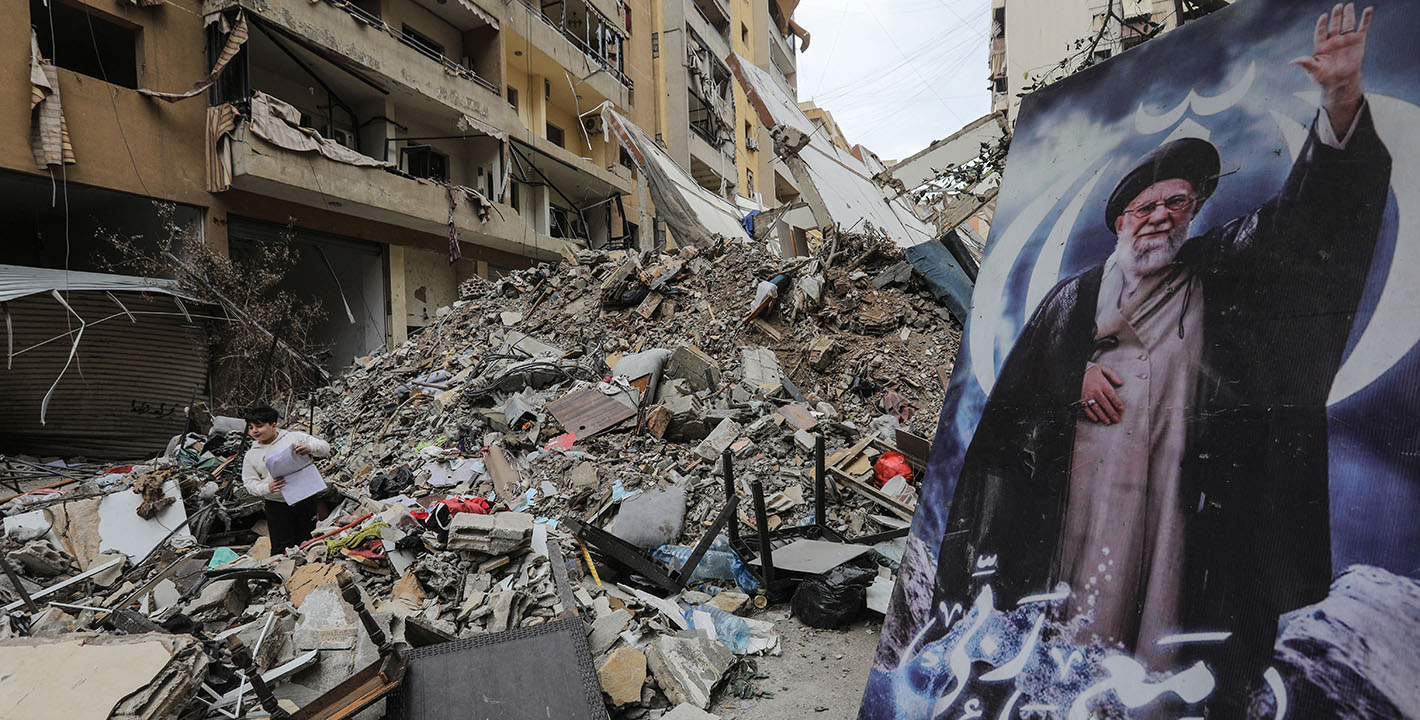
As talks begin between Washington and Tehran, Beirut has an opening to advance a regional plan for the party’s disarmament.

Michael Young

What is behind Marco Rubio’s announcement that the body is now an international nongovernmental organization?
Zaha Hassan
Policy discussion is ignoring that the Palestinian national project is hollowed out and apartheid is a present danger.

Nathan J. Brown
As negotiations with Iran and Lebanon continue, chaos is at the heart of the Netanyahu government’s calculations.
Michael Young
The party’s domestic and regional roles have changed, so Lebanon should devise a disarmament strategy that encompasses this.
Michael Young