

Commentary
Sergey Vakulenko
{
  "authors": [
    "Sergey Vakulenko"
  ],
  "type": "commentary",
  "blog": "Carnegie Politika",
  "centerAffiliationAll": "dc",
  "centers": [
    "Carnegie Endowment for International Peace",
    "Carnegie Russia Eurasia Center"
  ],
  "collections": [],
  "englishNewsletterAll": "ctw",
  "nonEnglishNewsletterAll": "",
  "primaryCenter": "Carnegie Russia Eurasia Center",
  "programAffiliation": "russia",
  "programs": [
    "Russia and Eurasia"
  ],
  "projects": [],
  "regions": [
    "Russia",
    "Eastern Europe",
    "Ukraine"
  ],
  "topics": [
    "Climate Change",
    "Security",
    "Military"
  ]
}
Source: Getty
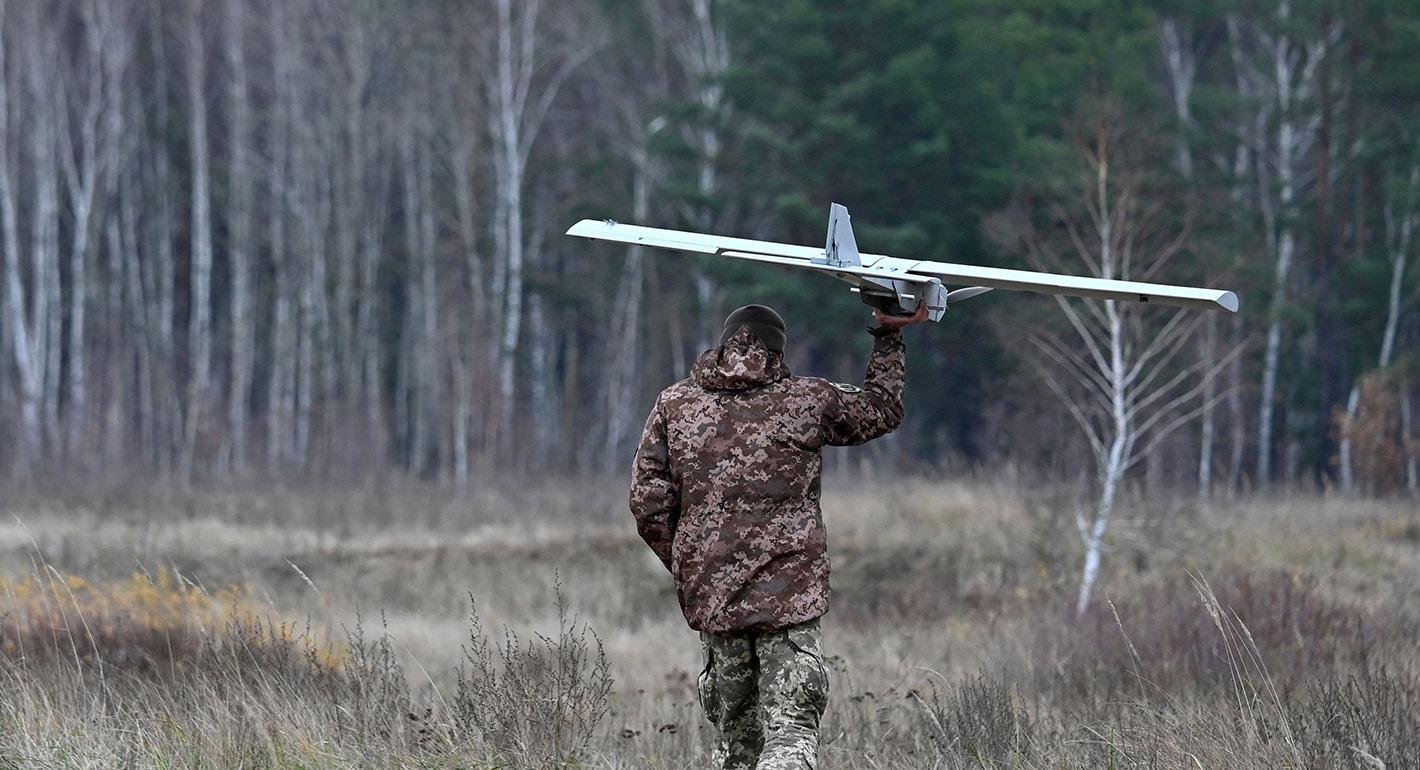
If the scale of Ukrainian drone attacks is maintained at the levels of March and Russian air defenses do not improve, Ukraine will be able to keep damaging Russian refineries faster than they can be fixed, slowly but steadily eroding the country’s refining capacity.
Since the beginning of the year, Ukrainian drones have attacked over fifteen Russian refineries and several oil depots in the first massive, sustained, and successful attack by Ukrainian unmanned aerial vehicles (UAVs) on Russian infrastructure, which has also involved attacks on major steel plants.
Ukrainian far-reaching drone attacks started a year ago with attacks on Moscow—including the Kremlin itself. Rather than causing much real damage, their main achievement was to destroy the semblance of Russia’s invincibility, lift Ukrainian spirits, and bring the war to Muscovites, while remaining isolated events.
In the earlier stages of the war, Ukraine concentrated its military resources on military targets, such as fuel depots close to the front lines or strategic airfields, leaving its Western allies to wage economic warfare. But sanctions had only a limited impact on Russian profits and the economy. Now Ukraine is taking matters into its own hands, physically attacking Russian energy infrastructure rather than relying on Western sanctions.
Previously, Ukraine was dependent on Western munitions for far-reaching attacks, with conditions of no deployment against targets in Russia proper and nonmilitary targets. The new class of domestically produced weapons removes such limitations, eases frustration about ineffective sanctions, and strengthens the Ukrainian negotiating position vis-à-vis its Western partners. Despite U.S. warnings to stop the attacks, Ukraine has continued, striking even deeper into Russian territory.
The current campaign started in January with attacks on the Ust-Luga fuel terminal and Tuapse refinery. By March, therefore, Russian air defenses had had some time to prepare. Nevertheless, the scale of recent attacks and the ineptitude of Russian air defenses were quite surprising. One video shows a drone making a turn and diving toward the target in broad daylight, to the sound of continuous—and ultimately futile—defensive gunfire.
Still, even the current wave of drone attacks will have a limited effect on the Russian industry and economy. Drone attacks do not destroy entire refineries and usually do not even destroy individual units, but only damage them, unlike World War II air raids by hundreds of bombers. The Ust-Luga and Ryazan refineries were both back in operation a few weeks after being attacked. Strikes against Russian refineries create financial losses for Russian oil companies, but do not hurt the state budget and have little impact on Russian export earnings. The needs of the Russian armed forces and the primary needs of the Russian economy for fuel can be satisfied by factories that are out of reach of Ukrainian drones.
Still, repairs are expensive: tens if not hundreds of times greater than the cost of drones, even considering their low success rate and the need for a swarm attack to create the conditions needed for a single hit. In a war of attrition, the odds are with the drones.
The attacks peaked just before Russia’s presidential election on March 15–17: most likely, Ukraine had stockpiled its arsenal for a show of force and the propaganda value of spoiling Putin’s latest apparent victory. Since then, the attacks have slowed, but not stopped. Ukrainian officials have repeatedly announced a major expansion of long-range UAV manufacturing, meaning the rate of attacks in the future is likely to increase.
If the scale of the drone attacks is maintained at the levels of March and Russian air defenses do not improve, Ukraine will be able to keep damaging Russian refineries faster than they can be fixed, slowly but steadily eroding the country’s refining capacity.


The latest wave of attacks signifies a major shift in modern warfare. Navigational equipment, including solid-state inertial systems that are impervious to jamming and signal spoofing, is now affordable and abundant; the emergence of the Starlink communications system has made it possible to remotely control drones from 1,000 km away; and the availability of satellite images allows for the selection of targets with an accuracy of several meters.
These revolutionary warfare tactics are being deployed against a traditional adversary with traditional strengths. Russia’s landmass and the size of its refining industry make it resilient: it can be shaken, but is difficult to topple.
But the landmass that serves as a defense shield also creates logistical problems. The damaged refineries serve the surrounding regions, and replacement fuel has to be transported long distances. There are two major product pipelines carrying fuel from the Urals and Siberia to the Baltics and the Black Sea that alleviate the problem to some extent, but distributing the fuel around European Russia will put additional stress on the country’s already overstretched railroads.
Russia, for its part, has been targeting Ukraine’s oil refineries and other energy infrastructure—including power plants—since the first winter of the war, leaving millions of Ukrainians without heating in freezing temperatures. Immediately after the first attacks by Ukrainian drones, Russia used two ballistic missiles to attack the only functioning Ukrainian refinery in Kremenchug, and then switched back to major power generation assets, methodically destroying thermal and hydropower stations. The current attacks appear to be more precise than previous efforts: Russia sends swarms of drones to overwhelm air defense systems and then delivers main hits with heavy missiles, targeting expensive, bulky, and hard-to-replace generators and control systems.
Both sides are engaging more and more in total war, not only targeting current or future military capacity, but also attempting to destroy as much of the enemy’s economy as possible—spending substantial parts of their military potential in the process.

Senior Fellow, Carnegie Russia Eurasia Center
Sergey Vakulenko is a senior fellow at the Carnegie Russia Eurasia Center.
Recent Work
Sergey Vakulenko
Sergey Vakulenko
Carnegie does not take institutional positions on public policy issues; the views represented herein are those of the author(s) and do not necessarily reflect the views of Carnegie, its staff, or its trustees.

Russian strikes are weakening the economy sustaining Ukraine’s war effort. Closing the growing funding gap will require more European support and politically contentious reforms in Kyiv.

Balázs Jarábik

Despite a new textbook, an influx of Russian teachers and managers, and an end to the teaching of Ukrainian, the Kremlin is unlikely to have “reprogrammed” locals.

Konstantin Skorkin

For every ruble allocated to social policy, health, and education in 2027, double that amount is earmarked for the army, the police, and the security services.

Alexandra Prokopenko

Cargo traffic through Russia’s Northern Sea Route has increased because of the disruption caused by the conflict in the Middle East, the Ukraine war, and U.S.-China tensions.

Mikhail Korostikov
An analysis of traffic accident data suggests that Ukrainian drone attacks caused a material but not disastrous fall in Russian gasoline consumption over the summer.
Sergey Vakulenko