

Commentary
Konstantin Skorkin
{
  "authors": [
    "Konstantin Skorkin"
  ],
  "type": "commentary",
  "blog": "Carnegie Politika",
  "centerAffiliationAll": "",
  "centers": [
    "Carnegie Endowment for International Peace",
    "Carnegie Russia Eurasia Center"
  ],
  "englishNewsletterAll": "",
  "nonEnglishNewsletterAll": "",
  "primaryCenter": "Carnegie Russia Eurasia Center",
  "programAffiliation": "",
  "regions": [
    "Ukraine"
  ],
  "topics": [
    "Civil Society",
    "Domestic Politics"
  ]
}
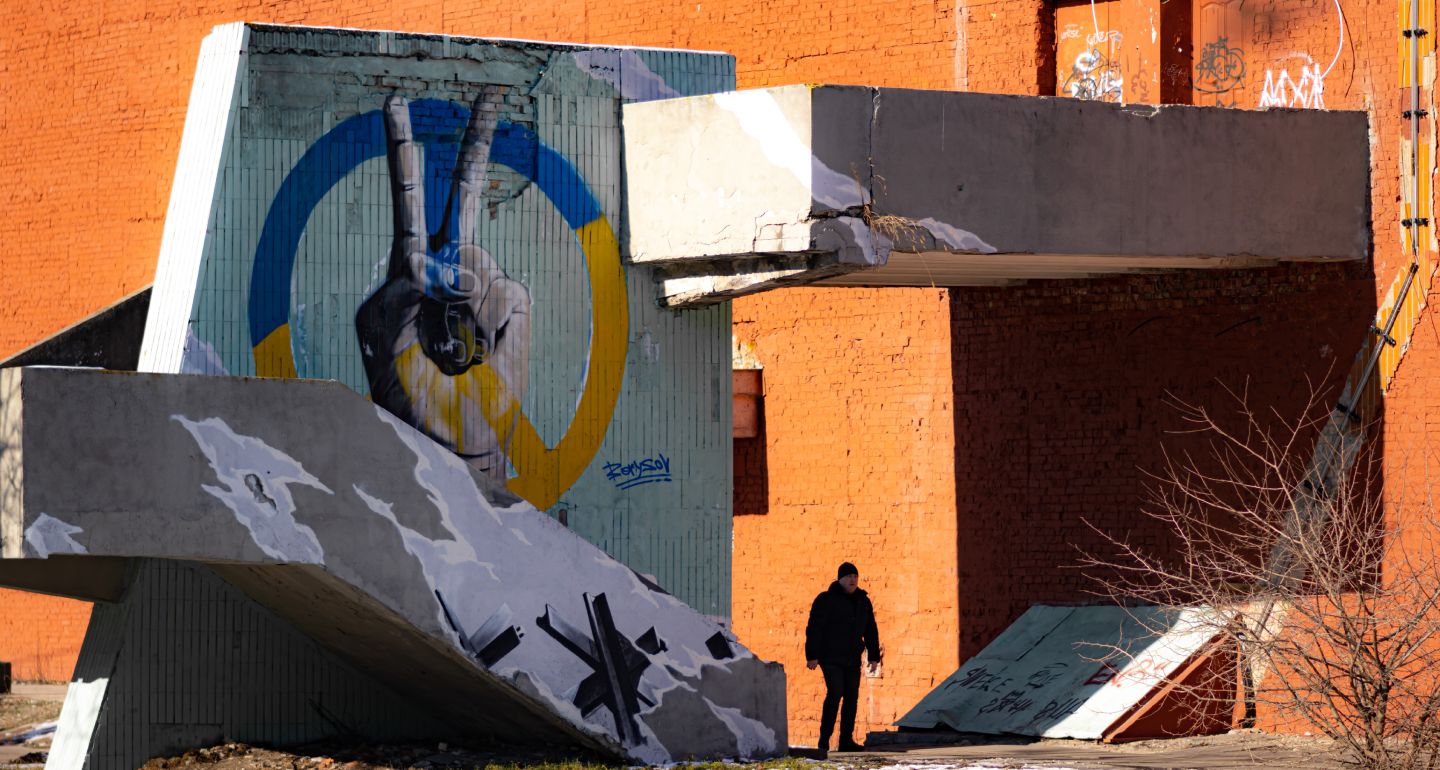
Source: Getty
The Kremlin’s unwillingness to discuss anything other than capitulation is doing more to undermine the potential emergence of a party of peace in Ukraine than any domestic patriotic propaganda.
As the fifth anniversary of the full-scale invasion of Ukraine approaches, the number of peace initiatives has begun to grow: a new round of talks with the United States and Russia has taken place in Abu Dhabi, and a localized ceasefire enabled residents of the city of Oleshky to be evacuated. Until recently, the idea of making significant concessions to Russia to secure peace was taboo in Ukrainian society. But with the latest attempts at peace talks resonating more than previous efforts among the exhausted Ukrainian public, some Ukrainian politicians are openly saying that peace must be agreed as soon as possible.
Public demand for peace is being strengthened by expectations of another difficult winter under constant Russian bombardment, a worsening economic crisis, and growing pressure from U.S. President Donald Trump and his administration. The key factor still fueling Ukrainians’ will to fight on is the Kremlin’s refusal to discuss anything other than capitulation, even as the Ukrainians themselves show willingness to compromise.
For many years, even the idea of any kind of “party of peace” in Ukraine was nothing short of toxic. That was hardly surprising: the country is a victim of Russian aggression, which means the key to ending the war lies in Moscow, not in Kyiv. In this context, calls for peace from the Ukrainian side would have sounded like a proposal to capitulate, which is tantamount to political suicide.
The national consensus during the first years of the war was based upon the idea of restoring Ukraine’s territorial integrity and the inevitable defeat and punishment of the aggressor. In 2022, 89 percent of Ukrainians were against signing a peace agreement with Russia before all of its troops had been withdrawn from every part of Ukraine.
As the hostilities have dragged on, however, and with the growth of internal problems such as corruption scandals and abuses of power in the mobilization system, the possibility of a compromise peace deal has stopped being a forbidden subject. By October 2026, the proportion of Ukrainians who believe that peace is more important than victory had reached 50 percent, from 37 percent at the end of 2023.
Sociologists have also observed a growing willingness among Ukrainians to accept a compromise as a way of ending the war. In October 2026, 56 percent of people were willing to make territorial concessions so long as their country received Western security guarantees, up from 38 percent two years earlier.
In response to the increased appetite for peace, even if it requires concessions, some politicians have already come forward with formulas to that end. The most high-profile figure to do so is Oleksii Goncharenko, a parliamentary deputy from the opposition party European Solidarity, who has proposed his own peace plan involving Ukrainian concessions. Such a move was not entirely unexpected: Goncharenko has a history of taking on contentious issues, including, most recently, condemning abuses of power and corruption in the mobilization system.
Goncharenko’s peace plan envisages a phased de-escalation through a series of deals mediated by influential third countries, including Türkiye, Egypt, and Saudi Arabia (whose opinion holds weight with both the Kremlin and the United States). “A thousand small agreements will lead to a broader peace agreement,” Goncharenko believes.
The plan was predictably greeted with a wave of patriotic indignation, which culminated in Goncharenko’s own party disowning him. But if a couple of years ago, such a move would have meant the end of his political career, now Goncharenko is clearly preparing to launch his own political project, tapping into a seam of Ukrainian Trumpism: The Ukrainian deputy’s peace initiatives align well with the demands that Washington is making of Ukraine.
In polls, he is a leading contender for the role of head of a potential peace party—a party that 19 percent of Ukrainians said they would like to see, compared with 32 percent who would not like to see such a political force. Fifty percent of respondents said they were neutral.
Nor is Goncharenko alone. Kharkiv Mayor Ihor Terekhov, a popular figure, has spoken out passionately against the idea that the only possible future for Ukraine is one of “never-ending war” and has labeled his opponents “the party of war.”
At around the same time, Danylo Hetmantsev, a parliamentary deputy from the Servant of the People party, also referred to a party of war, which he says discredits and marginalizes anyone who tries to talk about peace. That immediately sparked renewed talk of a possible political project involving Terekhov and Hetmantsev, aimed at voters in southeastern Ukraine (there have long been rumors that the authorities would like to create a populist and loyal party targeting the country’s Russian-speaking population).
Even the tattered remains of the country’s former pro-Russian political forces are showing signs of life. Vadym Novynskyi, an oligarch and former parliamentary deputy, called for President Volodymyr Zelensky to be removed from office in response to the latest wave of pressure on Kyiv from the Trump administration. Novinsky has long used the issue of protecting the interests of the Ukrainian Orthodox Church (Moscow Patriarchate) to cultivate ties with conservative circles in the United States. Not to be left out, Yuriy Boyko, leader of the Platform for Life and Peace parliamentary group, has claimed that unnamed soldiers “believe the time has come to end” the war.
The main obstacle to the full-fledged formation of a party of peace in Ukrainian politics is Russia. For all the shifts in public mood, 78 percent of Ukrainians still believe that the main hindrance to a peace agreement is Moscow’s desire to subjugate Ukraine, while 12 percent see the problem as the Ukrainian government’s intransigence.
The Ukrainian public is open to peace talks, but does not see that readiness reciprocated on the Russian side. Russian President Vladimir Putin’s recent interview, in which he said that Russians and Ukrainians are genetically identical and that Ukraine has no right to consider the land seized by Russia as territorial losses because historically, it never belonged to Ukraine, has only added to the feeling in Ukrainian society that the Kremlin’s position remains unchanged.
That is doing more to undermine the potential emergence of a party of peace in Ukraine than any domestic patriotic propaganda. According to polls by the Kyiv International Institute of Sociology, 61 percent of Ukrainians still consider it unacceptable to hand over to Russia the parts of Donbas that currently remain under Ukrainian control. Thirty-five percent of Ukrainians would be prepared to make that concession, but most of that 35 percent also said it would be a difficult condition to accept.
Tellingly, other polls indicate that 77 percent of Ukrainians don’t believe that Moscow is genuinely prepared to discuss a peace plan, and 52.5 percent think that “any statements by Russia are false and deceptive.”
The position of those Ukrainians who are determined to keep on fighting is also bolstered by U.S. pressure on their country. Unlike his predecessor, Trump has never been very popular in Ukraine, and is not trusted by the Ukrainian public.
The recent diesel deal between Russia and the United States came as a shock to Ukrainians and strengthened the position of Zelensky, who during the years of war has learned how to use external pressure to drown out internal problems. Meanwhile, the Democrats’ victory in the U.S. midterm elections has given rise to hope that U.S. foreign policy will become more favorable to Ukraine again as Congress returns to Democrat control.
For now, Moscow’s refusal to back down from its maximalist demands and pressure from Washington mean any calls for compromises to be made could be perceived as capitulation. As a result, demand within Ukrainian society for a party of peace is mounting without any clear political articulation. When the needle of public expectation finally shifts toward a rapid end to the war, those advocating for reaching a compromise with Moscow could be led by anyone. Then—in keeping with Ukraine’s high-octane and dynamic political environment—this currently unoccupied niche will be overflowing with contenders.
An independent journalist.
Recent Work
Konstantin Skorkin
Konstantin Skorkin
Carnegie does not take institutional positions on public policy issues; the views represented herein are those of the author(s) and do not necessarily reflect the views of Carnegie, its staff, or its trustees.
Russia’s banking sector is sinking ever deeper into a crisis that the authorities are simply managing rather than trying to fix.
Alexander Kolyandr, Alexandra Prokopenko
The war does threaten Putin’s existence. That is why he does not negotiate.
René Nyberg
The new Serbian leadership may have promised to keep on cooperating with Russia, but soon they will have to make a choice between fighting corruption and sealing lucrative deals with Moscow. The two are mutually exclusive, even if the new leaders in Belgrade haven’t yet realized it.
Maksim Samorukov
Serbia’s electoral earthquake is an extremely rare example of an entire political system being defeated by street protesters who played by the rules.
Alexander Baunov
The pressures of war are gradually warping Russia’s system of governance, making it more vulnerable to a future crisis.

Tatiana Stanovaya