

Commentary
Moldova’s reintegration plan was drawn up to demonstrate to Brussels that Chișinău is serious about the Transnistria issue—and to get the West to react.
Vladimir Solovyov
{
  "authors": [
    "Konstantin Skorkin"
  ],
  "type": "commentary",
  "blog": "Carnegie Politika",
  "centerAffiliationAll": "dc",
  "centers": [
    "Carnegie Endowment for International Peace",
    "Carnegie Russia Eurasia Center"
  ],
  "collections": [],
  "englishNewsletterAll": "ctw",
  "nonEnglishNewsletterAll": "",
  "primaryCenter": "Carnegie Russia Eurasia Center",
  "programAffiliation": "russia",
  "programs": [
    "Russia and Eurasia"
  ],
  "projects": [],
  "regions": [
    "Eastern Europe",
    "Ukraine"
  ],
  "topics": [
    "Economy"
  ]
}
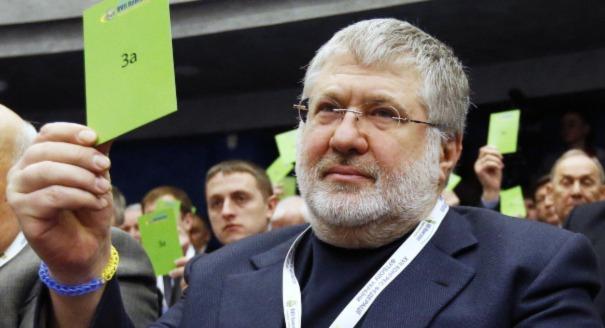
Source: Getty
It’s true that Ukraine’s oligarchs corrupted the Ukrainian state and undermined effective reform and development, preventing it from escaping from its post-Soviet stagnation. But they were also a key protective mechanism against anyone else usurping power.
It was not so long ago that the oligarchs and their relationship with the central government were a key element in Ukrainian politics. Their enormous capital that grew out of the corrupt privatization of Soviet industry on the eve of the 2000s influenced the most diverse aspects of the country’s political life, from the agenda set by the media to the makeup of parliament.
That has all changed, however, with the outbreak of war. With every passing day, the influence of Ukraine’s oligarchs is fading, and their capital alongside it. Without them, Ukraine is becoming a different country.
The process of deoligarchization, as it has become known, was already one of the biggest issues in Ukrainian politics in the year before the war. President Volodymyr Zelensky introduced a controversial law designed to limit the “excessive influence” of major tycoons, but the law was criticized both for its dubious legal status and for not going far enough.
Above all, there was no confidence that the young president would prevail in his confrontation with the country’s richest people: that the powerful oligarchs might not just decide to chip in to support the opposition and kick out Zelensky and his Servant of the People party at the next elections.
Then came Russia’s invasion, which the Ukrainian elite had refused to believe could happen right up until it did. Faced with an existential threat, internal squabbles were put on a back burner, and Zelensky went from a president whose popularity was in decline to supreme commander in chief. The oligarchs had to get in line with the new reality, and swiftly.
The outbreak of a full-scale war meant that for once Ukraine’s oligarchs were in the same boat as mere mortals. Just as with ordinary Ukrainians, their property could be destroyed by Russian missiles; their assets in the territory occupied by Russia are at risk of being appropriated; and their very lives are at stake: the grain magnate Oleksiy Vadatursky, number 24 on Ukraine’s Forbes list, was killed in July during the heavy shelling of the city of Mykolaiv. In these circumstances, it’s hardly surprising that most of the country’s oligarchs are donating enormous sums for defense and humanitarian needs, and not just for the PR.
The war is destroying the very foundation of the oligarchs’ economic might. Their most profitable assets—the metallurgy giants and mines of Donbas and Krivbas, the Black Sea and Azov Sea ports, and the most fertile agricultural land—are located in the southeast of the country, where the worst of the fighting is taking place.
Ukraine’s richest man, Rinat Akhmetov, has already lost his two main metallurgy assets: the Azovstal plant in Mariupol, which was completely destroyed, and the Ilyich Iron and Steel Works. Dmytro Firtash’s Azot chemical plant in Severodonetsk has also been heavily damaged, while Ihor Kolomoisky’s Kremenchuk oil refinery has stopped work due to the shelling. Akhmetov, Kolomoisky, and Viktor Pinchuk all have industrial assets at risk of being destroyed in the cities of Kryvyi Rih, Zaporizhzhia, and Dnipro.
Ukrainian agricultural holdings have lost farmland due to it being appropriated by the separatists, occupied by Russian forces, or mined. The country’s business owners are scrupulously recording the damage and drawing up multi-billion-dollar lawsuits against Russia, but whatever the outcome of the war, it’s clear that the oligarchs’ fortunes will never be what they were.
Those economic losses will be accompanied by a loss of political influence. Unsurprisingly, the political forces seen as pro-Russian effectively disintegrated following the outbreak of war. Their oligarchic sponsors are either arrested or fled abroad; their pro-Russian agenda has been discredited by the invasion; and the significant part of their electoral base is occupied by Russia. This largely explains why some former figures in the pro-Russian Opposition Platform–For Life, Opposition Bloc, and now defunct Party of Regions are accepting posts in the Russia-imposed administrations of occupied territories: there are quite simply no political prospects for them in Ukraine.
Kolomoisky’s political star is also fading fast. Earlier in his presidency, Zelensky was having to prove that he wasn’t simply a puppet controlled by the powerful Dnepropetrovsk oligarch. Now, Kolomoisky has reportedly been stripped of his Ukrainian citizenship, and is entirely dependent on the president’s goodwill: he is sanctioned by the United States and under investigation in both Israel, where he also holds citizenship, and Russia, leaving him with few options.
Technically, Kolomoisky may have lost his citizenship for having a second nationality, which is forbidden by Ukrainian law. In practice, however, that law is hardly ever enforced. It’s more likely that the Ukrainian leadership simply decided to use the opportunity to strip Kolomoisky of his influence and send a warning to other Ukrainian oligarchs in doing so.
The war has also put an end to the oligarchs being able to use their own media as one of their main tools of influence. The moratorium on the country’s political life, together with the information monopoly put in place by presidential decree at the start of the war (TV channels can only show “unified news” that meet guidelines drawn up by the president’s office) have turned the oligarchs’ media resources—loss-making even before the war—into a complete waste of money for their owners.
Some of the oligarchs, including Akhmetov and the Kyiv developer Vadim Stolar, have already sold their media assets, and Pinchuk appears to be preparing to follow suit. Without a constant cashflow from business tycoons, the Ukrainian media market, especially TV, looks set to shrink fast.
Right now, the only person on the Forbes list of the ten richest Ukrainians who can feel relatively confident is former president Petro Poroshenko. He doesn’t have any major assets in the southeast of the country, and his national-patriotic ideology is on point at a time of war. Yet all the new means of exerting pressure on the former president, from restrictions on travel abroad to closing down the armies of pro-Poroshenko propaganda-spreading bots, are a constant reminder that the arsenal Zelensky has at his disposal in the fight against his main rival is only growing.
The Russian invasion has pushed the Ukrainian state to the brink of survival, but on the domestic political front, it has enabled Zelensky to solve most of his old problems. The main one—his standoff with the oligarchs—resolved itself on its own: the tycoons are now focused on salvaging the remnants of their capital rather than trying to bring down the president.
The deoligarchization of Ukraine looks set to be an irreversible process. Regardless of how the war ends, the conditions are simply not in place for the formation of a new class of the superrich: the Ukrainian economy has been too badly damaged by the war for any new oligarchs to emerge, while the ambitions of those who once had it all have been severely curtailed.
New fortunes could, of course, be made upon the country’s postwar reconstruction, but that would be more likely to produce business magnates with close ties to the powers that be, like in Russia, rather than political players in their own right. We will also likely see the mass expansion of Western business onto the Ukrainian market, since the main sponsors of the country’s reconstruction will be Europe and the United States.
Removing the oligarchs from the Ukrainian economy and politics is an important step in moving toward more transparent rules of the game and a system that will be easier to integrate into European structures. It’s no coincidence that the West has actively supported Zelensky in his battle with the oligarchs, even when the president’s actions smacked of arbitrariness and sat uncomfortably with the rule of law. But the consequences won’t all be positive.
It’s true that Ukraine’s oligarchs corrupted the Ukrainian state and undermined effective reform and development, preventing it from escaping from its post-Soviet stagnation. But they were also a key protective mechanism against anyone else usurping power: a role they performed at least as effectively as civil society.
Ukraine didn’t just have two successful revolutions in 2004 and 2014 because of civil resistance. They also resulted from the considerable media and financial support given to the opposition by big business (no matter that that support was motived by self-interest). Now the war has enabled President Zelensky to concentrate an enormous amount of power in his hands, and it will be tempting for him to hold onto that power, even when peace is restored. When that time comes, there will no longer be a trade union of oligarchs ready to help civil society prevent such a turn of events.

Konstantin Skorkin
An independent journalist.
Carnegie does not take institutional positions on public policy issues; the views represented herein are those of the author(s) and do not necessarily reflect the views of Carnegie, its staff, or its trustees.
Moldova’s reintegration plan was drawn up to demonstrate to Brussels that Chișinău is serious about the Transnistria issue—and to get the West to react.
Vladimir Solovyov
Putin is stalling, waiting for a breakthrough on the front lines or a grand bargain in which Trump will give him something more than Ukraine in exchange for concessions on Ukraine. And if that doesn’t happen, the conflict could be expanded beyond Ukraine.

Alexander Baunov
As discussions about settlement and elections move from speculation to preparation, Kyiv will have to manage not only the battlefield, but also the terms of political transition. The thaw will not resolve underlying tensions; it will only expose them more clearly.

Balázs Jarábik
The main source of Russian aggression is a profound mistrust of the West and the firm belief that it intends to inflict a “strategic defeat” on Russia. As long as this fear persists, the war will not end.

Tatiana Stanovaya
The Russian army is not currently struggling to recruit new contract soldiers, though the number of people willing to go to war for money is dwindling.
Dmitry Kuznets